
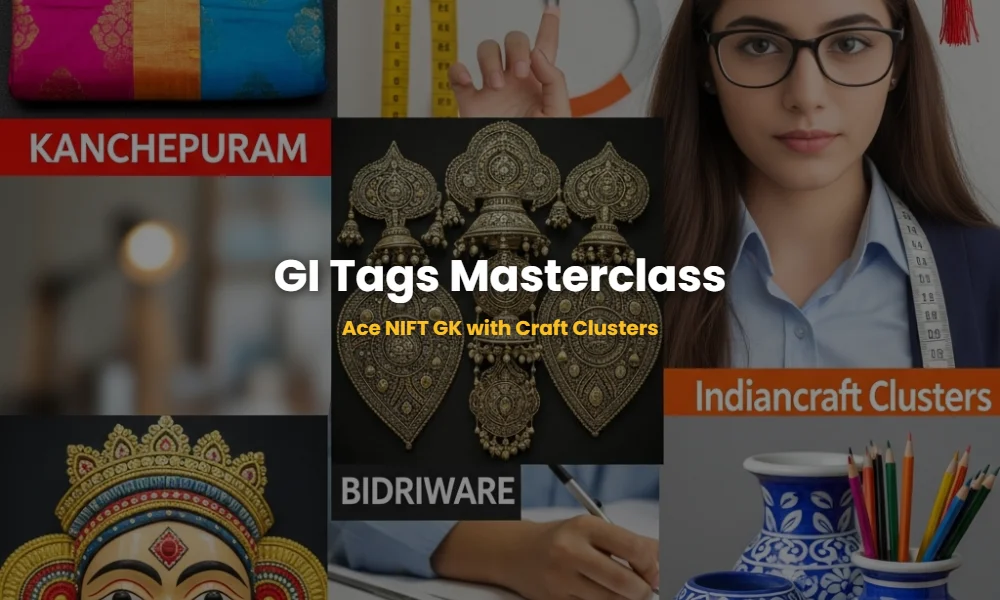
Why GI Tags are a Make-or-Break for NIFT
Indian GI Tags and craft clusters are essential for NIFT aspirants because they reflect India’s cultural heritage and intellectual property. Knowing these geographical markers demonstrates a student’s awareness of regional textiles, traditional craftsmanship, and socio-economic design impacts across the country.
For a design aspirant, a craft cluster isn’t just a location; it’s a living museum of techniques. The National Institute of Fashion Technology (NIFT) heavily emphasizes General Knowledge (GK) related to Indian textiles and handicrafts. This is because the industry is increasingly moving towards sustainable, localized, and authentic sourcing. Understanding the Geographical Indications (GI) of Goods (Registration and Protection) Act, 1999, and keeping up with monthly updates is no longer optional—it is a competitive necessity.
The Secret Power of GI Tags in Exams
GI Tags provide legal protection to unique products from specific regions, ensuring quality and authenticity. For NIFT, questions often link these tags to design processes, raw materials, and the history of Indian fashion and lifestyle industries.
Imagine walking into the exam hall and seeing a question about the latest GI addition from Assam or Odisha. Without a General Knowledge Daily Dose, you might miss these high-scoring points. GI Tags are essentially the ‘brand names’ given by the government to traditional wisdom. From the Kancheepuram Silk of Tamil Nadu to the Pashmina of Kashmir, each tag tells a story of the soil, the climate, and the human hands involved. Aspirants must focus on the textile design patterns and the specific communities that sustain these crafts.
Monthly Updates: Recent GI Tag Entries
Recent months have seen a surge in GI Tag registrations across diverse categories like agriculture and handicrafts. Notable additions include Majuli Masks from Assam and various tribal textiles from Odisha, which are highly likely to appear in the current NIFT GAT paper.
| Region | Product Name | Category |
|---|---|---|
| Assam | Majuli Mask | Handicraft |
| Odisha | Lanjia Saura Painting | Handicraft |
| Arunachal Pradesh | Adi Kekir (Ginger) | Agriculture |
| Gujarat | Kachchhi Kharek | Agriculture |
💡 Pro-Tip: How to track GI Tags
Always check the official website of the GI Registry under the Department for Promotion of Industry and Internal Trade (DPIIT). NIFT examiners often pick products that have been in the news for export growth or international exhibitions.
Don’t Gamble with Your NIFT Score!
Get exclusive access to the most predicted questions for the General Ability Test. Join thousands of toppers today.
🚀 Take Premium Mock Test NowInteractive GK Mock Quiz (10 Questions)
Test your knowledge on Indian GI Tags and craft clusters with this specially curated NIFT-standard quiz. Don’t skip—these could be on your exam paper!
Q.1 Which state recently secured the GI tag for ‘Majuli Masks’ and ‘Majuli Manuscript Painting’?
Q.2 ‘Kachchhi Kharek’ is a recently GI-tagged product from Gujarat. What is it?
Q.3 Which Indian state is home to the ‘Bidriware’ craft cluster, known for its unique silver inlay work on black metal?
Q.4 The ‘Channapatna Toys’ are historically associated with which ruler’s patronage?
Q.5 ‘Pashmina’ wool, known for its extreme fineness, is derived from which animal?
Q.6 Which craft cluster is famous for ‘Blue Pottery’ and does not use clay in its manufacturing?
Q.7 ‘Phulkari’ is a traditional embroidery GI-tagged to which three states?
Q.8 Which city is famously known for its ‘Zardozi’ embroidery, which was used extensively in Mughal attire?
Q.9 The ‘Pochampally Ikat’ from Telangana is often called ‘Silk City’ and is known for which technique?
Q.10 Which state’s ‘Solapur Chaddar’ was the first product in Maharashtra to receive a GI tag?
The NIFT Examiner’s Hidden Strategy
Examiners often look for products that bridge the gap between traditional craft and modern commercial success. For example, the Kandhamal Haldi of Odisha or the Moga Silk of Assam are frequently used to test a candidate’s interdisciplinary knowledge.
When studying design aptitude, integrate GI knowledge by sketching the motifs found in these crafts. This helps in the Creative Ability Test (CAT) as well. If you are asked to design a modern bag inspired by Indian heritage, using motifs from Lanjia Saura paintings or Bidriware patterns will give you an edge over others using generic designs. Expert Tip: Focus on the ‘Why’ behind a GI tag. Is it because of the water (like in Sanganeri prints) or the specific sheep (like in Pashmina)?
Frequently Asked Questions
❓ Which was the first Indian product to get a GI tag?
Darjeeling Tea was the first Indian product to receive the GI tag in 2004-05. It set the precedent for protecting Indian regional excellence.
❓ How long is a GI Tag valid in India?
A GI registration is valid for a period of 10 years, which can be renewed from time to time for further periods of 10 years each.
❓ Can a single state have multiple GI tags for textiles?
Yes, states like Uttar Pradesh and Tamil Nadu have dozens of GI tags. UP, for example, has tags for Lucknow Chikan, Banaras Brocade, and Bhadohi Carpets.





