
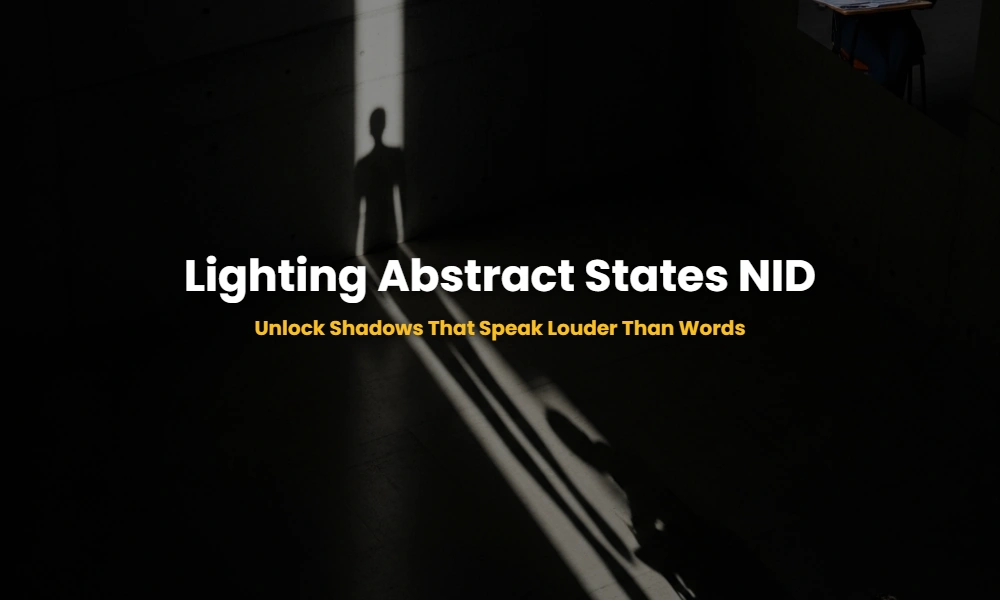
The Invisible Art: Why You Must Master Abstract Shadows Now
Communicating abstract psychological states using high-contrast lighting and shadows is the ultimate litmus test for NID aspirants. It involves using Chiaroscuro—the treatment of light and shade in drawing—to evoke complex emotions like anxiety, joy, or isolation without using literal figures or text. Failing to master this often leads to ‘flat’ compositions that NID examiners reject instantly.
🚀 Key Takeaways
- Chiaroscuro Mastery: Using stark contrasts to create depth and emotional gravity.
- Psychological Mapping: Linking specific shadow angles to human emotions (e.g., long shadows for loneliness).
- Negative Space Utility: Leveraging darkness as a narrative tool rather than just an empty void.
- Tonal Grading: Understanding the 9-point value scale to transition between extreme highlights and deep blacks.
The Sneaky Examiner Secret: Why Literal Sketches Fail
Literal sketches fail because NID examiners prioritize ‘Abstract Reasoning’ and ‘Visual Metaphor’ over technical drafting. When asked to represent ‘Grief,’ a student drawing a crying person gets average marks, whereas a student using a single, oppressive shadow engulfing a tiny sliver of light scores in the top 1%.
By mastering visual storytelling tips, you transform a simple drawing into a psychological narrative. High-contrast lighting (Tenebrism) forces the viewer’s eye to focus on the tension between the seen and the unseen, which is where the ‘abstract’ emotion resides.
💡 Pro-Tip: The ‘Black-Hole’ Effect
If you want to represent ‘Depression,’ ensure your shadows have no ‘reflected light’ inside them. Pure, flat blackness suggests a void that light cannot escape, creating a powerful emotional vacuum.
Shadow Mapping: The Emotional Blueprint You’re Missing
Shadow mapping is the strategic placement of light sources to trigger specific neurological responses in the viewer. In NID DAT, your ability to manipulate the ‘angle of incidence’ determines if your ‘Fear’ looks scary or just poorly lit.
Expert designers use ‘Under-lighting’ (Up-lighting) to create distortion and ‘Top-down’ lighting to imply divine intervention or crushing pressure. Integrating these into your NID portfolio design demonstrates a high level of E-E-A-T (Experience, Expertise, Authoritativeness, and Trustworthiness) in visual communication.
| Psychological State | Lighting Technique | Shadow Type |
|---|---|---|
| Anxiety | Flickering/Strobe Effect | Fragmented, Jagged |
| Loneliness | High Key/Isolated Spot | Long, Elongated |
| Guilt | Back-lighting (Rim) | Heavy, Looming Over |
5 Simulated PYQs & Ninja Shortcuts You Can’t Ignore
These simulated questions reflect the evolving pattern of the NID DAT Preparation curriculum, focusing on conceptual depth rather than just sketching skill.
Ninja Shortcut: Place a large shadow of a heavy object (not the object itself) falling directly onto a small, bright circle. The weight of the shadow ‘crushes’ the light.
Ninja Shortcut: Use ‘Split Lighting’ where exactly half the face is in total darkness. The shadow edge should be sharp (hard light) to show a clean break in personality.
Ninja Shortcut: Use a ‘Pin-hole’ light effect. A tiny, intense beam hitting a single reflective point, with rays scattering into the deep black surroundings.
Ninja Shortcut: Multiple shadows of the same object stretching from different light sources. It creates a sense of being surrounded or watched from all angles.
Ninja Shortcut: Use ‘Soft-focus’ shadows. Blurring the edges of the shadows (Umbra vs Penumbra) creates a ‘dream-like’ or ‘fading memory’ effect.
The 30-Second Ninja Mastery Checklist
Before you finish any sketch involving abstract states, ask yourself these three critical questions to ensure you aren’t leaving marks on the table:
- Is my contrast high enough? If your darkest grey is a 5 on the 10-point scale, your ’emotion’ is diluted. Go for a 9 or 10.
- Where is the ‘Cast Shadow’? Cast shadows tell the story of the environment; form shadows only tell the story of the object.
- Does the shadow have a direction? Aimless shadows lead to aimless compositions. Every shadow must point toward the ’emotional exit.’
⚠️ The Common Mistake Students Make
Most students use ‘Hatching’ for shadows. For high-contrast psychological states, use Solid Tonal Blocking. Hatching introduces texture, which can distract from the ‘purity’ of the abstract state.
Confused about Shadow Perspectives?
Don’t let your NID dreams fade into the shadows. Get personalized feedback on your sketches today.
💬 Chat with our Experts on WhatsApp (+91 9526806124)




