
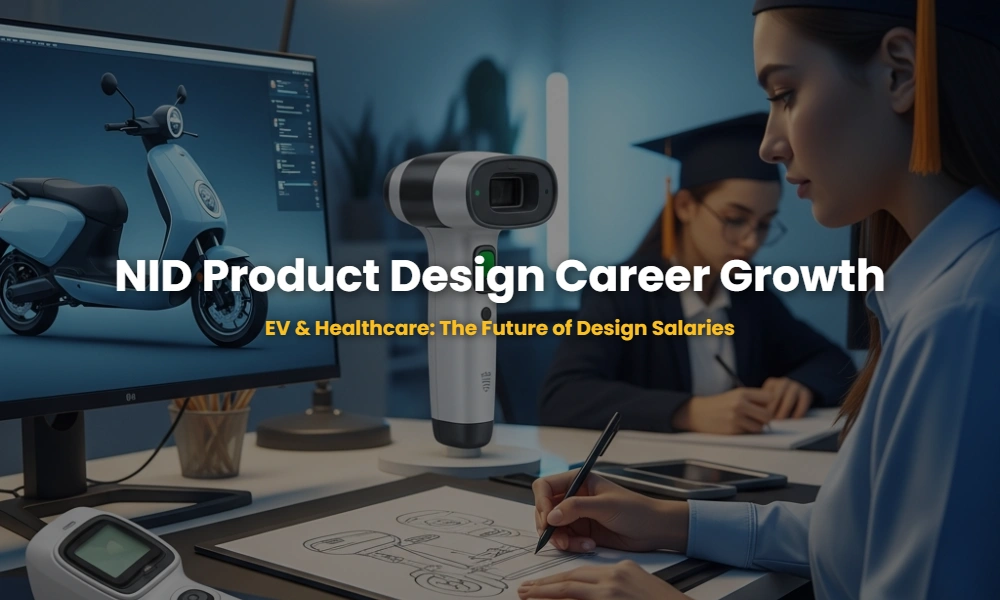
The landscape of Indian design is undergoing a seismic shift. No longer restricted to furniture or consumer electronics, NID Product Design graduates are now the backbone of high-tech industries. Specifically, the Electric Vehicle (EV) and Healthcare startup sectors are headhunting NIDians with aggressive compensation packages that were previously unheard of in the design domain.
🚀 Key Takeaways
- High Starting Salaries: Fresh NID graduates in EV startups are starting at ₹12–18 LPA, with experienced roles hitting ₹35+ LPA.
- Sector Demand: Healthcare startups (Med-Tech) are valuing Human Factors Specialists from NID for critical device safety.
- The Equity Edge: Startups are increasingly offering ESOPs (Employee Stock Options) to top-tier design talent.
- Hybrid Skillsets: Mastery of CAD, Ergonomics, and UX is the trifecta for a high-package career trajectory.
⚡ The Secret EV Revolution: Why NID Designers are the Most Wanted Hires
In the EV sector, NID graduates focus on vehicle ergonomics, dashboard HMI (Human Machine Interface), and charging infrastructure design, fetching average packages of ₹15–21 LPA in top-tier startups like Ola Electric or Ather.
The transition to electric mobility isn’t just an engineering challenge; it is a design challenge. EV startups need designers who can rethink the “form factor” of a vehicle since the absence of a bulky internal combustion engine allows for radical new shapes. NID graduates specializing in Product Design are uniquely trained to handle this ambiguity.
Specific Roles in EV Startups:
- Automotive Interior Designer: Focuses on sustainable materials and modular seating.
- HMI Specialist: Designing the digital screens that control the vehicle.
- Charging Infrastructure Designer: Ensuring that charging stations are intuitive and weather-resistant.
💡 Click to Reveal: The Insider EV Package Tip
Startups like Ola and Ather often offer a base salary of ₹16 LPA plus significant performance bonuses for graduates with strong 3D modeling skills in Alias or Rhino.
🩺 Healthcare Startups are Desperate for NID Minds – Don’t Miss This Wave
Med-Tech startups prioritize NIDians for their expertise in user-centric research and patient-safety design, offering packages that rival IT roles, often starting at ₹12 LPA for freshers.
Healthcare is no longer about cold, clinical machines. Modern startups are building wearable diagnostics and home-based medical kits. These products require the extreme sensitivity and “empathy-driven design” taught at NID. Whether it’s a device for early cancer detection or a modular hospital bed, the Product Designer ensures it is non-intimidating and highly functional.
Leading firms like Philips Healthcare and upcoming unicorns in the health-tech space specifically recruit from NID Ahmedabad and Gandhinagar because of their rigorous Design Thinking methodology.
💰 The Shocking Salary Truth: Traditional Firms vs. Startups
While traditional manufacturing firms offer stability with packages around ₹8–10 LPA, EV and Healthcare startups are offering nearly 1.5x to 2x that amount to secure top NID talent.
| Experience Level | Traditional Mfg. Sector | EV / Health-Tech Startup |
|---|---|---|
| Entry Level (0-1 yr) | ₹7 – ₹10 LPA | ₹12 – ₹18 LPA |
| Mid-Level (3-5 yrs) | ₹14 – ₹18 LPA | ₹22 – ₹35 LPA |
| Design Lead (8+ yrs) | ₹25 – ₹35 LPA | ₹45 – ₹70 LPA + Equity |
📈 Career Trajectory: From Junior Designer to Head of Product
The career path for an NID graduate in a startup is non-linear and rapid, moving from individual contributor roles to high-level strategic leadership within 5–7 years.
Because startups scale fast, a designer who joins at the Seed or Series A stage often finds themselves leading a 20-person design team by Series C. This exponential growth is the biggest advantage of the startup sector compared to traditional corporations.
Common Trajectory:
- Associate Product Designer: Hands-on CAD, prototyping, and material testing.
- Senior Product Designer: Managing full product lifecycles and vendor relations.
- Design Strategist / Lead: Determining the future product roadmap and brand language.
- VP of Design / Chief Product Officer (CPO): Integrating design into the core business strategy.
🧠 How to Crack the NID Exam to Enter This Elite Circle
Securing a high-package career starts with a top rank in the NID DAT (Design Aptitude Test). Success requires balancing creative intuition with logical problem-solving skills.
The NID entrance exam is notoriously difficult, with a focus on observation and creative visualization. To reach the level where companies like Ola or Philips hire you, you must first master the basics. Focus on building a strong portfolio that shows your ability to solve real-world problems—exactly what the startup ecosystem looks for.
🏁 Quick Preparation Quiz
Q: What is the most important factor in the NID Mains Studio Test?
A: It’s not just how pretty your model looks, but how effectively you’ve used the materials to solve the ergonomic problem provided in the brief.
Frequently Asked Questions
1. Is NID better than IIT for Product Design?
While IIT (IDC) is excellent for technical and system design, NID is considered the gold standard for pure Industrial and Product Design due to its 60-year legacy and intense focus on user aesthetics and form studies.
2. Do NID graduates get jobs abroad in the EV sector?
Yes! Many NID alumni work with global giants like Tesla, BMW, and Lucid Motors. The foundational skills taught at NID are globally applicable.
3. Are startups stable for a career after NID?
While they carry more risk than legacy firms, funded startups in EV and Healthcare offer rapid learning, high packages, and equity that can lead to massive wealth creation if the company goes public.
Ready to Crack the NID Exam and Reach These Heights?
Get personalized guidance, mock tests, and portfolio reviews from NID alumni experts.
💬 Chat with our Experts on WhatsApp (+91 9526806124)




