
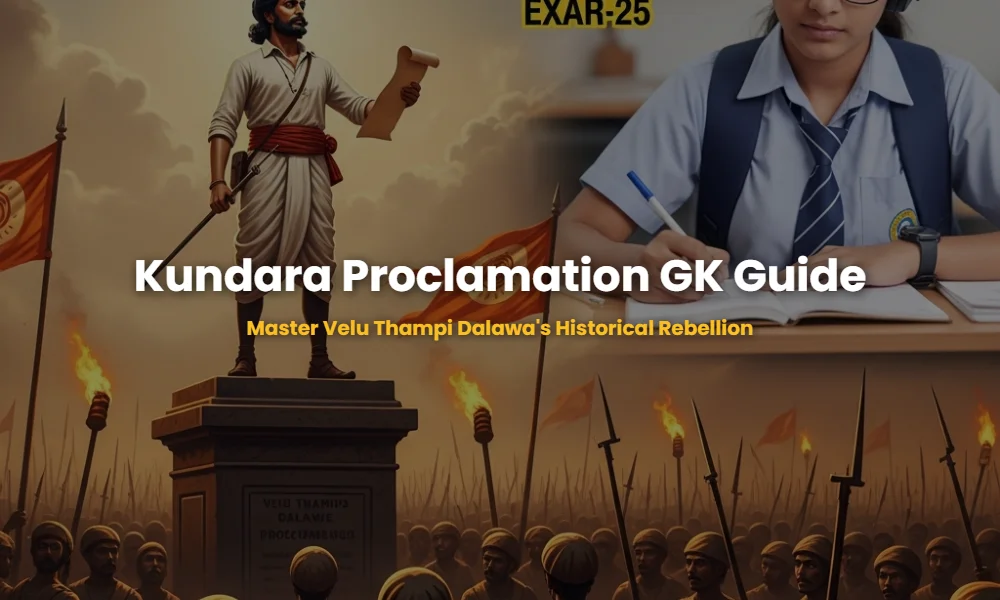
Why is the Kundara Proclamation a foundational element for Static GK in Kerala PSC?
The Kundara Proclamation of 1809 stands as one of the most defiant anti-colonial manifestos in Indian history. Issued by Velu Thampi Dalawa, the Prime Minister of Travancore, it was an clarion call for the masses to rise against the growing tyranny of the British East India Company. For aspirants preparing for competitive exams, mastering this topic is essential for scoring in the Kerala History segment of Static GK.
★ Key Takeaways
- ✅ Date: January 11, 1809 (27 Dhanu 984 ME).
- ✅ Location: Kundara, Kollam district.
- ✅ Issued By: Velu Thampi Dalawa, the Dalawa of Travancore.
- ✅ Primary Target: British Resident Colonel Macaulay.
- ✅ Significance: First major organized resistance against British rule in Kerala.
Table of Contents
What was the political atmosphere before the Kundara Proclamation?
The political context was shaped by the oppressive Subsidiary Alliance of 1805, which forced Travancore to pay a massive annual tribute to the British and effectively surrendered the state’s military sovereignty. The high-handed interference of British Resident Colonel Macaulay in the internal administrative and financial matters of Travancore pushed Velu Thampi Dalawa to the brink of armed revolt.
By 1808, the financial burden on the state became unbearable. The Resident demanded the payment of arrears in tribute and insisted on the disbandment of the Carnatic Brigade (the native army of Travancore). This direct threat to the livelihood of the Nair soldiers and the sovereignty of the Maharaja of Travancore led to an explosive situation. Velu Thampi realized that the British intended to dismantle the traditional social and political fabric of the state, prompting him to seek a mass base for his resistance movement through the proclamation at Kundara.
What are the key declarations of the Kundara Proclamation?
The key declarations centered on the preservation of religious identity, the protection of the caste system, and the expulsion of the British to restore the power of the native monarchy. It appealed to the emotions of the common people by portraying the British as invaders who would eventually force the population into Christianity and impose foreign laws.
The 5 Pillar Declarations:
- Threat to Traditional Customs: The Dalawa warned that the British would ignore the traditional caste distinctions and force high-caste individuals to work under low-caste officials.
- Religious Exploitation: He claimed that the British would eventually desecrate temples and promote the spread of Christianity, thereby destroying the Hindu dharma of the land.
- Economic Ruin: The proclamation highlighted how the British were siphoning off the wealth of Travancore through tributes and illegal trade monopolies.
- Administrative Interference: It condemned the removal of native officers and their replacement by individuals loyal to the Company.
- A Call to Arms: It commanded every able-bodied citizen to join the struggle, promising that the Maharaja’s authority would be restored once the foreign ‘mlechhas’ were expelled.
ထ Click to Reveal: Exam Tip
Kerala PSC often asks for the specific date of the proclamation. Remember it as January 11, 1809. Another frequent question is the location: Kundara in Kollam.
The Alliance between Velu Thampi and Paliath Achan
The revolt was not isolated to Travancore alone; it was a coordinated effort between the Dalawa of Travancore and the Chief Minister of Kochi, Paliath Achan. This alliance symbolized a rare moment of unity between the two princely states against a common enemy, the British East India Company.
Together, they planned a two-pronged attack on the British Residency in Kochi. While the initial attempt to capture Colonel Macaulay failed, it ignited a massive popular uprising across the region. This part of the history is a goldmine for PSC objective questions regarding administrative alliances in pre-independence Kerala.
Comparative Data: Travancore vs. British Power (1809)
| Feature | Travancore Forces (Velu Thampi) | British East India Company |
|---|---|---|
| Primary Strength | Nair Brigade & Local Volunteers | Professional Regiments & Artillery |
| Leadership | Velu Thampi Dalawa | Colonel Macaulay & Major Chalmers |
| Motivation | Patriotism & Religious Preservation | Colonial Expansion & Revenue |
| Tactics | Guerilla Warfare & Mass Proclamations | Disciplined Formations & Naval Support |
Essential Static GK Facts for Exams
To succeed in Kerala PSC, you must memorize these specific details about Velu Thampi Dalawa and the Kundara Proclamation:
- Velu Thampi’s House Name: Thampanoor (Ancestral home: Thalakkulam).
- Position: Dalawa (Prime Minister) of Travancore (1801–1809).
- King of Travancore during the Revolt: Avittom Thirunal Balarama Varma.
- British Resident: Colonel Colin Macaulay.
- Martyrdom: Velu Thampi committed suicide at Mannadi to avoid capture by the British.
- The Punnathala Bridge: The site of a fierce battle between the Dalawa’s forces and the British.
- Successor as Dalawa: Ummini Thampi (who was loyal to the British).
Frequently Asked Questions (FAQ)
1. Why is it called the ‘Kundara’ Proclamation?
It is named after the village of Kundara in Kollam, where Velu Thampi Dalawa addressed a massive gathering and issued the public declaration on Jan 11, 1809.
2. What was the impact of the Proclamation on the Kerala PSC syllabus?
It is categorized under the ‘Early Resistance to British Rule’ section and is a recurring topic in Degree Level and Plus Two level PSC exams.
3. Did Velu Thampi succeed in his rebellion?
Militarily, the rebellion was crushed by the superior technology and planning of the British. However, it succeeded as a symbolic act of resistance that inspired future nationalist movements.
ထ Confused about Static GK for PSC?
Our experts provide daily current affairs, history notes, and mock tests to help you crack the Kerala PSC exam on your first attempt.
ထ Chat with our Experts on WhatsApp (+91 9526806124)




