
Architectural Evolution and Iconographic Nuances of Nagara Style: Chandela vs Solanki
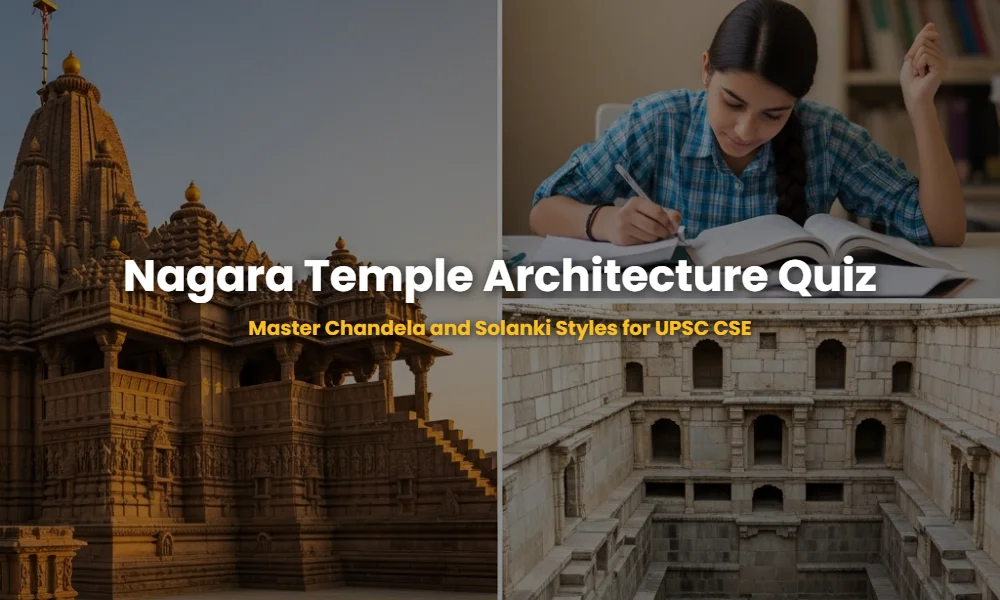
The Nagara style of temple architecture, which flourished in Northern India between the 10th and 13th centuries, reached its zenith under the patronage of the Chandela rulers of Central India and the Solanki (Chaulukya) dynasty of Gujarat and Rajasthan. While both adhere to the fundamental Nagara style, they represent distinct regional sub-styles—the Khajuraho school and the Maru-Gurjara style—each with unique structural and iconographic characteristics. This deep dive focuses on the structural complexity, the evolution of the Shikhara, and the sophisticated use of space and water in temple complexes.
🚀 Key Takeaways
- Chandela Style: Known for the use of high Jagati (platforms), Uru-shringas (miniature towers), and erotic iconography.
- Solanki Style: Renowned for ornate ceilings, massive Kundas (step-tanks), and the distinct Torana (ornamental arches).
- Materiality: Chandelas primarily used sandstone; Solankis utilized sandstone, basalt, and later, marble.
- Symmetry: Both styles follow a strict geometric progression from the Garbhagriha to the Mandapa.
Table of Contents
What are the defining characteristics of Chandela (Khajuraho) Architecture?
The Chandela architecture is defined by its massive elevated platforms (Jagati), the vertical ascent of clustered Shikhara towers (Uru-shringas), and the seamless integration of erotic and secular iconography. Unlike many Nagara temples, these lack an enclosure wall, emphasizing a free-standing, cosmic mountain-like appearance.
The Chandelas, ruling from the 10th to 11th centuries, elevated the Nagara tradition into a highly sophisticated form at Khajuraho. The Kandariya Mahadeva temple stands as the pinnacle of this evolution. The primary architectural innovation was the Uru-shringa, where secondary shikharas are clustered around the main spire, creating a rhythm of ascending peaks that mimic the Himalayas. This symbolic “mountain” architecture was further enhanced by the Panchayatana layout, featuring four subsidiary shrines. The iconographic richness at Khajuraho is not merely aesthetic but metaphysical, representing the Purusharthas (Dharma, Artha, Kama, and Moksha).
💡 Examiner Tip: Sandhara vs. Nirandhara
In UPSC Art & Culture, pay attention to the Pradakshina Patha. Sandhara temples have a circumambulatory path inside the structure, while Nirandhara temples do not. Most major Khajuraho temples are Sandhara, facilitating internal ritualistic movement.
How does Solanki (Maru-Gurjara) architecture differ in its spatial arrangement?
Solanki architecture, primarily the Maru-Gurjara style, is distinguished by its intricate marble carvings, the integration of deep step-wells (Kundas) into the temple plan, and the use of the Samavarana (pyramidal) roof on the mandapa. It prioritizes light play and ornamental arches (Toranas).
The Solanki dynasty (11th-13th century) in Gujarat produced architectural marvels like the Sun Temple at Modhera and the Dilwara Temples at Mount Abu. The Modhera temple is famous for its Surya Kunda, a massive rectangular tank with 108 miniature shrines, showcasing an unparalleled mastery over water-based structural design. Unlike the heavy masonry of Khajuraho, the Solanki style uses slender pillars and heavily ornamented Toranas. The Samavarana roof style for the mandapa—a bell-shaped, stepped pyramid—differs significantly from the Phamsana roofs found in early Nagara styles.
💡 Insider Knowledge: Iconography
Notice the Solanki focus on Jainism and Shaivism. While Chandela temples often feature secular and erotic life on the exterior walls, Solanki temples (especially Dilwara) utilize the interiors to display intricate, lace-like marble work depicting the lives of Tirthankaras.
Comparative Analysis: Chandela vs. Solanki
The primary difference lies in the structural silhouette: Chandela temples emphasize verticality through clustered shikharas, whereas Solanki temples emphasize horizontality and interior decorative complexity.
| Feature | Chandela (Khajuraho) | Solanki (Maru-Gurjara) |
|---|---|---|
| Base Platform | Very high Jagati (elevated) | Low Jagati, emphasis on Kunda |
| Roof Structure | Phamsana & Curvilinear Shikhara | Samavarana (Bell-shaped pyramid) |
| Ornaments | Exterior focused; Erotic sculptures | Interior focused; Filigree marble work |
| Entrance | Makara Torana (integrated) | Free-standing Torana arches |
UPSC Mock Quiz: Architectural Evolution
Test your mastery with these 10 challenging questions designed for the Civil Services Examination standard.
Q1. The architectural feature ‘Uru-shringa’ is most prominently associated with which phase of Nagara development?
Q2. Which of the following temples is a ‘Sandhara’ temple featuring an internal circumambulatory path?
Q3. The ‘Surya Kunda’ of Modhera is architecturally significant because:
Q4. Unlike Khajuraho temples, Solanki temples often feature a free-standing entrance arch called:
Q5. What is the ‘Samavarana’ in the context of Maru-Gurjara (Solanki) style?
Q6. Chandela temples are predominantly made of which material?
Q7. The ‘Erotic Sculptures’ of Khajuraho are thought to represent:
Q8. Which architectural element serves as the transition between the Garbhagriha and Mandapa?
Q9. The ‘Sun Temple’ at Modhera was built under the patronage of:
Q10. The plan of the Kandariya Mahadeva temple is based on:
Conclusion: The Legacy of Nagara Sub-styles
The transition from early Nagara to the refined Chandela and Solanki phases represents the culmination of Hindu temple architecture in pre-medieval India. While the Chandelas pushed the limits of verticality and stone masonry, the Solankis introduced a lyrical delicacy in their interior carvings and water management systems. Understanding these nuances is vital for UPSC aspirants to differentiate between regional art forms in Mains examinations.
Need Help with Art & Culture?
Our experts provide personalized guidance and exclusive mock tests for UPSC CSE Mains and Prelims.
💬 Chat with our Experts on WhatsApp (+91 9526806124)




