
📅 Daily Overview: May 8, 2026
Welcome to MyEntrance.in, your premier destination for civil services and competitive exam preparation. Today’s current affairs analysis focuses on pivotal developments in space exploration, constitutional interpretations, and international economics. As India marches towards the vision of ‘Viksit Bharat 2047’, staying updated with the granular details of policy and science is crucial for aspirants of UPSC (CSE), KPSC (KAS), and SSC CGL.
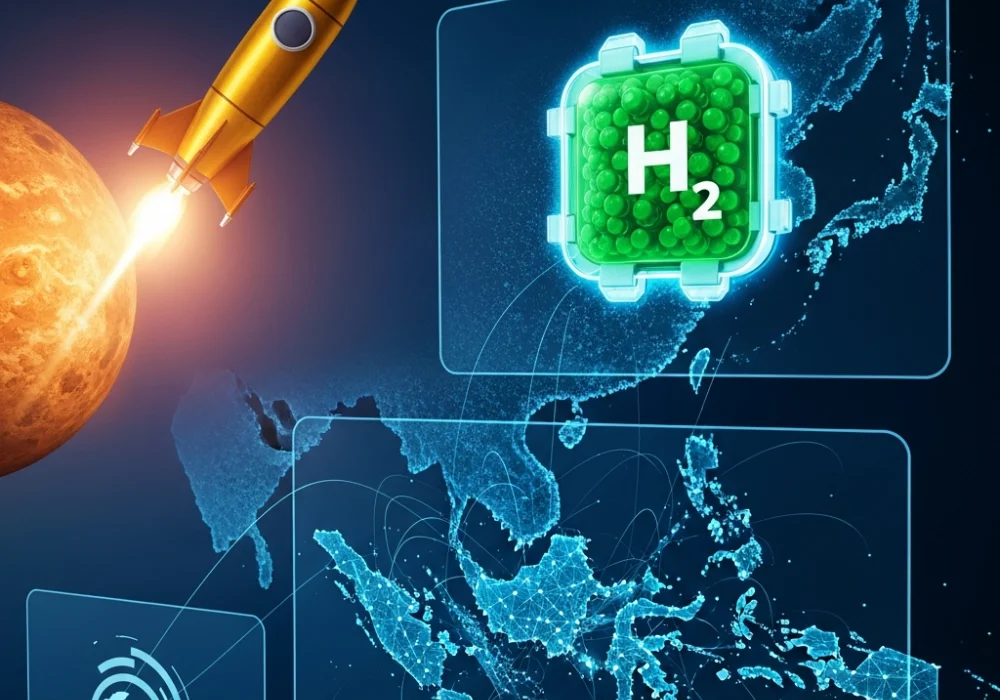
In today’s edition, we analyze ISRO’s Venus mission status, the Supreme Court’s latest stance on the Seventh Schedule, and the milestones achieved under the National Green Hydrogen Mission. Understanding these topics requires a blend of static knowledge and dynamic updates, which we provide in our detailed analysis below.
1. Science & Technology: ISRO’s Shukrayaan-1 Update
On May 8, 2026, the Indian Space Research Organisation (ISRO) released a significant update regarding the Shukrayaan-1 mission, India’s first foray toward Venus. The mission, initially conceptualized to study the atmosphere and chemistry of our ‘twin planet’, has reached the critical ‘Payload Integration Phase’.
Detailed Analysis: Venus is often called Earth’s twin due to its similar size and gravity, but its surface environment is radically different—with temperatures reaching 470°C and an atmospheric pressure 90 times that of Earth. Shukrayaan-1 aims to explore the sulfur dioxide cycles and the possibility of volcanic activity on the Venusian surface. This mission is vital for understanding planetary evolution and the runaway greenhouse effect, which holds critical lessons for Earth’s climate change mitigation.
💡 Click to Reveal: Static GK Connection
The Venusian Atmosphere: It consists primarily of Carbon Dioxide (96%) and Nitrogen (3%), with clouds of sulfuric acid. Unlike Mars, Venus has no internal magnetic field to protect its atmosphere from solar winds. ISRO’s orbiter will carry a high-resolution Synthetic Aperture Radar (SAR) to map the surface through the thick cloud cover.
2. Polity & Governance: The Doctrine of Pith and Substance
A landmark judgment was delivered today by a five-judge Constitution Bench regarding the legislative competence of states over specific mineral rights. The court emphasized the Doctrine of Pith and Substance to resolve the conflict between Union List Entry 54 and State List Entry 23 of the Seventh Schedule.
Contextual Significance: In Indian federalism, the distribution of powers is clear, but overlaps occur. The ‘Doctrine of Pith and Substance’ states that if the substance of a law falls within the power of the legislature that enacted it, the law is not invalid just because it incidentally touches upon a subject outside its jurisdiction. This ruling clarifies that states have the power to regulate minor minerals even if the Union has established a general framework for major minerals under the MMDR Act.
For aspirants, this highlights the evolving nature of Cooperative Federalism and the judicial role in maintaining the balance between central authority and state autonomy. Understanding Article 246 and the Seventh Schedule is non-negotiable for the UPSC Mains GS-II paper.
3. Economy: National Green Hydrogen Mission Milestones
The Ministry of New and Renewable Energy (MNRE) reported today that India has achieved a production capacity of 1 Million Tonnes Per Annum (MTPA) of Green Hydrogen, well on its way to the 5 MTPA goal by 2030. The National Green Hydrogen Mission, launched with an outlay of ₹19,744 crore, is the cornerstone of India’s ‘Net Zero’ strategy by 2070.
Why Green Hydrogen? Unlike ‘Grey Hydrogen’ (produced from fossil fuels) or ‘Blue Hydrogen’ (fossil fuels with carbon capture), Green Hydrogen is produced through the electrolysis of water using renewable energy. It is considered the ‘Fuel of the Future’ for hard-to-abate sectors like steel, cement, and long-haul shipping.
The strategic importance of this mission includes reducing India’s dependence on imported fossil fuels, which currently accounts for a massive chunk of the Current Account Deficit (CAD). By becoming a global hub for Green Hydrogen, India also aims to lead the International Solar Alliance (ISA) nations in energy transition technologies.
💡 Click to Reveal: Technical Terms
Electrolyser: A device that uses electricity to split water into hydrogen and oxygen. The ‘SIGHT’ (Strategic Interventions for Green Hydrogen Transition) program under the mission provides financial incentives for domestic manufacturing of electrolysers.
4. International Relations: India-ASEAN Digital Transformation
A high-level meeting concluded today in Jakarta, focusing on the India-ASEAN Digital Work Plan 2026. The discussions centered on cross-border digital payments, cyber security, and the sharing of India’s ‘Digital Public Infrastructure’ (DPI) or India Stack (Aadhaar, UPI, DigiLocker).
Analysis: For India, the ASEAN (Association of Southeast Asian Nations) is a central pillar of the ‘Act East Policy’. By integrating UPI with systems in Singapore, Thailand, and Indonesia, India is fostering an economic ecosystem that bypasses traditional Western payment gateways. This ‘soft power’ diplomacy through technology positions India as a leader in the Global South, offering affordable digital solutions to developing nations.
5. Environment: The State of World Forests Report 2026
The Food and Agriculture Organization (FAO) released its biennial report today. While global deforestation rates have slowed, the report warns of ‘silent degradation’ in tropical rainforests due to climate-induced wildfires. India, however, has shown a 0.5% increase in forest cover compared to 2024, attributed to the MISHTI Scheme (Mangrove Initiative for Shoreline Habitats & Tangible Incomes) and the PM-PRANAM initiative.
Candidates should note that ‘Forests’ is a subject in the Concurrent List (added via the 42nd Amendment Act, 1976), reflecting the shared responsibility of the Center and States in conservation efforts.
📝 Interactive Daily Quiz: 08-05-2026
Test your knowledge based on today’s analysis!
Q1. The ‘Shukrayaan-1’ mission is primarily designed to explore which planet?
- A) Mars
- B) Jupiter
- C) Venus
- D) Saturn
✅ Click to Reveal Answer & Deep Explanation
Correct Answer: C) Venus
Shukrayaan-1 is ISRO’s planned mission to Venus. The name is derived from ‘Shukra’ (Venus in Sanskrit) and ‘Yaan’ (Vehicle). It aims to study the surface and atmosphere of the planet. Other options like Mars (Mangalyaan) and Jupiter have different mission designations.
Q2. The ‘Doctrine of Pith and Substance’ is most relevant to which part of the Indian Constitution?
- A) Fundamental Rights
- B) Distribution of Legislative Powers
- C) Emergency Provisions
- D) Election Commission
✅ Click to Reveal Answer & Deep Explanation
Correct Answer: B) Distribution of Legislative Powers
This doctrine is used by the judiciary to determine which list a particular legislation falls under (Seventh Schedule). It examines the ‘true nature’ of the law to see if the enacting body has the competence, ensuring that incidental encroachment on other lists does not invalidate the law.
Q3. What is the target production capacity of the National Green Hydrogen Mission by 2030?
- A) 1 MTPA
- B) 5 MTPA
- C) 10 MTPA
- D) 50 MTPA
✅ Click to Reveal Answer & Deep Explanation
Correct Answer: B) 5 MTPA
The National Green Hydrogen Mission aims to develop a green hydrogen production capacity of at least 5 Million Tonnes Per Annum (MTPA) by 2030. This will be supported by an associated renewable energy capacity addition of about 125 GW.
Q4. Green Hydrogen is produced primarily through which process?
- A) Steam Methane Reforming
- B) Coal Gasification
- C) Electrolysis of water using renewables
- D) Nuclear Fusion
✅ Click to Reveal Answer & Deep Explanation
Correct Answer: C) Electrolysis of water using renewables
While Steam Methane Reforming is used for Grey Hydrogen, Green Hydrogen is defined by the use of carbon-free electricity (like solar or wind) to split water into hydrogen and oxygen through electrolysis.
Q5. Which amendment to the Indian Constitution shifted ‘Forests’ from the State List to the Concurrent List?
- A) 42nd Amendment Act, 1976
- B) 44th Amendment Act, 1978
- C) 73rd Amendment Act, 1992
- D) 101st Amendment Act, 2016
✅ Click to Reveal Answer & Deep Explanation
Correct Answer: A) 42nd Amendment Act, 1976
The 42nd Amendment, often called the ‘Mini-Constitution’, transferred five subjects from the State List to the Concurrent List: Education, Forests, Weights and Measures, Protection of Wild Animals and Birds, and Administration of Justice.
Q6. The MISHTI scheme, mentioned in the news, is associated with the conservation of:
- A) Snow Leopards
- B) Mangroves
- C) Coral Reefs
- D) Grasslands
✅ Click to Reveal Answer & Deep Explanation
Correct Answer: B) Mangroves
MISHTI stands for ‘Mangrove Initiative for Shoreline Habitats & Tangible Incomes’. It focuses on mangrove plantation along the coastline and on salt pan lands, using the convergence of MGNREGS and the CAMPA Fund.
Q7. ASEAN is headquartered in which city?
- A) Bangkok
- B) Singapore
- C) Jakarta
- D) Kuala Lumpur
✅ Click to Reveal Answer & Deep Explanation
Correct Answer: C) Jakarta
ASEAN (Association of Southeast Asian Nations) is headquartered in Jakarta, Indonesia. Indonesia is one of the five founding members (along with Malaysia, Philippines, Singapore, and Thailand) following the Bangkok Declaration in 1967.
Q8. Which organization releases the ‘State of World Forests’ report?
- A) UNEP
- B) FAO
- C) World Bank
- D) IUCN
✅ Click to Reveal Answer & Deep Explanation
Correct Answer: B) FAO
The Food and Agriculture Organization (FAO) of the United Nations publishes the ‘State of the World’s Forests’ (SOFO) biennially. It provides data on the status of forests, recent policy and institutional developments, and key issues in the forest sector.
Q9. The ‘India Stack’ refers to:
- A) A series of new satellites by ISRO
- B) A collection of open APIs and digital public goods
- C) The hierarchical structure of the Indian Judiciary
- D) India’s strategic oil reserves
✅ Click to Reveal Answer & Deep Explanation
Correct Answer: B) A collection of open APIs and digital public goods
India Stack is the moniker given to the set of digital infrastructure components like Aadhaar, UPI, CoWin, and DigiLocker that allow governments and businesses to utilize a unique digital infrastructure to solve problems via presence-less, paperless, and cashless service delivery.
Q10. Which Entry in the Union List (List I) deals with the regulation of mines and mineral development?
- A) Entry 14
- B) Entry 54
- C) Entry 66
- D) Entry 82
✅ Click to Reveal Answer & Deep Explanation
Correct Answer: B) Entry 54
Entry 54 of the Union List allows the Union to regulate mines and minerals to the extent declared by Parliament. Correspondingly, Entry 23 of the State List allows States to regulate minerals, subject to the provisions of the Union List.
Conclusion
Today’s news highlights a clear shift towards sustainable energy and high-tech diplomacy. From the Venusian clouds to the digital infrastructure of ASEAN, India is expanding its influence. For an aspirant, the key is to connect these dots—seeing how a technological advancement in Hydrogen production impacts India’s economic sovereignty and fiscal health. Keep practicing, keep analyzing, and stay ahead in your preparation journey with MyEntrance.in.





