
Daily Current Affairs Analysis: May 8, 2026
Welcome to the most comprehensive daily current affairs guide for competitive exams. Today, we navigate through critical geopolitical shifts in the Arctic, India’s ambitious “Mission Ocean 2.0”, and major breakthroughs in digital infrastructure. This analysis is tailored specifically for UPSC, SSC, and Kerala PSC aspirants aiming for the 2026-27 exam cycle.
1. Mission Ocean 2.0: Charting the Blue Economy
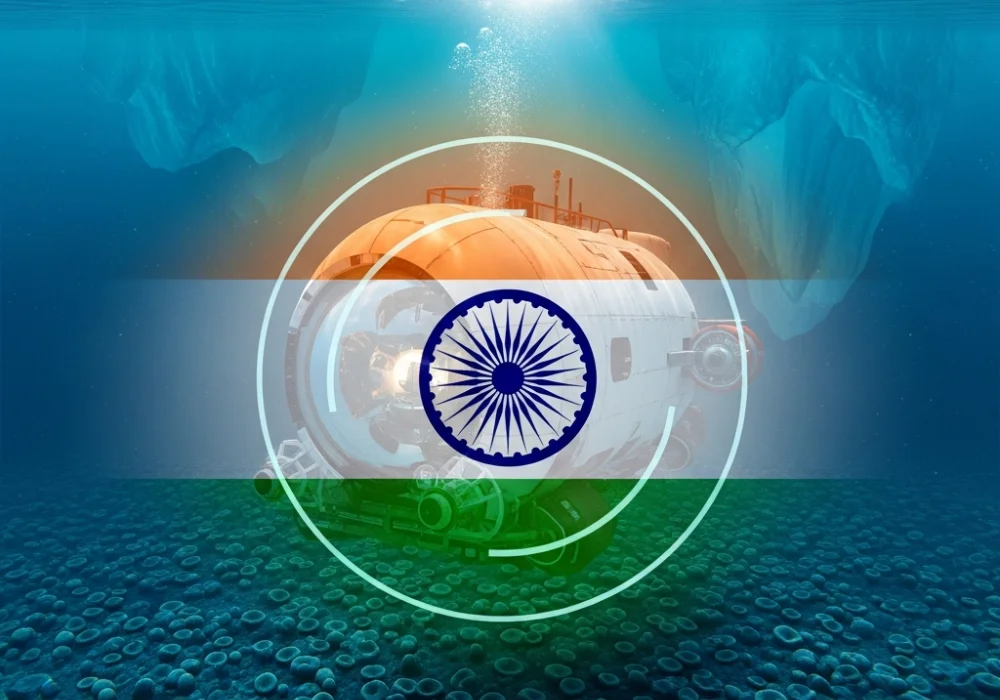
On May 8, 2026, the Ministry of Earth Sciences (MoES) officially launched the second phase of India’s Deep Ocean Mission, titled “Mission Ocean 2.0”. Building on the foundation laid in 2021, this phase focuses on the sustainable extraction of polymetallic nodules and the mapping of thermal vents in the Central Indian Ocean Basin.
Key Highlights:
- Submersible Excellence: The indigenously developed Matsya-12000 is scheduled for its first deep-sea trial at 9,000 meters, aiming to break the previous record set by Matsya-6000.
- Ocean Thermal Energy: Deployment of three new OTEC (Ocean Thermal Energy Conversion) plants off the coast of Lakshadweep to provide carbon-neutral power.
- Marine Bio-prospecting: Research into deep-sea microbes for pharmaceutical applications, specifically targeting drug-resistant bacteria.
Significance for UPSC: This aligns with Sustainable Development Goal (SDG) 14 – Life Below Water. For the Mains GS-III paper, understanding the Blue Economy’s contribution to India’s $10 Trillion economy target is crucial.
💡 Click to Reveal: What is the Blue Economy?
The Blue Economy refers to the sustainable use of ocean resources for economic growth, improved livelihoods, and jobs while preserving the health of the ocean ecosystem. It encompasses fisheries, maritime transport, renewable energy, and waste management.
2. India’s Arctic Strategy and the Arctic Council
In a significant diplomatic move today, the Arctic Council held a special observer-level meeting where India proposed the “Arctic-Monsoon Correlation Framework”. India has been an observer of the Arctic Council since 2013, maintaining the Himadri station at Svalbard, Norway.
The Arctic is warming four times faster than the global average. India’s interest isn’t merely scientific; it is existential. The melting of Arctic ice directly impacts the intensity and predictability of the Indian Summer Monsoon (ISM), which is the backbone of Indian agriculture.
Why it Matters:
India is advocating for the “Common Heritage of Mankind” principle in the Arctic, similar to the Antarctic Treaty. This prevents the region from becoming a site for uninhibited commercial exploitation by polar nations while ensuring scientific research remains open and collaborative.
💡 Click to Reveal: India’s Arctic Research Stations
India’s primary research station in the Arctic is Himadri (located at Ny-Ålesund, Svalbard). Additionally, India has a multi-sensor moored observatory called IndARC in the Kongsfjorden fjord, which has been operational since 2014.
3. Economy: RBI’s Digital Rupee (CBDC) Expansion
The Reserve Bank of India (RBI) announced today that the Central Bank Digital Currency (CBDC-Retail) has crossed the 50 million user milestone. Furthermore, the RBI is introducing “Programmable Payments” within the Digital Rupee ecosystem.
Programmability allows the government to ensure that subsidies provided for specific purposes (like fertilizers or education) are spent only on those specific categories. This is a revolutionary step in reducing leakages in the Direct Benefit Transfer (DBT) mechanism.
From a competitive exam perspective, students should differentiate between UPI (a payment protocol) and CBDC (digital legal tender). While UPI is a medium of exchange for commercial bank money, CBDC is a liability on the RBI’s balance sheet itself.
4. Science & Tech: The Rise of “Green Hydrogen” Corridors
The Government of India has identified five Green Hydrogen Corridors connecting major industrial hubs to ports. This initiative aims to produce 5 million metric tonnes (MMT) of green hydrogen by 2030. Today’s development includes a partnership with Japan for fuel-cell technology exchange.
Green hydrogen is produced via electrolysis of water using renewable energy. Unlike “Grey Hydrogen” (produced from natural gas) or “Blue Hydrogen” (natural gas with carbon capture), Green Hydrogen has zero carbon footprint.
💡 Click to Reveal: Types of Hydrogen
- Brown/Black: From Coal gasification.
- Grey: From Natural Gas (CO2 released).
- Blue: From Natural Gas (CO2 captured).
- Green: From Renewable energy electrolysis.
5. Environment: The 2026 State of Forest Report (SFR) Trends
Preliminary data from the upcoming biennial State of Forest Report suggests a 1.2% increase in India’s total forest and tree cover compared to 2024. However, the quality of forests—specifically the conversion of “Very Dense Forests” to “Moderately Dense Forests”—remains a concern for ecologists.
For state-level exams like Kerala PSC, it is important to note that the Western Ghats continue to face fragmentation threats, despite an increase in social forestry in the plains. The 2026 report emphasizes “Miyawaki Forests” as a key tool for urban afforestation.
📝 Interactive Daily Quiz: 08-05-2026
Test your knowledge with these 10 high-yield questions based on today’s analysis.
Q1. What is the primary focus of the newly launched ‘Mission Ocean 2.0’?
- A) Ocean surface cleanup from plastics
- B) Deep-sea mining and thermal vent mapping
- C) Coastal defense and naval expansion
- D) International coral reef conservation
✅ Click to Reveal Answer & Deep Explanation
Correct Answer: B) Deep-sea mining and thermal vent mapping
Mission Ocean 2.0 specifically targets the Central Indian Ocean Basin to explore polymetallic nodules and hydrothermal vents. While surface cleanup is part of broader environmental goals, this mission is an extension of the Deep Ocean Mission focusing on exploration and resource identification at depths exceeding 6000 meters.
Q2. Where is India’s Arctic research station ‘Himadri’ located?
- A) Antarctica
- B) Greenland
- C) Svalbard, Norway
- D) Iceland
✅ Click to Reveal Answer & Deep Explanation
Correct Answer: C) Svalbard, Norway
Himadri is India’s first permanent Arctic research station, located at Spitsbergen, Svalbard, Norway. It was inaugurated in 2008 and is operated by the National Centre for Polar and Ocean Research (NCPOR). Do not confuse it with Bharati or Maitri, which are located in Antarctica.
Q3. Which characteristic differentiates Green Hydrogen from Blue Hydrogen?
- A) Green Hydrogen is produced using coal
- B) Blue Hydrogen uses electrolysis of water
- C) Green Hydrogen is produced via renewable energy; Blue uses fossil fuels with carbon capture
- D) There is no difference; both are carbon-neutral
✅ Click to Reveal Answer & Deep Explanation
Correct Answer: C) Green Hydrogen is produced via renewable energy; Blue uses fossil fuels with carbon capture
Green Hydrogen is the cleanest form because it uses renewable energy (solar/wind) to power the electrolysis of water. Blue Hydrogen uses natural gas but captures the resultant CO2 emissions (CCS). Grey hydrogen is the most common but releases all CO2 into the atmosphere.
Q4. What is the “Programmable Payments” feature in Digital Rupee?
- A) A way to schedule recurring payments like Netflix
- B) Restricting funds to be used only for specific purposes/merchants
- C) A method to earn interest on digital cash
- D) An AI-driven investment bot within the wallet
✅ Click to Reveal Answer & Deep Explanation
Correct Answer: B) Restricting funds to be used only for specific purposes/merchants
Programmability in CBDC allows the issuer (like the government) to embed logic into the money. For example, ‘Education Tokens’ could only be used at schools or for buying books. This ensures that government subsidies are not diverted to other expenditures.
Q5. Which technique is increasingly used for ‘Urban Afforestation’ as per the latest environmental trends?
- A) Terrace Farming
- B) Miyawaki Method
- C) Hydroponics
- D) Jhum Cultivation
✅ Click to Reveal Answer & Deep Explanation
Correct Answer: B) Miyawaki Method
Developed by Japanese botanist Akira Miyawaki, this method involves planting dozens of native species in a small area, making them grow much faster and more densely than traditional plantations. It is ideal for creating “urban forests” in space-constrained cities.
Q6. India is an ‘Observer’ of the Arctic Council since which year?
- A) 2008
- B) 2013
- C) 2015
- D) 2021
✅ Click to Reveal Answer & Deep Explanation
Correct Answer: B) 2013
India was granted the ‘Observer’ status to the Arctic Council in May 2013 during the Kiruna Ministerial Meeting. This status allows India to participate in the Council’s working groups but not to vote on policy decisions.
Q7. What is the deep-sea submersible being developed for the Deep Ocean Mission?
- A) Varuna-5000
- B) Matsya-6000
- C) Samudra-1000
- D) Jal-Shakti
✅ Click to Reveal Answer & Deep Explanation
Correct Answer: B) Matsya-6000
Matsya-6000 is a manned submersible being developed by the National Institute of Ocean Technology (NIOT). It is designed to carry three humans to a depth of 6,000 meters for deep-sea resource exploration. (Note: Matsya-12000 mentioned in the analysis is the upcoming successor project).
Q8. Which ministry is the nodal agency for the ‘Deep Ocean Mission’?
- A) Ministry of Defense
- B) Ministry of Environment, Forest and Climate Change
- C) Ministry of Earth Sciences
- D) Ministry of Science and Technology
✅ Click to Reveal Answer & Deep Explanation
Correct Answer: C) Ministry of Earth Sciences
The Ministry of Earth Sciences (MoES) is the nodal ministry for implementing the Deep Ocean Mission. It collaborates with other agencies like ISRO and DRDO for specific technological components, but the primary administrative and financial control lies with MoES.
Q9. The ‘IndARC’ observatory is located in which Arctic fjord?
- A) Sognefjord
- B) Kongsfjorden
- C) Hardangerfjord
- D) Disko Bay
✅ Click to Reveal Answer & Deep Explanation
Correct Answer: B) Kongsfjorden
IndARC is India’s first multi-sensor moored observatory in the Arctic region, deployed in 2014. It is located in the Kongsfjorden fjord, Svalbard, midway between Norway and the North Pole. It helps in monitoring the impact of climate change on the Arctic ecosystem.
Q10. Sustainable Development Goal (SDG) 14 refers to:
- A) Zero Hunger
- B) Affordable and Clean Energy
- C) Life Below Water
- D) Climate Action
✅ Click to Reveal Answer & Deep Explanation
Correct Answer: C) Life Below Water
SDG 14 aims to conserve and sustainably use the oceans, seas, and marine resources for sustainable development. This goal is directly linked to India’s Deep Ocean Mission and Blue Economy policies.
Need Guidance for Your Exam Journey?
Our experts at MyEntrance are here to help you crack UPSC, SSC, and PSC exams with personalized study plans and high-quality mock tests.
💬 Chat with our Experts on WhatsApp (+91 9526806124)




