
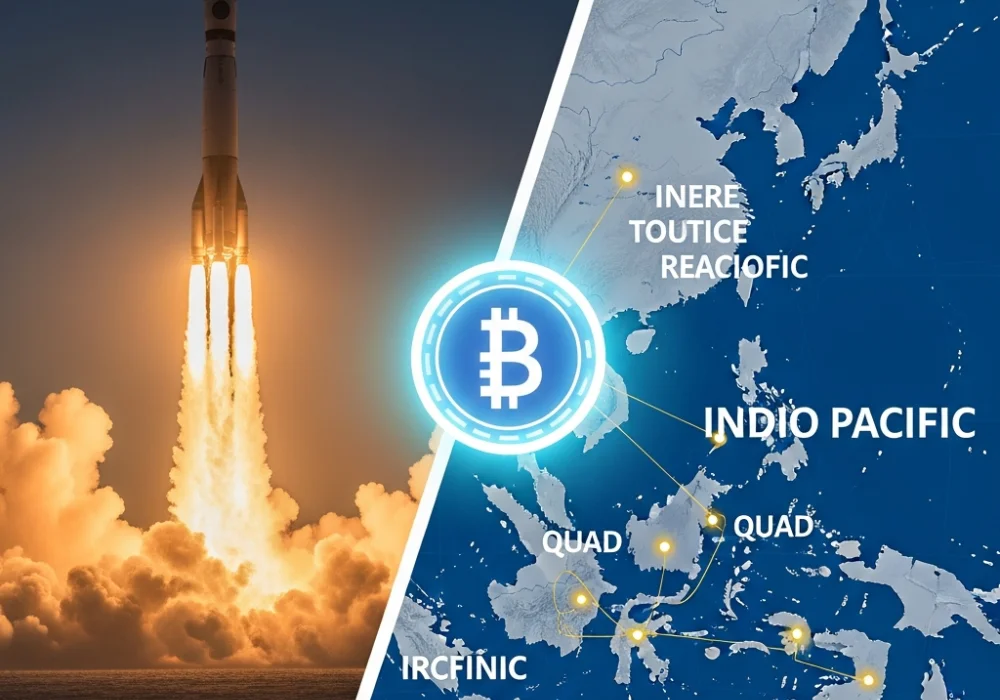
Introduction: The Importance of May 06, 2026
Welcome to the comprehensive daily current affairs analysis on MyEntrance.in. Today, May 6, 2026, marks a significant juncture in India’s journey toward technological self-reliance and geopolitical influence. From the finalized preparations for ISRO’s Gaganyaan-3 milestones to the crucial shifts in the Reserve Bank of India’s digital currency framework, today’s news cycle is packed with information essential for aspirants of UPSC, SSC, and state PSC exams. Understanding these events is not merely about memorizing facts; it is about grasping the underlying socio-economic and strategic shifts that shape the nation and the world. In this edition, we provide deep-context analysis, historical backgrounds, and the critical significance of each major news item to ensure you stay ahead in your competitive exam preparation.
1. Space Exploration: Gaganyaan-3 and the Roadmap to 2027
On May 6, 2026, the Indian Space Research Organisation (ISRO) successfully completed the high-altitude test firing of the human-rated LVM3 rocket engines for the Gaganyaan-3 mission. This mission is the final unmanned precursor before India sends its first ‘Gaganauts’ into space in early 2027. The Gaganyaan program aims to demonstrate India’s indigenous capability to undertake human spaceflight to Low Earth Orbit (LEO).
Background & Context: The program was initially announced in 2018. Following the challenges of the previous years, ISRO has adopted a modular approach, launching two unmanned missions to test safety protocols. Gaganyaan-1 and 2 focused on orbital reentry and the ‘Vyommitra’ humanoid robot. Gaganyaan-3 is the final ‘Human-Rating’ phase where every system is certified for biological safety. This involves the Crew Escape System (CES) and the Environmental Control and Life Support System (ECLSS).
Significance: If successful, India will become the fourth nation in the world to launch a manned space mission independently, after the USA, Russia, and China. For UPSC aspirants, this highlights India’s growing prowess in the ‘Global Space Economy,’ which is expected to reach $1 trillion by 2040. It also underscores the importance of the ‘Gaganyaan-3’ mission in testing the reliability of the Launch Vehicle Mark-3 (LVM3).
💡 Click to Reveal: What is Human-Rating?
Human-rating refers to the certification of a spacecraft and launch vehicle as safe to transport humans. This involves a rigorous process of ensuring redundancy in critical systems, so that even if one component fails, the crew remains safe. For LVM3, this meant upgrading the engine systems and structural integrity of the rocket used previously for the Chandrayaan missions.
2. Economy: RBI’s CBDC 2.0 and Monetary Policy Review
The Reserve Bank of India (RBI) today released its quarterly monetary policy update, maintaining the Repo Rate at 6.25% while announcing the official rollout of ‘Digital Rupee (Retail) 2.0’. This updated version of the Central Bank Digital Currency (CBDC) now includes offline transaction capabilities and programmable features for government subsidies.
Analysis: The decision to keep the repo rate unchanged reflects a cautious approach toward inflation, which currently hovers near the upper tolerance limit of 5.8%. The RBI’s focus is on ‘withdrawal of accommodation’ to ensure that inflation aligns with the 4% target over the long term. The ‘CBDC 2.0’ is a revolutionary step toward a cashless economy. By making the digital rupee programmable, the government can ensure that subsidies, such as those for fertilizers or education, are used strictly for their intended purposes.
Strategic Importance: For SSC and Banking aspirants, understanding the difference between the ‘Retail CBDC’ and ‘Wholesale CBDC’ is crucial. Retail CBDC is meant for the general public, while Wholesale is for inter-bank settlements. The introduction of offline payments solves a major hurdle in rural India where internet connectivity is intermittent. This moves India closer to achieving full financial inclusion and reducing the costs associated with physical currency management.
3. International Relations: Quad Summit 2026 in Tokyo
Leaders of the Quadrilateral Security Dialogue (Quad)—comprising India, the USA, Japan, and Australia—met in Tokyo today. The primary focus of the 2026 Summit was the ‘Indo-Pacific Undersea Cable Initiative’ and the joint development of ‘Ethical AI Standards’.
Context: The Quad has evolved from a security-centric group to a multifaceted partnership focusing on technology, climate, and health. The new undersea cable initiative is designed to provide secure and resilient telecommunications infrastructure across the Indo-Pacific, countering the dominant influence of state-backed entities from other regions. Prime Minister Narendra Modi emphasized ‘Human-Centric AI,’ advocating for global regulations that prevent the misuse of deepfakes and algorithmic bias.
Relevance for Exams: This is a high-priority topic for GS Paper II (International Relations). Aspirants should note the shift from ‘hard security’ to ‘economic and digital security’ within the Quad framework. The ‘Malabar Exercise’ remains the military backbone, but the ‘Quad Investors Network’ is now the new economic pillar aiming to diversify supply chains away from China.
4. Environment: India’s Progress on the Green Hydrogen Mission
In a major boost to the National Green Hydrogen Mission, the Ministry of New and Renewable Energy (MNRE) announced today that India has achieved a production capacity of 1 Million Tonnes Per Annum (MTPA) ahead of the 2027 interim target. This announcement coincides with the Earth Day follow-up reports indicating a significant reduction in India’s carbon intensity.
Deep Dive: Green hydrogen is produced through the electrolysis of water using renewable energy. It is considered the ‘fuel of the future’ because it emits only water vapor when burned. India’s target is to reach 5 MTPA by 2030. The success mentioned today is largely attributed to the ‘SIGHT’ (Strategic Interventions for Green Hydrogen Transition) program, which provides financial incentives for the manufacturing of electrolyzers.
Significance: This achievement positions India as a global export hub for green energy. For Kerala PSC aspirants, it is worth noting that the Kochi-Vizhinjam Green Hydrogen Hub is a key contributor to these national figures. Decarbonizing heavy industries like steel and refineries is the ultimate goal, helping India reach its ‘Net Zero’ target by 2070.
5. Kerala State Affairs: Vizhinjam Port Phase 2 Operationalization
The Kerala Government has announced that Phase 2 of the Vizhinjam International Transshipment Deepwater Multipurpose Seaport will become fully operational by the end of May 2026. This port is expected to compete with major international hubs like Colombo and Singapore.
Detailed Analysis: Vizhinjam is unique because of its natural depth of 18 to 20 meters, which allows the world’s largest ‘Ultra Large Container Vessels’ to dock without the need for extensive dredging. This significantly reduces the cost of operation. Phase 2 focuses on automated stacking cranes and an expanded 800-meter berth. This project is a Public-Private Partnership (PPP) model involving the Government of Kerala and Adani Vizhinjam Port Private limited.
Competitive Exam Angle: For Kerala PSC, aspirants must remember the geographical significance—Vizhinjam is located just 10 nautical miles from the international shipping route. It is poised to handle the ‘Transshipment’ traffic that currently goes to foreign ports, saving India billions in foreign exchange. It also boosts the ‘Blue Economy’ and creates thousands of local jobs in the logistics sector.
Interactive Mock Quiz: May 06, 2026
Test your knowledge with these 10 high-quality MCQs based on today’s analysis.
Q1. Which launch vehicle is being specifically ‘human-rated’ for ISRO’s Gaganyaan missions?
- A) PSLV-C58
- B) GSLV Mk II
- C) LVM3 (Launch Vehicle Mark 3)
- D) SSLV-D3
✅ Click to Reveal Answer & Deep Explanation
Correct Answer: C) LVM3 (Launch Vehicle Mark 3)
The LVM3, formerly known as GSLV Mk III, is India’s most powerful rocket. For the Gaganyaan mission, it is being ‘human-rated,’ which involves enhancing the reliability of the engines and adding a Crew Escape System (CES). The PSLV is used for lighter satellites, and the SSLV is for small satellites, making them unsuitable for heavy crewed modules.
Q2. What is the current ‘Repo Rate’ as per the RBI’s May 2026 policy review?
- A) 4.50%
- B) 6.25%
- C) 7.15%
- D) 5.80%
✅ Click to Reveal Answer & Deep Explanation
Correct Answer: B) 6.25%
The RBI Monetary Policy Committee (MPC) decided to keep the repo rate at 6.25% to balance economic growth with inflation control. The repo rate is the rate at which the central bank lends money to commercial banks. A stable rate suggests that the RBI believes current inflation is under control but requires a ‘watchful’ stance.
Q3. Which of the following is a new feature of ‘Digital Rupee (Retail) 2.0’?
- A) Compulsory conversion of all cash
- B) Offline transaction capabilities
- C) Interest payments on digital balance
- D) Use only for international trade
✅ Click to Reveal Answer & Deep Explanation
Correct Answer: B) Offline transaction capabilities
CBDC 2.0 introduces ‘Offline capabilities,’ allowing users to make transactions even without an active internet connection. This is vital for deep rural penetration and ensuring the digital rupee mimics the properties of physical cash as much as possible. It does not earn interest, as it is a direct replacement for currency notes.
Q4. The 2026 Quad Summit was hosted by which country?
- A) India
- B) Australia
- C) Japan
- D) USA
✅ Click to Reveal Answer & Deep Explanation
Correct Answer: C) Japan
The 2026 Quad Summit took place in Tokyo, Japan. The venue usually rotates among the four member nations. The focus in Tokyo was on technological collaboration and maritime security, particularly through the lens of undersea cable infrastructure and AI ethics.
Q5. India aims to reach a Green Hydrogen production capacity of 5 MTPA by which year?
- A) 2027
- B) 2030
- C) 2047
- D) 2070
✅ Click to Reveal Answer & Deep Explanation
Correct Answer: B) 2030
The National Green Hydrogen Mission has set a target of achieving 5 Million Tonnes Per Annum (MTPA) by 2030. Reaching 1 MTPA by May 2026 is an early milestone that shows the mission is ahead of schedule. 2070 is the year India aims to reach Net Zero emissions overall.
Q6. What is the unique geographic advantage of the Vizhinjam Port in Kerala?
- A) It is located in a fresh-water lake
- B) Natural depth of 18-20 meters
- C) It is the only port in the Arctic region
- D) It connects directly to the Ganges river
✅ Click to Reveal Answer & Deep Explanation
Correct Answer: B) Natural depth of 18-20 meters
Vizhinjam Port has a natural depth of 18-20 meters very close to the shore. This is significant because most other Indian ports require expensive dredging to accommodate large vessels. This depth allows ‘Mother Ships’ (Ultra Large Container Vessels) to dock, making it a viable global transshipment hub.
Q7. The ‘SIGHT’ program is associated with which Indian mission?
- A) Digital India Mission
- B) National Green Hydrogen Mission
- C) Mission Karmayogi
- D) Ayushman Bharat
✅ Click to Reveal Answer & Deep Explanation
Correct Answer: B) National Green Hydrogen Mission
The Strategic Interventions for Green Hydrogen Transition (SIGHT) is a sub-component of the National Green Hydrogen Mission. It provides financial incentives for the domestic manufacturing of electrolyzers and for the production of green hydrogen itself, helping India achieve cost-parity with fossil fuels.
Q8. Which robot is used by ISRO to simulate human behavior in space?
- A) Pragyan
- B) Vikram
- C) Vyommitra
- D) Sophia
✅ Click to Reveal Answer & Deep Explanation
Correct Answer: C) Vyommitra
Vyommitra is a female-looking humanoid robot developed by ISRO for the unmanned Gaganyaan missions. She is designed to perform switch panel operations, monitor capsule parameters, and interact with the ground station, simulating the tasks a human astronaut would perform.
Q9. The ‘withdrawal of accommodation’ stance in monetary policy refers to:
- A) Printing more money
- B) Increasing the liquidity in the system
- C) Reducing money supply to control inflation
- D) Reducing interest rates to 0%
✅ Click to Reveal Answer & Deep Explanation
Correct Answer: C) Reducing money supply to control inflation
A ‘withdrawal of accommodation’ stance means the central bank is aiming to reduce the excess liquidity (money supply) in the market. This is usually done to ensure that high demand doesn’t drive prices up, thus controlling inflation. It is the opposite of an ‘accommodative’ stance where interest rates are lowered to boost the economy.
Q10. Which port is India aiming to replace as a primary transshipment hub via Vizhinjam?
- A) Chabahar Port
- B) Gwadar Port
- C) Colombo Port
- D) Rotterdam Port
✅ Click to Reveal Answer & Deep Explanation
Correct Answer: C) Colombo Port
Currently, a massive portion of India’s transshipment cargo (cargo transferred between large and small ships) is handled at Colombo Port in Sri Lanka. By developing Vizhinjam, India aims to bring this traffic to its own shores, reducing costs for exporters and importers and enhancing strategic control over its maritime trade.
Need Personalized Guidance?
Preparing for UPSC, SSC, or Kerala PSC can be challenging. Our experts at MyEntrance are here to help you with free study materials, mock tests, and doubt-clearing sessions.
💬 Chat with our Experts on WhatsApp (+91 9526806124)




