
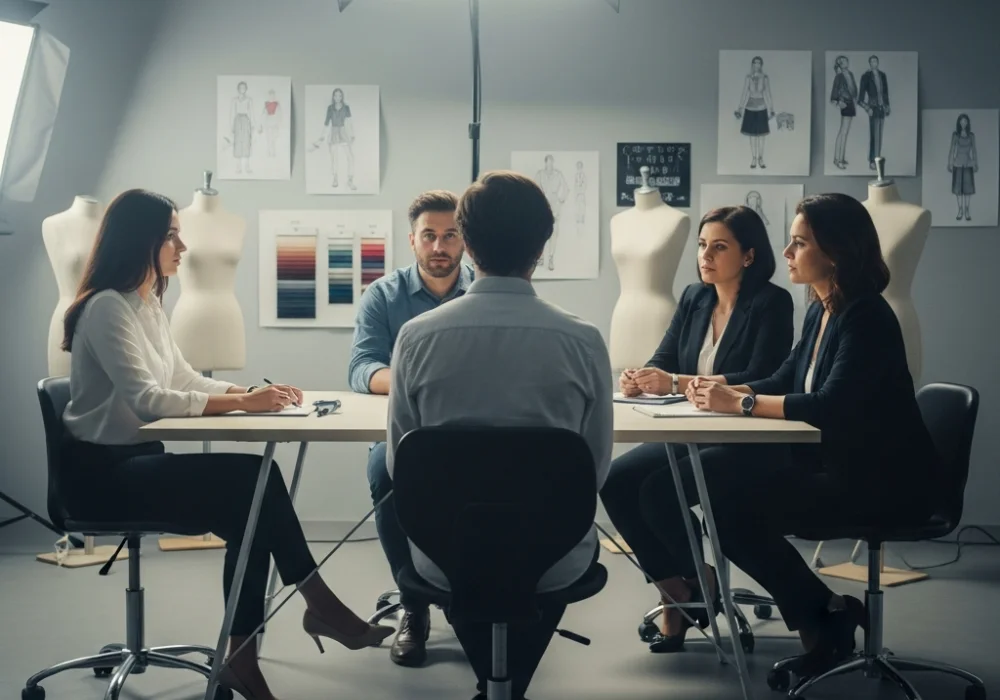
Introduction: The Ethical Battlefield of Modern Design
Welcome to the ultimate masterclass for your NIFT Personal Interview (PI). As an elite admission panelist, I have seen thousands of candidates struggle when the conversation shifts from their portfolio to the gritty, real-world ethics of the industry. The most common ‘trap’ question in the current admission cycle revolves around the tension between Fast Fashion and Slow Fashion. In a high-pressure environment, examiners aren’t just looking for your opinion; they are testing your ability to handle complexity, your awareness of global supply chains, and your potential as a future leader in the Indian fashion landscape. This guide, curated for www.myentrance.in, will provide you with the intellectual ammunition needed to navigate these situational ethics questions with grace and authority.
💡 Pro-Tip: Why this topic matters now
NIFT looks for candidates who understand that fashion is no longer just about aesthetics; it is about sustainability and social responsibility. Being ‘neutral’ is often seen as being ‘uninformed’. You must take a stance while acknowledging the multifaceted nature of the problem.
What the Examiners are Secretly Looking For
When we ask a question like, ‘Is it unethical for a student on a budget to buy from a fast-fashion giant?’, we aren’t looking for a ‘Yes’ or ‘No’. We are evaluating your performance based on four distinct pillars:
- Industry Awareness: Do you know the environmental impact of 2,000 liters of water used for one cotton t-shirt? Do you know about the Rana Plaza incident or the rise of ‘Ultra-Fast Fashion’?
- Empathy and Inclusivity: Do you understand the economic constraints of the average consumer? Can you talk about fashion without sounding elitist?
- Critical Thinking: Can you identify ‘Greenwashing’? Can you distinguish between a brand’s marketing claims and their actual supply chain practices?
- Solution-Oriented Mindset: Are you just identifying problems, or are you proposing innovative solutions like circularity, upcycling, or textile tech?
The panel wants to see if you have the emotional intelligence to balance your passion for design with the harsh realities of global capitalism. We value a student who can admit that while slow fashion is the goal, systemic change is required to make it accessible to everyone.
The Core Conflict: Understanding the Spectrum
Before we dive into the mock interview, let’s define the terms of this ethical debate. Fast Fashion is characterized by high-volume, low-cost production that mimics catwalk trends. It provides democratization of fashion but at a heavy cost to labor rights and the planet. Slow Fashion emphasizes quality, longevity, and ethical manufacturing, but often remains price-prohibitive for the masses.
Key Arguments for Slow Fashion:
- Reduced carbon footprint and waste.
- Fair wages and safe working conditions for artisans and laborers.
- Preservation of traditional crafts and handloom techniques (vital for NIFT candidates).
The Reality of Fast Fashion:
- Accessibility for lower-income groups.
- Rapid job creation in developing economies.
- Efficiency in supply chain logistics.
Your goal in the interview is to bridge these two worlds. You must demonstrate that you respect the craft of slow fashion while understanding the scale of fast fashion.
💡 Click to Reveal: The ‘Golden Middle’ Strategy
Always mention ‘Circular Fashion’. Instead of choosing one over the other, talk about how fast fashion brands can adopt circular models—like take-back programs and using recycled fibers—to mitigate their impact.
Mock Interview Transcript: The ‘Hot Seat’ Scenario
Panelist (Mr. Khanna): “Candidate, I see you’re wearing a very stylish jacket. If I told you that jacket was made in a sweatshop using child labor, but it’s the only way a student like you can afford to look ‘on-trend’, would you still wear it? Or would you choose to be out of fashion and ethical?”
Candidate: “That is a very challenging but vital question, sir. To be honest, the choice shouldn’t have to be between being ‘on-trend’ and being ‘ethical’. If I knew for a fact that this garment was the product of exploitation, my conscience would not allow me to wear it, regardless of the price. However, I believe the burden of ethics shouldn’t fall solely on the consumer’s wallet.”
Panelist (Ms. Iyer): “Oh? Then who is responsible? The brands? They are just giving people what they want—cheap clothes.”
Candidate: “It’s a shared responsibility, ma’am. Brands have the capital to innovate. As a future designer at NIFT, I want to explore how we can use technology to make sustainable fabrics cheaper. Also, we need to redefine what ‘trendy’ means. If we move toward a ‘capsule wardrobe’ culture where we value quality over quantity, the demand for sweatshop-produced garments will naturally decline. Even as a student on a budget, I can choose to buy second-hand or support local thrift stores, which is both affordable and ethical.”
Panelist (Mr. Khanna): “But isn’t ‘Slow Fashion’ just for the rich? Are you saying NIFT should only cater to the elite?”
Candidate: “Not at all, sir. In fact, India has a long history of ‘Slow Fashion’ that was inherently affordable—our handloom sector. My goal at NIFT is to learn how to scale these traditional, sustainable practices so that ‘Made in India’ slow fashion becomes a viable, affordable alternative to international fast-fashion brands. I want to work on making ethics inclusive, not exclusive.”
Panelist Feedback & Analysis
Why did this candidate succeed? Let’s break down the mechanics of their response:
- Directness: They didn’t dodge the question about the ‘sweatshop jacket’. They addressed the moral discomfort immediately.
- Pivot to Professionalism: They linked the answer back to their future education at NIFT. This shows they are thinking about their career goals, not just their personal wardrobe.
- Cultural Context: By mentioning the Indian handloom sector, they showed they understand the local industry’s strengths.
- Nuance: They acknowledged that ‘Slow Fashion’ currently feels elitist but proposed a solution (innovation and scaling) to fix it.
Common Mistake to Avoid: Don’t just ‘bash’ fast fashion. Many NIFT graduates end up working for companies like Reliance, Aditya Birla, or international brands like H&M and Zara. If you call them ‘evil’, you are effectively saying you don’t want to work in the largest sector of the industry. Instead, talk about how you want to transform those companies from the inside.
The ‘Ethics Checklist’ for Your PI
Before you walk into that interview room, ensure you have formulated thoughts on these five situational dilemmas:
- The Affordability Trap: How to defend sustainable choices to someone with low income.
- The Greenwashing Debate: How to spot a brand that is ‘pretending’ to be eco-friendly.
- The Cultural Appropriation vs. Appreciation: Is it ethical to use tribal prints in fast fashion?
- The Waste Management Crisis: What happens to unsold inventory? (Mention upcycling here!)
- The Personal Responsibility: What are YOU doing personally to be a conscious consumer? (Be honest!)
💡 Quick Quiz: Test Your Ethical Logic
Question: A brand uses 100% organic cotton but pays its workers below minimum wage. Is this a sustainable brand?
Answer: No. Sustainability rests on three pillars: Environmental, Social, and Economic. If the ‘Social’ pillar (labor rights) is broken, the brand is not sustainable. Use this ‘Triple Bottom Line’ logic in your interview!
Conclusion: Your Voice as a Designer
The NIFT Personal Interview is your chance to show the panel that you are more than just a person who can draw pretty clothes. You are a thinker. You are a problem-solver. By mastering the debate between fast and slow fashion, you demonstrate that you are ready for the rigors of the industry. Remember, the panel isn’t looking for the ‘right’ answer—they are looking for a ‘reasoned’ answer. Be bold, be empathetic, and stay informed on current trends. You’ve got this!
Ready to Ace Your NIFT Interview?
Don’t leave your dream to chance. Get expert feedback on your portfolio and participate in realistic mock PIs with our seasoned faculty.
💬 Chat with our Experts on WhatsApp (+91 9526806124)




