
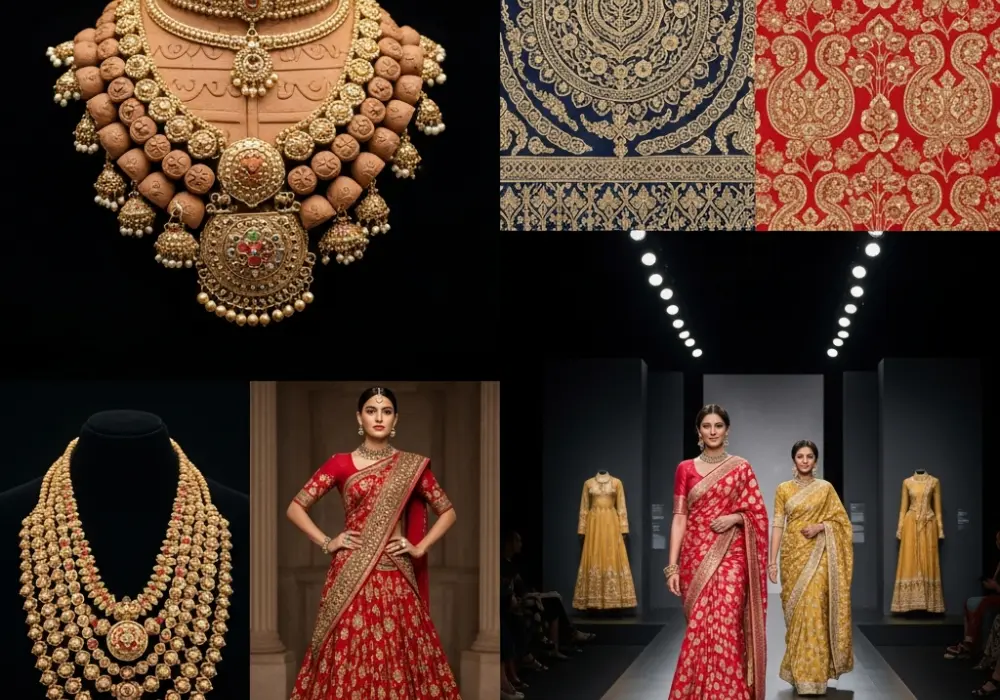
Mastering Indian Fashion History: A Vital Guide for NIFT Success
For any NIFT (National Institute of Fashion Technology) aspirant, Indian Fashion History is not just a subject but the very foundation of the Creative Ability Test (CAT) and the General Ability Test (GAT). Understanding how garments evolved, how textiles were traded, and how cultural shifts influenced silhouettes is essential for answering questions on traditional costumes, textile identification, and historical inspirations. The history of Indian clothing is a tapestry woven with threads of diverse cultures, ranging from the indigenous innovations of the Indus Valley to the opulent influences of the Mughal courts and the transformative impact of British colonialism. This guide provides a comprehensive interactive timeline and a deep dive into the eras that shaped India’s sartorial legacy.
To excel in the NIFT exam, you must recognize that fashion history often repeats or reinvents itself. For instance, the ‘Anarkali’ silhouette we see today has its roots in the Mughal era, while the modern ‘Sari’ drape has been influenced by Victorian sensibilities during the British Raj. By studying this timeline, you will gain the visual vocabulary needed to design contemporary outfits inspired by the past—a frequent requirement in NIFT’s situational tests and design portfolios. Let us explore the chronological milestones that every design student must memorize.
3300 – 1300 BCE
The Indus Valley Civilization
The origins of Indian textiles lie in the Harappan and Mohenjo-Daro civilizations. Evidence from terracotta figurines like the ‘Dancing Girl’ and the ‘Priest-King’ suggests the use of draped garments. This era saw the first cultivation and weaving of cotton (Karpasa). Men often wore a cloth wrapped around the waist, similar to a dhoti, while women wore short skirts and elaborate jewelry made of beads, shells, and gold. For NIFT, remember that spindle whorls found at these sites prove that spinning and weaving were advanced crafts even 5,000 years ago.
1500 – 500 BCE
The Vedic Period
During the Vedic age, garments were primarily unstitched. The three main components were the Antariya (lower garment), the Uttariya (veil or wrap for the upper body), and the Kayabandh (a waist sash). Gold and silver threads were used to embellish garments for the nobility. This period is crucial for NIFT students to understand the concept of ‘Draping’ before ‘Tailoring’ became prevalent in India. The evolution of the sacred thread and the importance of dye colors like saffron and indigo also took root here.
322 – 185 BCE
Mauryan and Sunga Dynasties
This era witnessed a refinement in textile production. Fine muslins and silk became popular. Sculptures from Sanchi and Bharhut show women wearing the ‘Stanapatta’ (a chest band). The attire remained mostly unstitched but became more ornate with the use of ‘Patka’ (decorative sashes). For the exam, note that this period highlights the use of elaborate headgears and heavy jewelry, signifying social status and regional identity.
1st – 3rd Century CE
The Kushan Period
The Kushans brought Central Asian influences to Indian attire. This period is pivotal for the introduction of ‘Stitched Garments’. For the first time, we see depictions of trousers, long tunics, and heavy quilted coats. The Gandhara and Mathura schools of art provide visual evidence of these changes. NIFT students should identify this as the period when boots and tailored sleeves first appeared in the Indian subcontinent, marking a significant shift from purely draped styles.
320 – 550 CE
The Gupta Empire (Golden Age)
Often called the Golden Age of India, the Gupta period saw a peak in artistic expression. Clothing became highly sophisticated, featuring delicate embroidery and diaphanous fabrics. The Ajanta cave paintings serve as a primary source, showing intricate patterns on garments. The ‘Ghagra’ and ‘Choli’ began to take their proto-forms during this time. For design students, studying Gupta motifs like the ‘Padma’ (lotus) and ‘Hamsa’ (swan) is essential as they are frequently used in textile design questions.
1526 – 1857 CE
The Mughal Era
The Mughals revolutionized Indian fashion by blending Persian aesthetics with local traditions. Key garments include the Jama (a long-sleeved coat), Angarkha, Paijama (trousers), and the iconic Peshwaz. This era introduced Zardozi (gold embroidery) and Chikankari to the mainstream. Fabric choices shifted towards heavy brocades, velvets, and the finest Malmal. NIFT aspirants must study the Mughal influence on jewelry, specifically the Kundan and Meenakari techniques, as they are staples in Indian bridal wear even today.
1858 – 1947 CE
The Colonial Era & Swadeshi Movement
British rule introduced Western silhouettes like the blouse and the petticoat, which became permanent companions to the Sari. The Parsi Gara embroidery and the ‘Nivi’ style of sari draping (popularized by Jnanadanandini Devi) emerged during this time. Simultaneously, the Swadeshi movement made ‘Khadi’ a symbol of national identity and resistance. For the NIFT exam, understanding the political power of Khadi and the Victorian influence on Indian sleeves and necklines is crucial for socio-cultural fashion questions.
1950s – 1970s
Post-Independence & Bollywood Glamour
Following independence, there was a concerted effort to revive Indian handlooms. Designers like Kamaladevi Chattopadhyay played a key role. However, it was Bollywood that dictated trends. The 1960s saw the ‘Mumtaz’ style sari and the tight ‘Sadhana’ cut churidars. In the 70s, bell-bottoms and psychedelic prints entered the scene. For GAT preparation, focus on the establishment of the ‘Handloom Board’ and the rise of synthetic fabrics like polyester in India during this period.
1980s – 1990s
The Birth of Indian Couture
The late 80s were revolutionary with the establishment of NIFT (1986). This era saw the rise of the first generation of professional Indian designers like Ritu Kumar, Rohit Khosla, and Satya Paul. Fashion moved from being a tailor-made commodity to a designer-labeled industry. The 1990s liberalization opened doors for global brands, but Indian designers responded by elevating traditional textiles into ‘Haute Couture’. Pay attention to the transition from ‘Boutique’ to ‘Designer Brand’ for your exam interviews.
2000s – Present
The Sustainable & Digital Future
Modern Indian fashion is defined by ‘Global Fusion’ and ‘Sustainable Luxury’. We see a massive revival of crafts like Ajrakh, Kalamkari, and Ikat in contemporary western silhouettes. The advent of e-commerce and social media has democratized fashion. Designers are now focusing on ‘Ethical Fashion’ and ‘Slow Fashion’. For NIFT aspirants, understanding current movements like ‘Vocal for Local’ and the impact of the ‘Make in India’ initiative on the textile sector is vital for the latest GAT current affairs.
Strategic Study Guide: How to Ace History Questions in NIFT
Memorizing dates is only half the battle. To truly excel, you must connect these historical points to visual design. Here are some key study areas to focus on:
- Textile Identification: Know the difference between a Banarasi Brocade (Mughal influence) and a Patola (traditional Ikat). Study the weaving techniques of different states.
- Traditional Silhouettes: Be able to sketch and label the parts of an Angarkha or a Kanchli. NIFT often asks students to redesign a traditional garment for a modern office setting.
- Embroidery Styles: Distinguish between Phulkari (Punjab), Kantha (West Bengal), and Kasuti (Karnataka). Each has a unique history and geographical significance.
- Influence of Personalities: Understand how figures like Maharani Gayatri Devi (Chiffon saris) or Mahatma Gandhi (Khadi) changed the way India dressed.
In the NIFT Situation Test, you might be asked to create a model using materials like wire, paper, and clay that represents a specific era. Use this timeline as your mental mood board. When you think of the ‘Gupta Period’, think of fluid, organic shapes. When you think of the ‘Kushan Period’, think of structured, heavy forms. This depth of knowledge will set you apart from thousands of other candidates.
Final Tips for Exam Day
Ensure you keep a separate notebook for ‘Fashion Terminology’. Terms like ‘Kalki’ (the paisley motif), ‘Jamdani’ (figured muslin), and ‘Bandhani’ (tie-dye) should be on your fingertips. Practice drawing these motifs during your CAT preparation. The history of fashion is not just about what people wore; it is about the stories they told through their clothes. Go through this timeline several times, visualize the eras, and you will find yourself much more confident in the examination hall.
🚀 Ready to Ace the NIFT Exam?
Don’t let your doubts hold you back. Get expert guidance, free study materials, and access to premium mock tests designed by NIFT alumni.
💬 Chat with our Experts on WhatsApp (+91 9526806124)




