
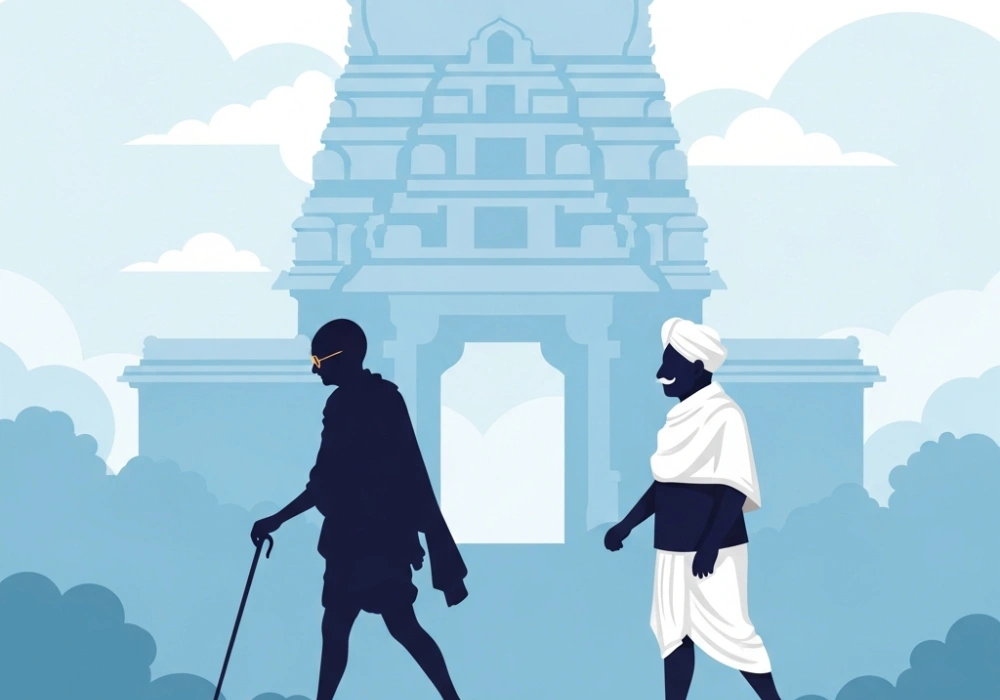
Decoding the Vaikom Satyagraha for Kerala PSC Success
The Vaikom Satyagraha (1924-1925) is not just a chapter in Kerala’s history; it is the cornerstone of modern social reform in South India and a perennial goldmine for the Kerala Public Service Commission (PSC) examinations. Whether you are preparing for the KAS, Secretariat Assistant, or University Assistant exams, understanding the nuanced roles of leaders like K.P. Kesava Menon and the strategic intervention of Mahatma Gandhi is non-negotiable. In this detailed guide, we will break down the Previous Year Questions patterns, offer shortcuts to memorize dates, and explore the deep-seated logic of the movement to ensure you never miss a mark on this topic.
The Architect of Action: K.P. Kesava Menon
Often in Previous Year Questions, students confuse the roles of T.K. Madhavan and K.P. Kesava Menon. While T.K. Madhavan was the visionary who brought the issue to the national level at the Kakinada session of the Indian National Congress (1923), it was K.P. Kesava Menon who acted as the operational leader on the ground. As the Secretary of the Untouchability Abolition Committee, Menon was the first to offer Satyagraha. His leadership was characterized by a strict adherence to Non-Violence (Ahimsa), even when faced with extreme provocation from conservative elements.
💡 Pro-Tip: The Leadership Trio
Remember the ‘VKM’ trio: Vaikom, Kesava Menon, and Madhavan. Kesava Menon led the action, while Madhavan provided the momentum. They were arrested together on the first day of the movement, marking the official start on March 30, 1924.
Mahatma Gandhi’s Visit: A Strategic Chronology
One of the most complex areas in Kerala PSC history is the sequence of events during Mahatma Gandhi’s visit to Vaikom in March. Gandhi did not just visit the protest site; he engaged in high-level diplomacy that eventually led to the resolution of the struggle.
- Arrival at Vaikom (March 10): Gandhi arrived to boost the morale of the Satyagrahis.
- The Meeting with Indanthuruthil Namboothiri: This was a crucial debate between the Mahatma and the leader of the orthodox Brahmins. Gandhi argued that untouchability had no scriptural basis.
- Meeting with Sree Narayana Guru: Gandhi visited Sivagiri to meet the Guru. This is a favorite theme for Previous Year Questions. They discussed the methodology of the protest and the spiritual equality of all humans.
- Meeting with Rani Sethu Lakshmi Bayi: Gandhi met the Regent Maharani of Travancore. This meeting paved the way for the eventual opening of the roads around the Vaikom temple.
Simulated Question 1: Leadership Hierarchy
Who was the President of the Vaikom Satyagraha Committee formed at the Congress meeting in Ernakulam?
A) T.K. Madhavan
B) K.P. Kesava Menon
C) K. Kelappan
D) Mannathu Padmanabhan
💡 Click to Reveal Answer & Logic
Correct Answer: B) K.P. Kesava Menon.
Traditional Method: Reading various history textbooks to distinguish between the President and Secretary. Many students confuse the ‘Untouchability Abolition Committee’ (K.P. Kesava Menon) with the later organizers of the Savarna Jatha (Mannathu Padmanabhan).
30-Second Ninja Shortcut: Remember ‘Menon is the Man’. In Kerala PSC, if a question asks for the primary organizational leader of the initial Vaikom committee, it is almost always K.P. Kesava Menon. T.K. Madhavan was the ‘Propagator’, but Menon was the ‘President/Secretary’ in the operational sense.
Simulated Question 2: The Gandhi-Sivagiri Connection
During his visit to Kerala related to the Vaikom Satyagraha, at which location did Mahatma Gandhi meet Sree Narayana Guru?
A) Vaikom Temple Entrance
B) Sivagiri, Varkala
C) Aluva Advaita Ashram
D) Thiruvananthapuram
💡 Click to Reveal Answer & Logic
Correct Answer: B) Sivagiri, Varkala.
Traditional Method: Memorizing the entire travel map of Gandhi. This takes hours and often leads to confusion between his multiple visits to Kerala.
30-Second Ninja Shortcut: Use the ‘Guru-Giri’ mnemonic. Sree Narayana Guru was at Sivagiri. Gandhi went to the ‘Giri’ (Hill) to meet the ‘Guru’. This meeting occurred on March 12, just two days after he reached Vaikom.
Simulated Question 3: Chronological Order
Arrange the following events of the Vaikom Satyagraha in the correct chronological order:
1. Starting of the Satyagraha.
2. Meeting between Gandhi and Indanthuruthil Namboothiri.
3. Savarna Jatha led by Mannathu Padmanabhan.
4. Temple Entry Proclamation.
A) 1-2-3-4
B) 1-3-2-4
C) 2-1-3-4
D) 1-2-4-3
💡 Click to Reveal Answer & Logic
Correct Answer: A) 1-2-3-4.
Traditional Method: Memorizing specific dates for every event. (March 30, 1924; March 1925; Nov 1924; 1936 respectively).
30-Second Ninja Shortcut: Focus on the ‘Action-Reaction-Support-Victory’ flow. First, the Action (Satyagraha starts). Second, the Reaction/Negotiation (Gandhi meets the Namboothiri). Third, the Mass Support (Savarna Jatha). Fourth, the ultimate Victory (Temple Entry Proclamation – though much later, it’s the logical conclusion). This flow helps you eliminate wrong options instantly.
Simulated Question 4: External Support
Which famous leader from Tamil Nadu participated in the Vaikom Satyagraha and earned the title ‘Vaikom Veeran’?
A) C. Rajagopalachari
B) E.V. Ramasamy (Periyar)
C) Kamaraj
D) Subramania Bharati
💡 Click to Reveal Answer & Logic
Correct Answer: B) E.V. Ramasamy (Periyar).
Traditional Method: Reading the biographies of all South Indian reformers. While valuable, it is time-consuming for PSC aspirants.
30-Second Ninja Shortcut: The ‘P-V’ connection. Periyar is the Veeran. Remember that K.P. Kesava Menon and T.K. Madhavan invited Periyar when the local leadership was in jail. His involvement gave the movement a truly Dravidian and trans-border character.
Simulated Question 5: The Savarna Jatha Strategy
What was the primary objective of the Savarna Jatha led by Mannathu Padmanabhan during the Vaikom Satyagraha?
A) To protest against the British Government.
B) To show the support of the forward castes for the temple entry of lower castes.
C) To demand better wages for workers.
D) To celebrate the arrival of Mahatma Gandhi.
💡 Click to Reveal Answer & Logic
Correct Answer: B) To show the support of the forward castes for the temple entry of lower castes.
Traditional Method: Analyzing the sociological impact of the Nair Service Society (NSS) and its role in the Satyagraha. Deeply academic but may be distracting during a 60-minute PSC exam.
30-Second Ninja Shortcut: Break the word: Savarna (Upper Castes) + Jatha (March). Why would upper castes march? In the context of a Dalit/Ezhava protest, they march to show Solidarity. The Jatha started from Vaikom and ended in Thiruvananthapuram to submit a memorandum to the Maharani.
Cheat Sheet: Vaikom Satyagraha Quick Revision
| Key Element | Details for Exam Memory |
|---|---|
| Start Date | March 30, 1924 (Remember: 30-3-24) |
| First Batch Satyagrahis | Kunhappan, Bahuleyan, Venniyil Govinda Panicker |
| Gandhi’s Visit | March 1925 (Stayed at Vaikom boat jetty area) |
| Savarna Jatha Leader | Mannathu Padmanabhan (Vaikom to Trivandrum) |
| Outcome | Three roads around the temple opened to all castes. |
| The ‘Vaikom Veeran’ | E.V. Ramasamy (Periyar) |
Expert Commentary for Higher-Level Exams
For those appearing for KAS (Kerala Administrative Service), it is important to note that the Vaikom Satyagraha was the first organized struggle against untouchability in the whole of India. While it did not result in immediate ‘temple entry’ (which only happened in 1936), it established the moral superiority of the reformist cause. The involvement of the Akalis (who sent a community kitchen or ‘Langar’) and the support from the Kerala Congress made it a national event. K.P. Kesava Menon’s role in balancing the local sentiments with national Congress policies is a classic study in leadership. His arrest early in the movement actually served as a catalyst, drawing more youth into the struggle. When you see Previous Year Questions about ‘external support’, remember the Akalis—it’s a frequent ‘trick’ question.
Struggling with Kerala History Dates?
Our experts are here to help you simplify the complex timelines of the Kerala Renaissance. Don’t let confusing facts stop your dream career.
💬 Chat with our Experts on WhatsApp (+91 9526806124)




