
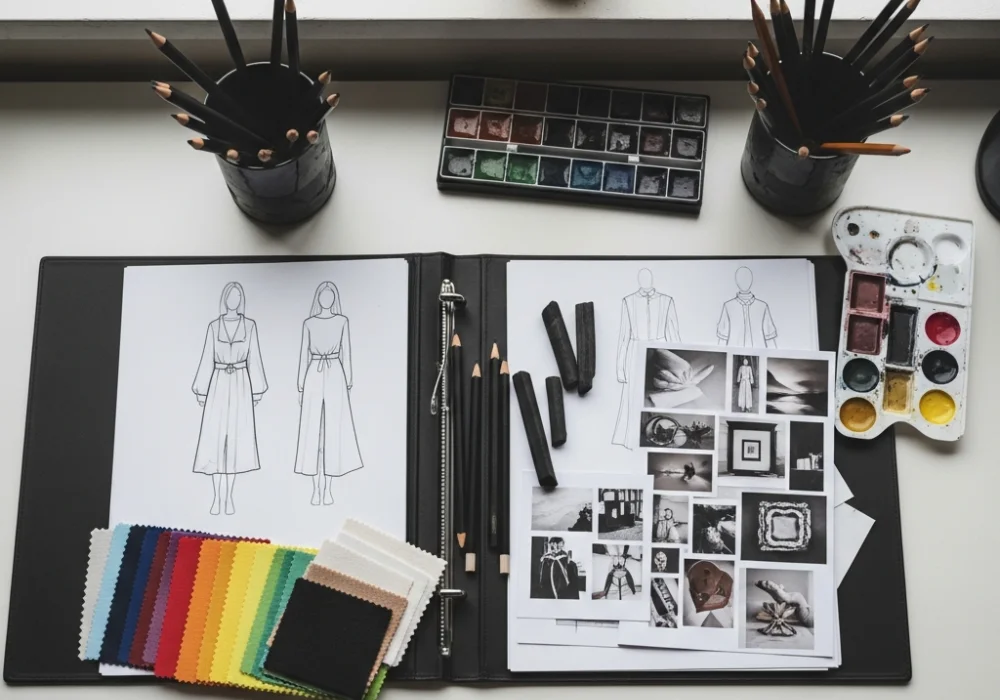
The Ultimate Roadmap to a Professional Fashion Portfolio
Entering a premier institution like the National Institute of Fashion Technology (NIFT) is the ultimate goal for thousands of design aspirants. While the written exams test your aptitude and creativity, the portfolio and subsequent rounds evaluate your artistic soul and technical potential. A portfolio is more than just a collection of drawings; it is a visual narrative of your creative journey. This guide will walk you through the nuances of developing a professional portfolio that stands out in the competitive landscape of fashion entrance exams.
Table of Contents
What is a Fashion Portfolio?
A fashion portfolio is a curated showcase of your best creative work, demonstrating your skills, style, and design thinking. For NIFT and other design entrance exams, the portfolio serves as your visual resume. It provides the jury with a glimpse into your observation skills, your ability to play with materials, and your unique perspective on the world around you. It is crucial to understand that examiners are not just looking for finished masterpieces; they are looking for potential.
💡 Pro-Tip: The ‘Process’ is King
Always include your rough sketches, mood boards, and failed attempts. Showing how you reached a final design is often more valuable to a jury than the final design itself. It demonstrates your problem-solving abilities.
Key Components of a Winning Portfolio
To build a comprehensive portfolio, you must touch upon various aspects of design and creativity. Here are the essential elements you should include:
1. Observational Sketching
Showcase your ability to translate the 3D world into 2D. Include sketches of everyday objects, nature, or urban landscapes. Focus on perspective, shading, and proportions. This demonstrates that you have a keen eye for detail.
2. Material Exploration
Fashion is tactile. Use various mediums such as charcoal, watercolors, acrylics, or even non-traditional materials like wire, fabric scraps, or recycled paper. Create 3D models or textures and include high-quality photographs of them in your portfolio.
3. Color Theory and Composition
Demonstrate your understanding of color palettes. Create works that explore monochromatic, analogous, or complementary color schemes. Your composition skills—how you arrange elements on a page—should show a sense of balance and rhythm.
4. Concept-Based Projects
Pick a theme (e.g., ‘Sustainability’, ‘Chaos’, ‘Heritage’) and develop a series of works around it. This shows your ability to think deeply and maintain a consistent narrative throughout a project.
The Curation Process: Quality Over Quantity
One of the biggest mistakes students make is including every single sketch they have ever made. A professional portfolio should be lean and impactful. Follow these steps for effective curation:
- Selection: Choose 15-20 of your absolute best works. If a piece doesn’t make you proud, leave it out.
- Variety: Ensure a mix of mediums. Don’t just include 20 pencil sketches. Add some photography, some digital art, and some craft work.
- Order: Start with your strongest piece to grab attention, and end with your second strongest to leave a lasting impression.
- Cleanliness: If it’s a physical portfolio, ensure no smudges or torn edges. For digital ones, use high-resolution scans.
Remember, the goal is to leave the jury wanting more, not feeling overwhelmed by repetitive content.
Digital vs. Physical Portfolios
In the current educational climate, the format of your portfolio matters. While physical folders were the norm, digital portfolios (PDFs, personal websites, or Instagram handles) are becoming increasingly popular. However, for NIFT entrance exams, the requirement often depends on the specific instructions given for the Situation Test or Studio Test rounds.
Physical Portfolios
These allow the jury to feel the paper and see the textures closely. Use a high-quality portfolio folder (A3 or A4 size) with clear sleeves. Avoid overly decorative folders that might distract from the art itself.
Digital Portfolios
If you are asked to submit digitally, ensure the file size is optimized for email or portal uploads. Use clean typography and plenty of white space. Tools like Canva, Adobe Portfolio, or Behance are excellent for this purpose.
Comparison: Portfolio vs. Situation Test
Many students confuse the portfolio with the Situation Test. Here is a breakdown of the differences:
| Feature | Fashion Portfolio | Situation Test |
|---|---|---|
| Timing | Prepared over months before the exam. | Conducted on-the-spot after CAT/GAT. |
| Focus | Broad creative range and personal style. | 3D model making using provided materials. |
| Medium | Sketches, Photos, Digital Art. | Cardboard, clay, wire, thread, etc. |
| Evaluation | Consistency and depth of thought. | Technical skill and material handling under pressure. |
Enhancing Your Skills with Mock Tests
While your portfolio showcases your art, you must also clear the Creative Ability Test (CAT) and General Ability Test (GAT) to move forward. This is where myentrance.in becomes your best ally. We provide specialized mock tests designed specifically for the latest patterns of NIFT and NIFT GAT exams. Practicing these tests helps you manage time effectively, allowing you more mental freedom to focus on your portfolio development.
Regular practice with our mock tests ensures that you are well-versed in the types of questions asked, from visualization to analytical reasoning. Combining a strong portfolio with high scores in the written rounds is the foolproof formula for NIFT success.
Frequently Asked Questions (FAQs)
Is a portfolio mandatory for NIFT B.Des admissions?
While a portfolio is not always strictly mandatory for the first phase of NIFT B.Des, it is highly recommended and often required during the interview/counseling stages or for other design colleges like NID. It provides a significant advantage during the final selection.
How many pages should my portfolio be?
Quality is more important than quantity. Aim for 15 to 25 well-curated pages. Avoid fluff and focus on showcasing your best and most diverse work.
Can I include digital art in my fashion portfolio?
Absolutely! If you are proficient in tools like Procreate, Photoshop, or Illustrator, including digital illustrations can show that you are tech-savvy and ready for the modern fashion industry.
Quick Knowledge Check
Test your understanding of portfolio building with these quick questions:
1. What is the most important thing to include alongside your final design?
💡 Click to Reveal
The design process (rough sketches, mood boards, and ideation phases).
2. How many works are typically recommended for a professional portfolio?
💡 Click to Reveal
15 to 20 high-quality pieces are ideal.
3. True or False: A portfolio should only contain finished drawings.
💡 Click to Reveal
False. It should include material exploration, photography, and experimental work as well.
Need Personalized Guidance for NIFT?
Building a portfolio can be overwhelming, but you don’t have to do it alone. Our experts at MyEntrance are here to help you navigate every step of the fashion entrance exams, from mock tests to portfolio reviews.
💬 Chat with our Experts on WhatsApp (+91 9526806124)




