
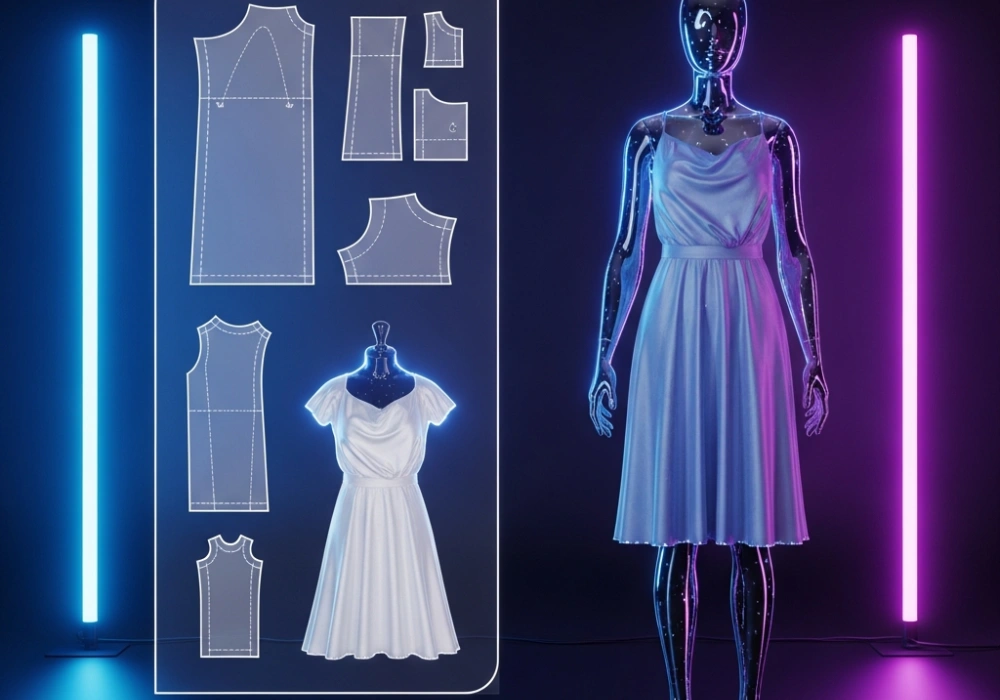
Mastering the Digital Thread: Evolution of 3D Garment Simulation
For any aspiring fashion designer preparing for the NIFT GAT (General Ability Test), understanding the technological shift from manual pattern making to digital simulation is no longer optional—it is essential. The fashion industry is currently undergoing a massive digital transformation, led by software like CLO 3D, Browzwear, and Optitex. These tools are not just for high-end design; they are the front-line soldiers in the war against textile waste. In the NIFT GAT, questions frequently touch upon the concepts of sustainability, technological innovation, and the technicalities of garment construction. This post decodes the logic behind these trends, helping you bridge the gap between traditional knowledge and modern industrial application.
💡 Why is this topic trending in NIFT GAT?
NIFT emphasizes the ‘Industry 4.0’ readiness of its students. Previous Year Questions often focus on how technology reduces lead times and improves the ‘Product Lifecycle Management’ (PLM). Mastering 3D simulation concepts gives you an edge in the Case Study and GAT sections.
The Technical Shift: From Physical to Digital
Traditionally, a garment goes through 4 to 6 physical sampling stages before production. This involves cutting fabric, sewing, shipping the sample to the buyer, getting feedback, and repeating the process. This ‘Physical Prototyping’ accounts for nearly 15-20% of fabric waste in the pre-production phase alone. 3D simulation software like CLO 3D uses advanced physics engines to simulate fabric properties like weight, thickness, and elasticity on a customizable digital ‘Avatar’. This allows designers to see how a garment will drape and fit without ever touching a piece of cloth.
Deciphering Exam-Level Questions
Question 1: The Core Purpose of 3D Prototyping
What is the primary environmental benefit of using 3D simulation software like CLO 3D in the apparel supply chain?
A) Increasing the speed of the sewing machines
B) Reducing the number of physical samples and fabric wastage
C) Enhancing the brightness of screen displays
D) Eliminating the need for human designers
💡 Pro-Tip: The ‘Sample Ratio’ Concept
In industrial terms, 3D simulation can reduce the sample-to-production ratio from 5:1 to 1:1. This is a massive SEO keyword for NIFT GAT Case studies!
Question 2: Understanding Heat Maps and Fit Analysis
In 3D simulation software, what do ‘Stress Maps’ or ‘Pressure Maps’ indicate on a digital avatar?
A) The cost of the fabric per meter
B) The popularity of the garment design
C) The areas where the garment is too tight or too loose on the body
D) The chemical composition of the dyes used
Question 3: The Concept of the ‘Digital Twin’
Which of the following best describes a ‘Digital Twin’ in the context of fashion technology?
A) Two identical garments produced in different colors
B) An exact digital replica of a physical garment and its properties
C) A social media filter for clothing
D) A backup file of the design pattern
Question 4: Fabric Properties in Simulation
To simulate a silk scarf correctly in software, which property must the designer adjust to ensure it doesn’t look like denim?
A) Color saturation
B) Physical properties (Bending, Shearing, Weight)
C) File format (JPG vs PNG)
D) Resolution of the screen
Question 5: Sustainability and Carbon Footprint
How does 3D garment simulation contribute to the reduction of a brand’s carbon footprint?
A) By using less electricity than a sewing machine
B) By eliminating the need to transport physical samples via air freight across the globe
C) By making the designers work from home
D) By changing the color of the factory walls
Cheat Sheet: Quick Revision for 3D Fashion Tech
| Term | Definition/Function |
|---|---|
| Avatar | Virtual body model used for fitting garments. |
| Draping | The way fabric falls or hangs on a form. |
| Fit Map | Visual tool (Heat map) to check garment tightness. |
| Nesting | Arranging patterns to minimize fabric waste (Digital Marker). |
| Lead Time | The time from design start to final production. |
Summary of Previous Year Questions Insights
By analyzing Previous Year Questions, we see a pattern. NIFT doesn’t want you to be a computer programmer; they want you to be a designer who understands how to use technology to solve the industry’s biggest problem: Waste. Whether it is time waste, material waste, or energy waste, 3D simulation is the answer. When solving these questions in your entrance exam, always prioritize efficiency and sustainability as your guiding principles.
💡 Common Exam Myth
Myth: 3D design is only for high-tech garments. Fact: In the GAT, you must recognize that 3D is even more valuable for basic garments (like T-shirts) because they are produced in millions, and small savings in fabric lead to huge environmental impacts.
Ready to Ace the NIFT GAT?
Don’t let complex tech questions confuse you. Get personalized coaching and expert guidance today!
💬 Chat with our Experts on WhatsApp (+91 9526806124)




