
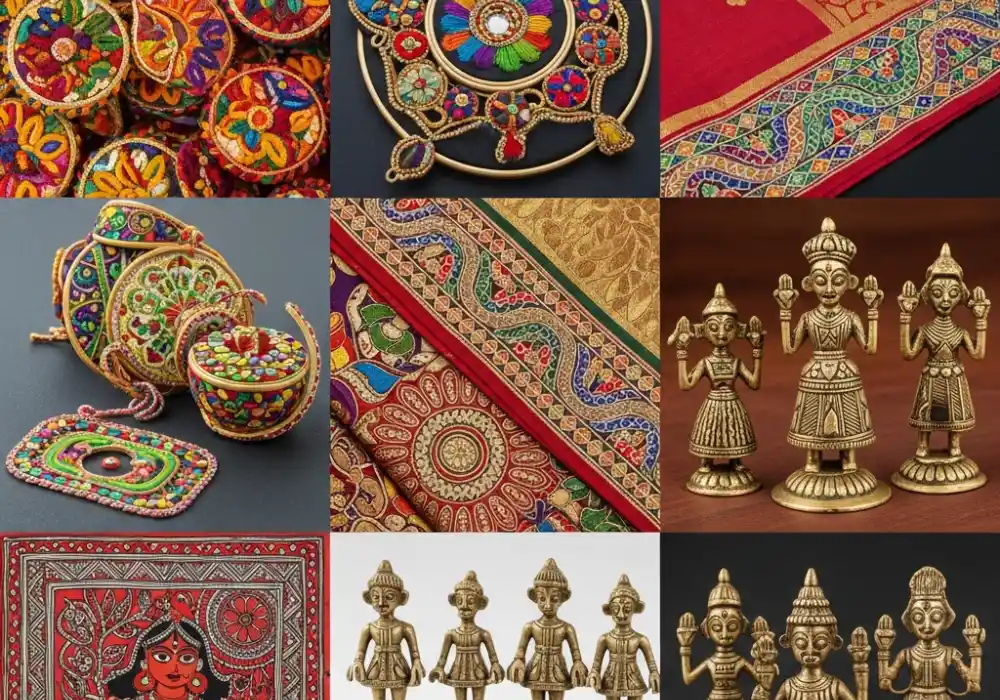
The Vital Role of Indian Crafts in NIFT Entrance Exams
Welcome, future designers! As you prepare for the National Institute of Fashion Technology (NIFT) entrance exam, understanding the vast and vibrant world of Indian Handlooms and Handicrafts is absolutely essential. This topic is a cornerstone of the General Ability Test (GAT), specifically within the General Knowledge and Current Affairs sections. More importantly, it provides the fundamental inspiration for the Creative Ability Test (CAT). India’s craft heritage is one of the most diverse in the world, spanning thousands of years and hundreds of unique regional specializations. From the intricate silk weaves of the South to the bold embroidery of the North, these crafts define India’s identity on the global fashion stage. Mastering this topic allows you to demonstrate cultural sensitivity, technical knowledge of textiles, and an appreciation for sustainable artisanal practices—all qualities that NIFT seeks in its students. This mock test is designed to be highly comprehensive, pushing your boundaries and ensuring you are ready to tackle even the most challenging questions on the day of the exam. Let’s dive into the richness of Indian craftsmanship!
💡 Pro-Tip for NIFT Aspirants
Always try to relate a craft to its state of origin and its specific GI (Geographical Indication) tag status. NIFT examiners love testing your knowledge on regional identity!
Mock Test: Handlooms and Handicrafts
- Which state is famous for the ‘Patan Patola’ saree, known for its complex double-ikat weaving technique?
- A. Rajasthan
- B. Gujarat
- C. Odisha
- D. Telangana
- ‘Phulkari’ is a traditional embroidery style primarily practiced in which Indian state?
- A. Haryana
- B. Punjab
- C. Himachal Pradesh
- D. Uttar Pradesh
- Which craft involves the ‘lost wax’ method of metal casting and is famously practiced by tribal communities in Bastar?
- A. Bidriware
- B. Dokra
- C. Kondapalli
- D. Nirmal Art
- The ‘Chanderi’ fabric, known for its sheer texture and lightweight feel, originates from:
- A. Madhya Pradesh
- B. Rajasthan
- C. Maharashtra
- D. Bihar
- What is the primary source of the wool used to make authentic Pashmina shawls?
- A. Angora Rabbit
- B. Merino Sheep
- C. Changthangi Goat
- D. Yak
- Which traditional painting style from Bihar is characterized by the use of fingers, twigs, and matchsticks, and usually depicts mythological themes?
- A. Pattachitra
- B. Warli
- C. Madhubani
- D. Kalamkari
- ‘Chikankari’, a delicate form of shadow-work embroidery, is the hallmark of which city?
- A. Jaipur
- B. Lucknow
- C. Hyderabad
- D. Bhopal
- Which of the following is a GI-tagged golden silk exclusively produced in the state of Assam?
- A. Eri Silk
- B. Mulberry Silk
- C. Muga Silk
- D. Tussar Silk
- The ‘Bandhani’ technique of tie-and-dye is most prominently found in which two states?
- A. West Bengal and Odisha
- B. Gujarat and Rajasthan
- C. Kerala and Tamil Nadu
- D. Punjab and Haryana
- ‘Kalamkari’ art, which uses hand-painting or block-printing with natural dyes, has its roots in:
- A. Andhra Pradesh
- B. Karnataka
- C. Kerala
- D. Tamil Nadu
- Which region is famous for ‘Bidriware’, a metal handicraft where silver is inlaid onto a blackened alloy of zinc and copper?
- A. Bidar, Karnataka
- B. Jodhpur, Rajasthan
- C. Moradabad, Uttar Pradesh
- D. Salem, Tamil Nadu
- ‘Kantha’ is a popular style of embroidery involving a simple running stitch, predominantly practiced in:
- A. Bihar
- B. West Bengal
- C. Assam
- D. Jharkhand
- Which handloom is characterized by its heavy silk and gold zari work, often called the ‘Queen of Silks’?
- A. Paithani
- B. Kanjeevaram
- C. Banarasi
- D. Sambalpuri
- The ‘Warli’ tribal art form, which uses basic geometric shapes to depict daily life, belongs to:
- A. Maharashtra
- B. Gujarat
- C. Chhattisgarh
- D. Madhya Pradesh
- ‘Pochampally Ikat’ is also known as ‘Pagdu Bandhu’ in which state?
- A. Tamil Nadu
- B. Telangana
- C. Karnataka
- D. Kerala
- Which style of block printing from Rajasthan uses mud-resist techniques and indigo dyes?
- A. Ajrakh
- B. Bagru
- C. Dabu
- D. Sanganeri
- ‘Kasuti’ is a traditional folk embroidery performed by the women of:
- A. Karnataka
- B. Andhra Pradesh
- C. Goa
- D. Maharashtra
- The intricate ‘Jamdani’ weaving technique, often used on fine muslin, is traditionally associated with:
- A. West Bengal
- B. Uttar Pradesh
- C. Bihar
- D. Odisha
- Which craft involves decorating wood with lacquer and is a specialty of Channapatna?
- A. Wooden Toys
- B. Papier Mache
- C. Blue Pottery
- D. Terracotta
- ‘Sambalpuri’ sarees are unique due to their ‘Baandha’ style of weaving. Which state do they belong to?
- A. Chhattisgarh
- B. Odisha
- C. West Bengal
- D. Jharkhand
Answer Key & In-Depth Explanations
Check Answers and Deep Dive into Craft History
1. Answer: B (Gujarat). Explanation: Patan Patola is a legendary double-ikat weave from Patan, Gujarat. It is one of the most difficult weaving techniques in the world because both the warp and weft threads are dyed in specific patterns before being woven together. This ensures that the design is identical on both sides of the fabric. Traditionally, these sarees were symbols of high status and were thought to possess protective qualities.
2. Answer: B (Punjab). Explanation: Phulkari literally translates to ‘flower work.’ It is a vibrant embroidery style from Punjab where floral motifs are created using the darn stitch on the wrong side of coarse cotton cloth (khaddar) with silken thread. Historically, Phulkari was an integral part of a Punjabi woman’s life, with grandmothers starting to embroider ‘Bagh’ (full garden) shawls at the birth of a grandchild.
3. Answer: B (Dokra). Explanation: Dokra (or Dhokra) is a non-ferrous metal casting using the lost-wax casting technique. This sort of metal casting has been used in India for over 4,000 years and is still used today. One of the earliest known lost-wax artifacts is the dancing girl of Mohenjo-daro. The process is labor-intensive, involving a clay core, a wax layer, and then a final clay mold before molten metal is poured in.
4. Answer: A (Madhya Pradesh). Explanation: Chanderi is a traditional ethnic fabric characterized by its lightweight, sheer texture and fine luxurious feel. Produced in the town of Chanderi in Madhya Pradesh, it is made by weaving in silk and golden zari in the traditional cotton yarn, which results in the creation of the shimmering texture. The motifs are often inspired by nature, including birds, flowers, and heavenly bodies.
5. Answer: C (Changthangi Goat). Explanation: Pashmina is a fine type of cashmere wool. The textiles made from it were first woven in Kashmir. The wool comes from the Changthangi goat (or Pashmina goat), which is a special breed of goat indigenous to high altitudes in the Himalayas. The fiber is exceptionally thin, making the shawls incredibly warm yet light enough to pass through a wedding ring.
6. Answer: C (Madhubani). Explanation: Madhubani art, also known as Mithila painting, originates from the Mithila region of Bihar. It was traditionally done by women on the freshly plastered mud walls and floors of huts, but now it is also done on cloth, handmade paper, and canvas. The paintings use natural dyes and pigments and are characterized by eye-catching geometrical patterns and a lack of empty space.
7. Answer: B (Lucknow). Explanation: Chikankari is a delicate and artfully done hand embroidery from Lucknow. It is believed to have been introduced by Noor Jehan, the wife of Mughal emperor Jahangir. The technique involves a variety of stitches (over 30 types) such as ‘Bakhiya’ (shadow work), ‘Phanda’, and ‘Jali’ (net work), traditionally performed on fine white cotton or muslin fabric.
8. Answer: C (Muga Silk). Explanation: Muga silk is the product of the silkworm Antheraea assamensis endemic to Assam. The silk is known for its extreme durability and has a natural yellowish-golden tint with a shimmering, glossy texture. It was previously reserved for the use of royalty. One of its unique properties is that its luster increases with every wash, making it a highly prized heirloom.
9. Answer: B (Gujarat and Rajasthan). Explanation: Bandhani is a type of tie-dye textile decorated by plucking the cloth with the fingernails into many tiny bindings that form a figurative design. The term bandhani is derived from the Sanskrit word ‘bandh’ which means ‘to bind’ or ‘to tie.’ While practiced in both states, Gujarat’s Jamnagar and Rajasthan’s Jodhpur are the primary hubs for this craft.
10. Answer: A (Andhra Pradesh). Explanation: Kalamkari consists of two distinct styles: the Srikalahasti style (freehand drawing) and the Machilipatnam style (block-printing). The name comes from ‘Kalam’ (pen) and ‘Kari’ (craftsmanship). Srikalahasti uses a bamboo pen to draw motifs and fill in colors, focusing largely on religious themes and epic narratives from the Ramayana and Mahabharata.
11. Answer: A (Bidar, Karnataka). Explanation: Bidriware is a metal handicraft from Bidar. It was developed in the 14th century C.E. during the rule of the Bahmani Sultans. The metal used is a blackened alloy of zinc and copper, inlaid with thin sheets of pure silver. The striking contrast between the black background and the shiny silver inlay makes it a unique and sophisticated art form.
12. Answer: B (West Bengal). Explanation: Kantha is one of the oldest forms of embroidery originating from West Bengal. Traditionally, it was a way for women to recycle old sarees and soft dhotis by layering them and stitching them together with a simple running stitch. Today, Kantha is a sophisticated craft used on sarees, dupattas, and home furnishings, representing scenes from rural life.
13. Answer: B (Kanjeevaram). Explanation: Kanchipuram or Kanjeevaram silk is a type of silk saree made in the Kanchipuram region in Tamil Nadu. These sarees are distinguished by their wide contrast borders and the use of heavy silk and gold zari. The temple borders, checks, stripes, and floral buttas are traditional designs. They are considered essential bridal wear in South India due to their durability and grandeur.
14. Answer: A (Maharashtra). Explanation: Warli painting is a form of tribal art created by the tribal people from the North Sahyadri Range in Maharashtra. These paintings are distinctive for their use of simple geometric shapes: a circle, a triangle, and a square. The central motif is usually a dance scene, and the paintings are traditionally done using a white paste made from rice flour on an ochre mud-based background.
15. Answer: B (Telangana). Explanation: Pochampally Ikat is a saree made in Bhoodan Pochampally, Telangana. It is popular for its traditional geometric patterns in the ‘Ikat’ style of dyeing. The intricate designs are created by dyeing the yarn before weaving. In 2004, it was the first traditional craft to receive Geographical Indication (GI) status in India, highlighting its cultural and economic importance.
16. Answer: C (Dabu). Explanation: Dabu printing is an ancient mud-resist hand-block printing technique from Rajasthan. The process involves applying a mud paste (Dabu) onto the fabric using blocks, which is then dried and dipped in dye (usually indigo). The areas covered by mud resist the dye, resulting in beautiful white or lighter patterns against a colored background. It is a highly sustainable and natural process.
17. Answer: A (Karnataka). Explanation: Kasuti is a traditional folk embroidery of Karnataka. It involves very intricate patterns like gopurams, chariots, and elephants. A unique feature of Kasuti is that the patterns are stitched without using knots, so that both sides of the cloth look identical. It requires great patience and precision as the threads are counted for every stitch.
18. Answer: A (West Bengal). Explanation: Jamdani is a fine muslin textile produced for centuries in South Rupshi of Narayanganj district in Bangladesh and currently in West Bengal, India. It is one of the most time-intensive and labor-intensive forms of handloom weaving. The designs are created directly on the loom using a decorative extra weft, almost like tapestry weaving, resulting in patterns that appear to float on the surface.
19. Answer: A (Wooden Toys). Explanation: Channapatna in Karnataka is famous for its wooden toys and lacquerware. The wood used is usually Dhoodhi wood (Hale wood), and the toys are colored using natural dyes mixed with lacquer, making them eco-friendly and safe for children. This craft was significantly encouraged by Tipu Sultan, who invited artisans from Persia to train local craftsmen.
20. Answer: B (Odisha). Explanation: Sambalpuri sarees are a traditional handwoven ikat or sari (locally called sadhi) wherein the warp and the weft are tie-dyed before weaving. This technique is known as ‘Baandha’ in Odisha. They are famous for their incorporation of traditional motifs like the shankha (shell), chakra (wheel), and phula (flower), all of which have deep symbolic meanings in Odia culture.
Preparation Strategy: How to Memorize Craft Forms
Memorizing dozens of regional crafts can be daunting. To succeed in NIFT, try the Map-Mapping Technique. Print a large map of India and pin images of specific textiles or crafts to their respective states. For instance, pin a piece of Blue Pottery over Jaipur, Rajasthan, and a piece of Pattachitra over Odisha. Seeing the visual distribution of these crafts helps your brain create spatial associations. Additionally, focus on the Materials used. Knowing that Pashmina comes from a goat or that Dokra uses metal will help you eliminate incorrect options in MCQs. Finally, keep an eye on current affairs related to the Handloom Ministry and the ‘Vocal for Local’ initiative, as these often find their way into the GAT question paper.
Still Have Doubts About Your NIFT Preparation?
Preparing for NIFT can be challenging, but you don’t have to do it alone. Our experts at MyEntrance are here to help you navigate through the vast syllabus of Indian textiles, GK, and design aptitude. Whether you need free guidance, more mock tests, or personalized coaching, we are just a message away!
💬 Chat with our Experts on WhatsApp (+91 9526806124)




