
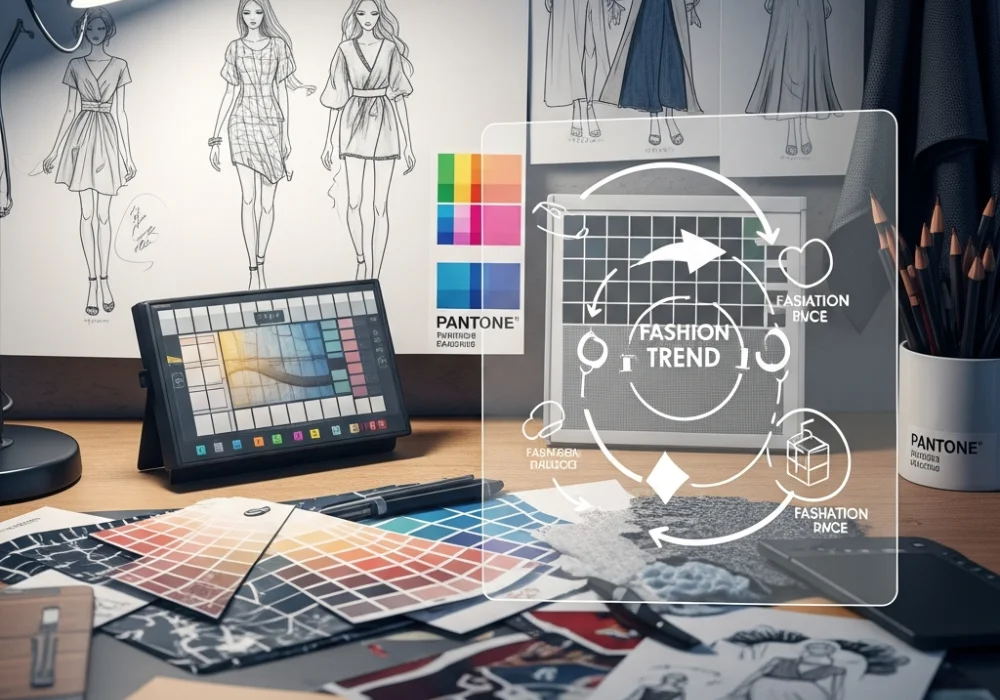
Cracking the Code: Trend Analysis for NIFT GAT
Your Ultimate Guide to Forecasting, Fashion Cycles, and Industry Insights
Introduction to Fashion Forecasting
For any NIFT aspirant, the General Ability Test (GAT) is a hurdle that requires more than just basic mathematical skills or English proficiency. One of the most nuanced sections involves your understanding of the fashion industry’s inner workings, specifically trend analysis and fashion forecasting. This isn’t just about knowing what is ‘in’ or ‘out’ this season; it is a scientific and sociological study of consumer behavior, global events, and creative evolution. Fashion forecasting is the practice of predicting upcoming trends in colors, fabrics, textures, and silhouettes that will eventually appear on runways and in retail stores. As a student preparing for the NIFT entrance exam, understanding these concepts allows you to demonstrate a high degree of industry awareness, which is vital for both the GAT and the subsequent Situation Test or Interview rounds.
The fashion cycle is a continuous movement that influences everything from the clothes we wear to the furniture we buy. In this comprehensive guide, we will explore the mechanisms of how trends are born, how they move through society, and how global forecasting agencies play a pivotal role in shaping the $2.5 trillion global fashion industry. By the end of this post, you will not only be equipped with the theoretical knowledge needed for the exam but also have a practical understanding of how to identify a ‘Fad’ versus a ‘Trend’.
The Mechanics of a Trend: Short-term vs. Long-term
When analyzing fashion, we categorize forecasts into two primary durations: Short-term and Long-term. Short-term forecasting, often called ‘Fad’ or ‘Seasonal’ forecasting, focuses on trends that will likely last for one to two years. These are heavily influenced by pop culture, celebrity endorsements, and social media viral moments. For example, the sudden surge in ‘Barbiecore’ pink following the release of a major motion picture is a classic example of a short-term trend that retail brands capitalized on instantly.
Long-term forecasting, on the other hand, looks five to ten years into the future. It considers ‘Megatrends’ that are driven by fundamental shifts in society, such as the rise of sustainable living, the integration of wearable technology (AI-integrated clothing), or shifts in global demographics. For NIFT GAT, you must understand that long-term forecasts guide the strategic decisions of major corporations, determining how they invest in new textile research or manufacturing processes. A common GAT question might ask you to differentiate between these two, or identify which factors influence a specific type of forecast.
Interactive Tool: Match the Fashion Concept
Test your knowledge! Click a concept on the left, then click its matching definition on the right.
Fashion Diffusion Theories: How Trends Move
In the NIFT GAT, you will often encounter questions regarding the ‘Diffusion of Innovation’. This refers to how a new style or color moves through a group of people. There are three core theories you must memorize:
- Trickle-Down Theory: This is the oldest theory, suggesting that fashion trends start with the wealthy and elite (royalty or celebrities) and slowly work their way down to the middle and lower classes. As soon as the ‘lower’ classes adopt the style, the elite discard it to find something new to maintain their status.
- Trickle-Up Theory (or Bubble-Up): This occurs when trends originate from street style, subcultures, or lower-income groups and are eventually picked up by high-fashion designers. Examples include denim jeans, punk aesthetics, and the current ‘grunge’ revival.
- Trickle-Across Theory: In today’s digital age, this is the most common. It suggests that fashion moves horizontally across all social classes simultaneously due to mass communication and rapid manufacturing. A design seen on a London runway today can be available in a budget retail store in Mumbai within weeks.
The Role of Forecasting Agencies and Color Authorities
Ever wondered why all the stores seem to have the same shade of green at the same time? This is not a coincidence. It is the result of global forecasting agencies like WGSN (Worth Global Style Network) and Peclers Paris. These agencies employ thousands of ‘cool-hunters’ and data analysts who track everything from political unrest to viral memes to predict what consumers will crave two years in advance.
Another major player is Pantone. Every year, the Pantone Color Institute announces the ‘Color of the Year’. This decision influences everything from graphic design and home decor to haute couture. For the GAT exam, keep an eye on current industry news—knowing the ‘Color of the Year’ or the major themes of recent Fashion Weeks (like Milan, Paris, or Lakme Fashion Week) can give you an edge in the General Awareness section.
Key Terminology for NIFT GAT
To score high in the fashion-related GAT questions, you should be familiar with these specific terms:
- Classic: A style that remains in fashion for an extended period, regardless of changing trends (e.g., The Little Black Dress or a white crisp shirt).
- Avant-Garde: Experimental or innovative designs that push the boundaries of what is accepted as the norm.
- Haute Couture: High-end fashion that is constructed by hand from start to finish, made from high-quality, expensive fabric and sewn with extreme attention to detail.
- Pret-a-Porter: Ready-to-wear fashion that is factory-made in standardized sizes.
- Silhouette: The overall shape or outline of a garment, such as A-line, Hourglass, or Empire waist.
- Texture: The feel, appearance, or consistency of a surface or a substance, which is a key element in fabric forecasting.
Practical GAT Preparation Tips
Preparation for trend-based questions requires a mix of static knowledge and active observation. Firstly, read fashion magazines like Vogue, Harper’s Bazaar, and Business of Fashion regularly. Pay attention to recurring themes. Secondly, analyze your own shopping habits—why did you buy that specific oversized hoodie? Was it because of a celebrity (Trickle-Down) or because of a social media subculture (Trickle-Up)? Applying these theories to real life makes them easier to remember during the exam.
Furthermore, focus on the ‘Elements and Principles of Design’. Understanding how ‘Balance’, ‘Proportion’, and ‘Rhythm’ work will help you describe trends more effectively. In the exam, you might be given a passage about a specific designer’s collection and asked to identify the dominant trend or the target audience based on the descriptions provided. Sharp analytical skills are your best friend here.
Conclusion: The Future of Fashion
As we move into an era of AI and sustainable consciousness, fashion forecasting is becoming more data-driven than ever. However, the human element of ‘intuition’ remains at its heart. For a NIFT aspirant, mastering this balance is key. Stay curious, stay observant, and keep practicing these concepts until they become second nature.
Ready to Ace your NIFT GAT?
Get personalized coaching, mock tests, and expert guidance to crack NIFT, NID, and other top design entrance exams.
💬 Chat with our Experts on WhatsApp (+91 9526806124)




