
How to Create an Award-Winning NIFT Design Portfolio
Securing a seat at the National Institute of Fashion Technology (NIFT) is the ultimate dream for thousands of aspiring designers across the country. While the written entrance exams—the Creative Ability Test (CAT) and General Ability Test (GAT)—measure your aptitude and speed, the second stage, particularly for postgraduate courses and specialized admissions, often involves a personal interview where your Design Portfolio becomes your most powerful weapon. Even for undergraduate candidates, maintaining a portfolio is a mark of a dedicated creative professional. In this comprehensive guide, we will explore the nuances of building a portfolio that doesn’t just showcase your work, but tells your unique story as a designer. To complement your preparation, don’t forget to explore the latest mock tests available at myentrance.in to stay ahead of the competition.
Table of Contents
What is a NIFT Design Portfolio?
A portfolio is a curated collection of your best creative work. It is more than a folder of drawings; it is a visual resume that demonstrates your skills, thought process, and artistic evolution. For the NIFT jury, your portfolio is a window into your mind. They aren’t just looking for a finished masterpiece; they are looking for potential, curiosity, and a sense of aesthetics. Whether you are applying for Fashion Design, Accessory Design, or Communication Design, your portfolio should reflect your specific interests while showcasing a broad foundation of creative abilities.
💡 Pro-Tip: Portfolio Purpose
The jury spends an average of 5-10 minutes looking at a portfolio. Make sure your first three pages are impactful enough to grab their attention immediately!
Core Components of a Winning Portfolio
To create a balanced portfolio for upcoming exams, you should include a variety of mediums. This shows the jury that you are versatile and willing to experiment. Here are the essential categories:
1. Sketching and Illustration
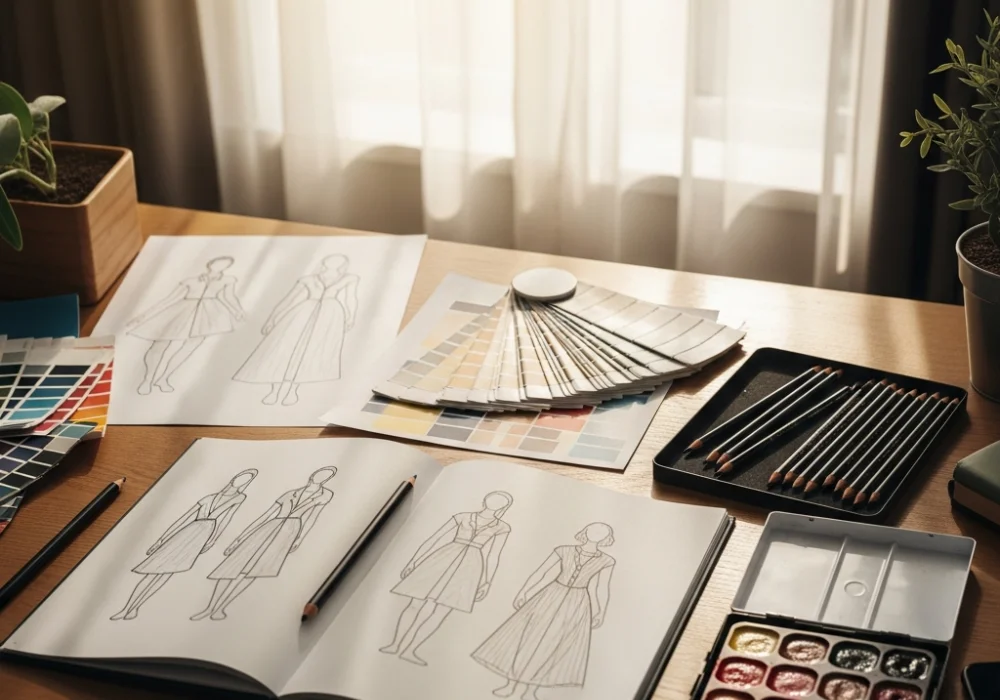
Showcase your ability to observe the world. Include live model sketches, still life, and perspective drawings. Use various mediums like charcoal, graphite, ink, and watercolors. For those aiming for Fashion Design, including well-proportioned croquis (fashion figures) is vital.
2. Material Exploration and 3D Work
NIFT values hands-on skills. If you have created models using paper, clay, wire, or recycled materials, take high-quality photographs and include them. This demonstrates your spatial awareness and understanding of form.
3. Photography and Digital Art
If you have a knack for photography, include a series that tells a story or follows a theme. Digital art created on software like Photoshop, Illustrator, or even mobile apps like Procreate shows that you are keeping up with modern industry standards.
4. Mood Boards and Color Palettes
Design is not just about drawing; it is about conceptualizing. Include a mood board that shows how you translate an abstract idea (like ‘Rainy Mornings’) into textures, colors, and silhouettes.
The Power of Storytelling and Process
One of the biggest mistakes students make is only showing the final product. The NIFT jury is far more interested in how you arrived at a solution than the solution itself. This is known as the ‘Design Process’.
- Initial Brainstorming: Show your rough scribbles and mind maps.
- Development: Include failed attempts or iterations. It shows resilience and critical thinking.
- Final Refinement: The polished version of your idea.
By documenting your journey, you provide proof of your originality. In an era where AI can generate images, showing your hand-drawn process steps is the only way to prove the work is truly yours. Practicing these conceptual skills through mock assessments on myentrance.in can help you articulate these thoughts better during your interview.
Comparison: Good vs. Exceptional Portfolio
Understanding the difference between an average submission and an award-winning one is key to your success. Refer to the table below:
| Feature | Good Portfolio | Exceptional Portfolio |
|---|---|---|
| Selection of Work | Includes every drawing ever made. | Highly curated; only 15-20 best pieces. |
| Process | Only shows the final result. | Shows research, sketches, and iterations. |
| Organization | Randomly placed pages. | Categorized with a clear narrative flow. |
| Personal Voice | Copies styles from the internet. | Reflects individual personality and social awareness. |
Digital vs. Physical Presentation
In the current academic landscape, you must be prepared for both physical and digital evaluations. A physical portfolio usually consists of an A3 or A4 size high-quality folder with clear sleeves. However, for many upcoming exam cycles, digital portfolios (in PDF format) have become the standard.
Tips for Digital Portfolios:
- Keep the file size manageable (under 10MB) without sacrificing image quality.
- Use consistent typography and layouts for a professional look.
- Ensure that the PDF is navigable and compatible with all devices.
Tips for Physical Portfolios:
- Invest in a sturdy, professional-looking case.
- Use butter paper or protective sheets to prevent charcoal or pencil work from smudging.
- Include actual fabric swatches or material samples for tactile appeal.
Common Mistakes to Avoid
Avoid these pitfalls to ensure your portfolio remains professional and impressive:
- Plagiarism: Never include work that isn’t yours. The NIFT jury can easily spot copied designs from Pinterest or Instagram.
- Lack of Variety: Don’t just show 20 sketches of the same face. Diversify your subjects and techniques.
- Poor Documentation: If you are including photos of 3D models, make sure they are well-lit and have a clean background.
- Neglecting the Intro: Always include a brief ‘About Me’ page and a Statement of Purpose explaining why you want to join NIFT.
Frequently Asked Questions (FAQs)
Is a portfolio mandatory for NIFT B.Des?
For B.Des (Undergraduate), the primary focus is the CAT/GAT and the Situation Test. However, having a portfolio during the situation test stage or for later interviews (if applicable) helps you stand out and demonstrates your commitment to the field.
How many pages should my portfolio have?
Quality over quantity is the rule. Aim for 15 to 25 pages of high-quality work rather than 50 pages of mediocre sketches.
Can I include digital art in my NIFT portfolio?
Yes! Digital art, 3D renders, and graphic design are highly encouraged as they show your tech-savviness and readiness for the modern design industry.
Quick Knowledge Check
Test your understanding of the NIFT portfolio requirements!
1. What is the most important part of a design project in a portfolio?
💡 Click to Reveal Answer
The Design Process (including research, ideation, and rough sketches).
2. True or False: You should include every single drawing you have ever made.
💡 Click to Reveal Answer
False. A portfolio should be highly curated to show only your best and most relevant work.
3. What should you use to protect charcoal sketches in a physical portfolio?
💡 Click to Reveal Answer
Fixative spray and butter paper/clear sleeves.
Prepare for NIFT with MyEntrance
Building a portfolio is just one part of the journey. To clear the CAT and GAT with high scores, you need consistent practice. At myentrance.in, we provide the most comprehensive mock tests and study materials designed for the latest NIFT exam pattern. Start your journey toward fashion excellence today!
💬 Chat with our Experts on WhatsApp (+91 9526806124)




