
Quick Answer: What Makes a Winning Design Portfolio?
A winning design portfolio is a curated collection of your best work that demonstrates your creative process, technical skills, and unique perspective. For premium institutes like NID and NIFT, it must showcase more than just finished pieces. It should highlight your problem-solving abilities, observational skills, and your journey from initial sketches to the final concept.
To succeed, focus on quality over quantity and ensure every piece tells a story. Practice with myentrance.in mock tests to refine your conceptual thinking before you start documenting your work.
Table of Contents
Why is a Portfolio Critical for Design Admissions?
A portfolio serves as your visual resume and a direct window into your creative mind. It allows the jury to evaluate your potential as a designer beyond just your entrance exam scores. For premium institutes, they are looking for students who can think critically and innovate.
Your portfolio should reflect your personality and your interests. Whether you are into fashion, graphics, or industrial design, your work must demonstrate a passion for the craft. Consistent practice and feedback, like those available through the resources at myentrance.in, are vital for growth.
What are the Essential Elements of a Top-Tier Portfolio?
Every successful portfolio needs a balance of technical skill and creative exploration. You should include a variety of mediums to show versatility in your artistic expression. Aim for 10 to 15 high-quality projects rather than dozens of mediocre ones.
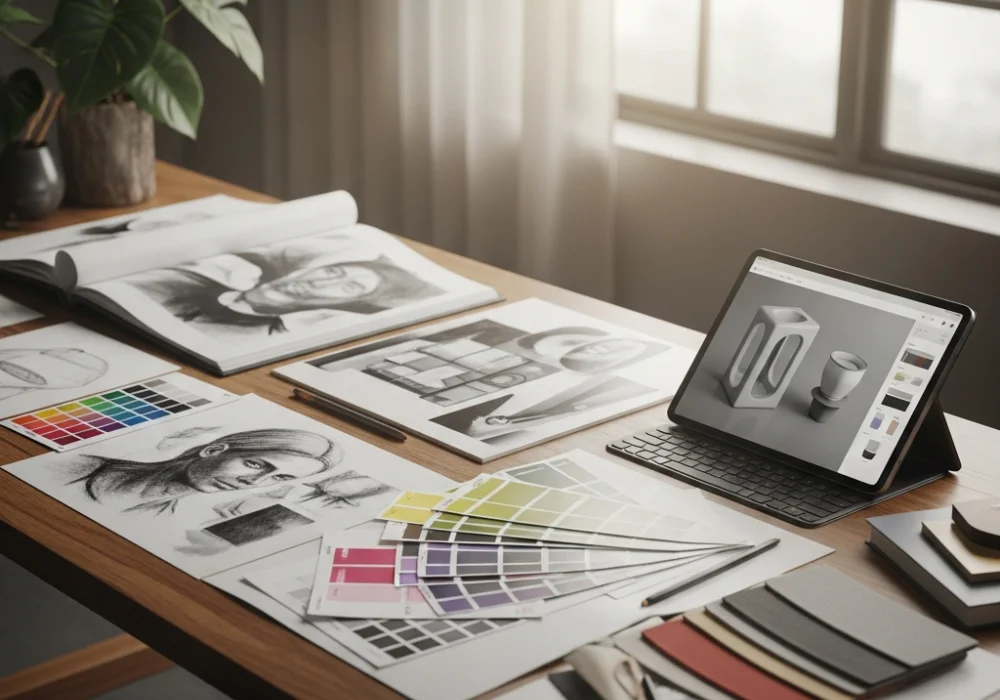
- Observational Drawings: Sketches of still life, human figures, and landscapes from real life.
- Creative Process: Mood boards, mind maps, and rough doodles that show how you arrived at an idea.
- Material Exploration: Photos of 3D models made from clay, paper, wire, or recycled materials.
- Digital Work: Optional but helpful, including basic graphic design or photography.
💡 Pro-Tip: The Power of Storytelling
Don’t just show the final product. Include a short paragraph or ‘captions’ explaining the problem you solved or the inspiration behind the work. This helps the jury understand your ‘Why’.
Comparison: NID vs. NIFT Portfolio Requirements
While both institutes value creativity, their focus areas differ slightly during the interview and portfolio rounds. Use the table below to understand the nuances of the latest pattern.
| Feature | NID (National Institute of Design) | NIFT (National Institute of Fashion Tech) |
|---|---|---|
| Primary Focus | Conceptual thinking and problem solving. | Aesthetics, material handling, and trend awareness. |
| Drawing Style | Realistic and analytical sketching. | Stylized illustrations and fashion figures. |
| Media | Diverse (Clay, Paper, Digital, Film). | Focus on Textiles, Illustrations, and Garments. |
How to Build Your Portfolio Step-by-Step
Building a portfolio is a marathon, not a sprint. Start early to ensure you have time for multiple iterations and refinements. Follow these steps to create a cohesive presentation.
1. Curate Your Best Work
Go through everything you have created in the last year. Select pieces that show a range of skills, such as color theory, perspective, and composition.
2. Document the Process
Take high-quality photos of your physical models. Scan your sketches to ensure they look professional and clean on a digital or physical page.
3. Organize Logically
Group your work into sections like ‘Freehand Drawing’, ‘3D Design’, and ‘Graphic Exploration’. This makes it easier for the jury to navigate through your strengths.
4. Seek Feedback
Show your work to mentors or peers. Use the mock interview resources at myentrance.in to get a professional opinion on your presentation.
Common Portfolio Mistakes to Avoid
Many students lose marks because they focus on the wrong details. Avoid these pitfalls to ensure your portfolio stands out for the right reasons.
- Over-decoration: Using too many stickers or fancy borders that distract from the actual artwork.
- Copying Work: Including fan art or copies of existing designs; institutes want original ideas.
- Lack of Variety: Showing 10 drawings of the same character; variety proves you are adaptable.
- Poor Presentation: Smudged charcoal drawings or blurry photographs of your work.
Quick Knowledge Check
Test your understanding of design portfolio basics with these quick questions.
1. What is the most important part of a portfolio project?
💡 Click to Reveal Answer
The design process (sketches, ideation, and evolution) is often more important than the final result.
2. How many projects should a standard portfolio contain?
💡 Click to Reveal Answer
Ideally 10 to 15 high-quality, diverse projects.
3. Should you include copied drawings of famous cartoons?
💡 Click to Reveal Answer
No. Institutes value originality and observational skills over the ability to copy existing characters.
Frequently Asked Questions
Is a digital portfolio better than a physical one?
It depends on the institute’s current syllabus and requirements. Most premium institutes now allow or require digital uploads, but having a physical copy for in-person interviews is highly recommended.
Do I need to be a professional artist to get into NID?
No. You need to demonstrate a strong foundation in drawing, creative thinking, and a willingness to learn. Use myentrance.in mock tests to build these fundamental skills.
Can I include school art projects in my portfolio?
Yes, provided they meet the quality standards and show your individual creative input rather than just following a teacher’s exact instructions.
Unlock Your Design Career Potential!
Get access to expert-led mock tests, previous year papers, and portfolio guidance tailored for NID, NIFT, and other top-tier exams. Join the community at myentrance.in today!
💬 Chat with our Experts on WhatsApp (+91 9526806124)




