
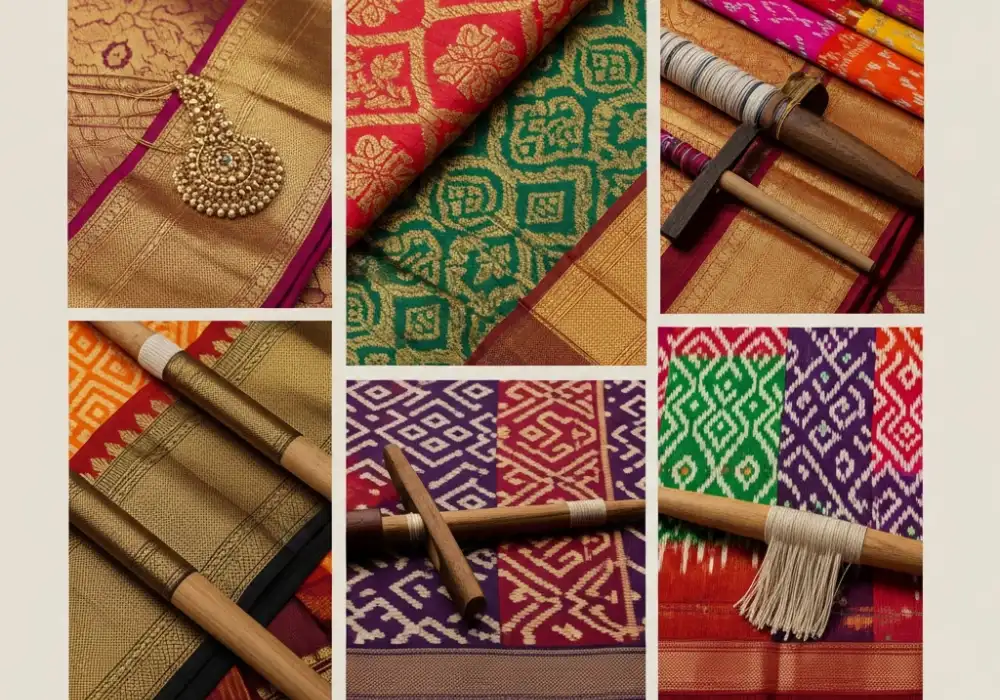
The Vitality of Handlooms in NIFT Entrance Exams
For any aspiring designer eyeing a seat at the National Institute of Fashion Technology, the topic of Indian Handlooms is not merely a subject—it is the soul of the curriculum. India’s textile heritage is one of the most diverse in the world, and NIFT seeks candidates who appreciate the intricacies of the warp and weft, the regional variations of silk and cotton, and the socio-economic significance of the weaving community. In the General Ability Test (GAT), questions frequently appear regarding GI tags, regional origins, and specific weaving techniques. In the Creative Ability Test (CAT), having a deep knowledge of these textures and motifs can significantly elevate your design illustrations. This mock test is meticulously designed to challenge your knowledge and provide a robust foundation for your preparation. By understanding the stories behind these fabrics, you develop a designer’s eye for detail and a respect for the craftsmanship that defines Indian fashion.
ℹ‸ Pro-Tip for NIFT Aspirants
Always remember that NIFT often asks about the ‘Geographical Indication’ (GI) status of handlooms. Focus on the specific district or town of origin rather than just the state to gain an edge in the exam.
Handlooms of India: Mock Test Part 1
- Which town in Telangana is world-famous for its Ikat weaving and was the first traditional craft to receive a GI tag in India?
- A) Gadwal
- B) Pochampally
- C) Venkatagiri
- D) Dharmavaram
- The ‘Muga Silk’ of Assam is uniquely identified by its:
- A) Crimson red color
- B) Natural golden luster
- C) Silver metallic finish
- D) Matte white texture
- ‘Kota Doria’ sarees from Rajasthan are distinguished by their fine square-check patterns known as:
- A) Jaals
- B) Butis
- C) Khats
- D) Konias
- Which of the following is an example of ‘Double Ikat’, where both warp and weft are tie-dyed?
- A) Sambalpuri Bandha
- B) Patan Patola
- C) Telia Rumal
- D) Both B and C
- The ‘Baluchari’ sarees, traditionally depicting mythological scenes on the pallu, belong to which state?
- A) Odisha
- B) Bihar
- C) West Bengal
- D) Uttar Pradesh
- Which handloom is famous for its ‘temple borders’ (Gopuram motifs) and thick, heavy silk?
- A) Kanjeevaram
- B) Mysore Silk
- C) Paithani
- D) Chanderi
- The ‘Paithani’ saree, known as the ‘Mahavastra’ of Maharashtra, primarily features which motif?
- A) Elephant
- B) Peacock (Mor)
- C) Tiger
- D) Lion
- ‘Jamdani’ weaving, often called ‘Woven Air’, is a specialty of which region?
- A) Lucknow
- B) Bengal
- C) Varanasi
- D) Hyderabad
- ‘Maheshwari’ sarees were significantly popularized under the patronage of:
- A) Rani Laxmibai
- B) Rani Ahilyabai Holkar
- C) Rani Padmini
- D) Nur Jahan
- Which state is the primary producer of ‘Tussar Silk’, often called the ‘Silk City of India’?
- A) Bhagalpur, Bihar
- B) Surat, Gujarat
- C) Kanchipuram, Tamil Nadu
- D) Banaras, Uttar Pradesh
Handlooms of India: Mock Test Part 2
- ‘Kalamkari’, the art of hand-painting or block-printing with natural dyes, is native to:
- A) Andhra Pradesh
- B) Karnataka
- C) Kerala
- D) Tamil Nadu
- The ‘Tanchoi’ weaving technique, which creates a satin-like finish without zari, has its roots in:
- A) China
- B) Persia
- C) Greece
- D) Egypt
- ‘Kasavu’ is the traditional gold-bordered cream saree from which state?
- A) Karnataka
- B) Kerala
- C) Tamil Nadu
- D) Andhra Pradesh
- ‘Venkatagiri’ sarees are traditionally known for their:
- A) Heavy wool embroidery
- B) Fine cotton weave with Jamdani-style motifs
- C) Tie-dye bandhani patterns
- D) Use of synthetic fibers
- ‘Kullu Shawls’ from Himachal Pradesh are characterized by:
- A) Floral embroidery
- B) Geometric patterns and bright borders
- C) Animal prints
- D) Plain textures
- Which of the following is NOT a characteristic of ‘Chanderi’ fabric?
- A) Sheer transparency
- B) Light weight
- C) Heavy velvet borders
- D) Hand-woven ‘Butis’
- ‘Sambalpuri’ sarees from Odisha are famous for which technique?
- A) Block Printing
- B) Bandha (Ikat)
- C) Zardosi
- D) Aari Work
- The ‘Dharamavaram’ sarees of Andhra Pradesh are best known for:
- A) Double-shaded effects and heavy silk
- B) Thin muslin fabric
- C) Jute weaving
- D) Mirror work
- What does the term ‘Ikat’ literally mean in its language of origin?
- A) To weave
- B) To tie or bind
- C) To color
- D) To polish
- Which handloom organization is responsible for promoting and marketing Indian handloom products?
- A) NIFT
- B) NID
- C) FabIndia
- D) Handloom Export Promotion Council (HEPC)
Answer Key & Comprehensive Explanations
✅ Click to Reveal Detailed Explanations
1. Answer: B (Pochampally). Pochampally Ikat, from the Yadadri Bhuvanagiri district of Telangana, is often called the ‘Silk City’. It is famous for its ‘tie and dye’ technique where the patterns are dyed into the yarns before weaving. It received the first GI tag in the craft category in 2004, highlighting its historical and cultural importance.
2. Answer: B (Natural golden luster). Muga silk is produced by the silkworm Antheraea assamensis found only in Assam. It is naturally golden-yellow and becomes more lustrous with every wash. It is one of the rarest silks in the world and was traditionally reserved for royalty.
3. Answer: C (Khats). Kota Doria is a blend of cotton and silk. The ‘Khats’ are square-check patterns created by the specific arrangement of warp and weft yarns of varying thicknesses. This makes the fabric breathable and light, ideal for the desert heat of Rajasthan.
4. Answer: D (Both B and C). Double Ikat is a complex technique where both warp and weft yarns are resist-dyed. Patan Patola from Gujarat and Telia Rumal from Telangana are the most prominent examples. This requires extreme precision to match the colors during weaving.
5. Answer: C (West Bengal). Baluchari sarees originate from Murshidabad but are now centered in Bishnupur. They are unique for their ‘pallus’ which feature hand-woven scenes from Indian epics like the Ramayana and Mahabharata, historically without using zari.
6. Answer: A (Kanjeevaram). Woven in Kanchipuram, Tamil Nadu, these sarees use pure mulberry silk and gold zari. The ‘Korvai’ technique joins the border and body in a zig-zag pattern, often featuring the ‘Gopuram’ or temple motif.
7. Answer: B (Peacock/Mor). Paithani sarees from Maharashtra are characterized by their kaleidoscopic silk and tapestry-style borders. The peacock (Mor) is the most iconic motif, usually woven in vibrant colors on a gold background.
8. Answer: B (Bengal). Jamdani is a fine muslin textile. The motifs are woven using a ‘discontinuous weft’ technique where the weaver adds patterns by hand using a needle while the fabric is on the loom, resulting in a fabric so light it was called ‘Ab-e-rawan’ (running water) or ‘woven air’.
9. Answer: B (Rani Ahilyabai Holkar). In the 18th century, Queen Ahilyabai Holkar invited weavers from Mandu and Surat to Maheshwar. She personally designed the first Maheshwari saree, ensuring they were lightweight and featured reversible borders.
10. Answer: A (Bhagalpur, Bihar). Bhagalpur is known as the ‘Silk City’ and is the hub for Tussar silk. Tussar is a wild silk known for its deep golden texture and thermal properties, making it a favorite for contemporary ethnic wear.
11. Answer: A (Andhra Pradesh). Kalamkari (meaning ‘pen-work’) has two styles: Srikalahasti (hand-painted) and Machilipatnam (block-printed). It uses only natural vegetable dyes and involves a 23-step purification and dyeing process.
12. Answer: A (China). Tanchoi was brought to India by three Parsi brothers (the Chois) who learned the technique in China. It became famous in Varanasi and is known for its intricate floral patterns woven entirely in silk without zari threads.
13. Answer: B (Kerala). Kasavu is the traditional cream-colored ‘Mundu-Neriyathu’ with a gold zari border. It represents the aesthetic of simplicity and purity in Kerala’s culture and is worn during festivals like Onam.
14. Answer: B (Fine cotton weave with Jamdani-style motifs). Venkatagiri sarees from Andhra Pradesh were historically woven for the royalty of the Venkatagiri kingdom. They are known for their softness and the use of Jamdani-style motifs like parrots or gold coins.
15. Answer: B (Geometric patterns and bright borders). Kullu shawls from Himachal Pradesh are woven with coarse wool and feature vibrant, colorful geometric patterns on the ends. These designs are a direct reflection of the local Himalayan environment.
16. Answer: C (Heavy velvet borders). Chanderi fabric is known for its silk-cotton blend, sheer transparency, and ‘Butis’ (small motifs). It does not traditionally use heavy velvet, as its hallmark is lightness and elegance.
17. Answer: B (Bandha/Ikat). Sambalpuri textiles from Odisha use the ‘Bandha’ technique, a form of Ikat. The patterns often reflect regional symbols like the lotus, shell (shankha), and chakra, which distinguish them from Telangana’s Ikat.
18. Answer: A (Double-shaded effects and heavy silk). Dharmavaram in Andhra Pradesh produces thick silk sarees with double-shaded (dual-tone) borders and bodies, created by using different colored threads for warp and weft.
19. Answer: B (To tie or bind). The word ‘Ikat’ comes from the Malay-Indonesian word ‘mengikat’, which means to tie. This refers to the process of wrapping yarns tightly before dyeing to prevent color penetration in specific areas.
20. Answer: D (HEPC). The Handloom Export Promotion Council (HEPC) is a nodal agency under the Ministry of Textiles that works to promote the export of Indian handloom products globally and supports the weaving community.
Need help with your NIFT Preparation?
Our experts at MyEntrance are here to guide you through every step of your design journey. Whether it is General Ability, Creative Ability, or Situation Test coaching, we have got you covered with the most comprehensive study materials and mock tests.
ᄒ Chat with our Experts on WhatsApp (+91 9526806124)




