
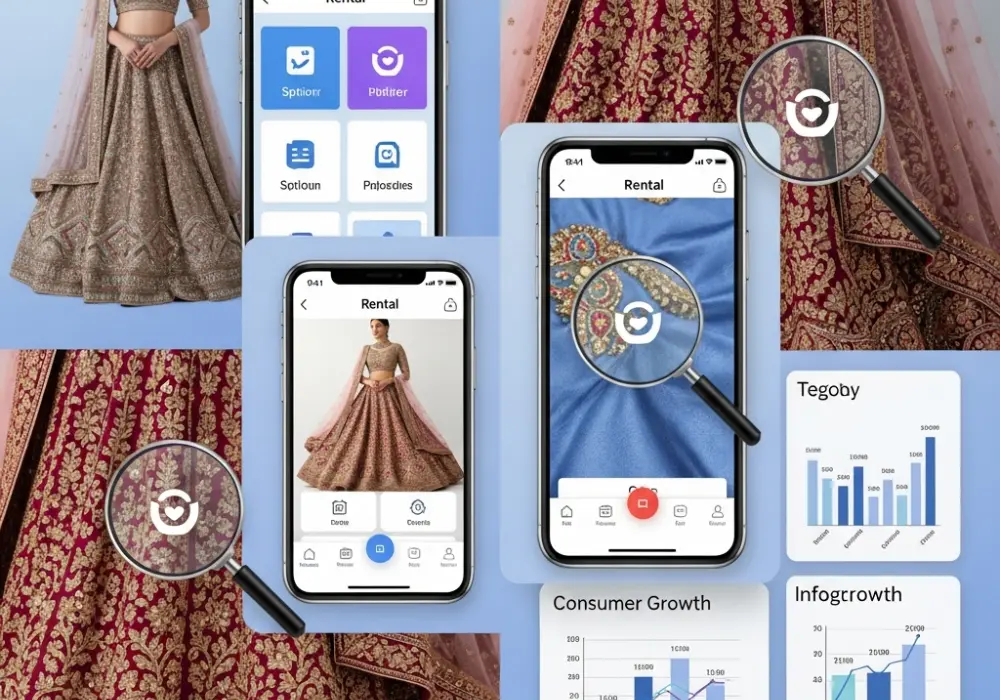
Decoding the Urban Indian Consumer: The Shift Toward Ethnic-Wear Rental Platforms
As a NIFT GAT aspirant, understanding the pulse of the fashion market is not just a soft skill—it is a core competency tested every year. One of the most significant trends currently dominating the Indian urban landscape is the dramatic shift from ‘ownership’ to ‘access’ within the ethnic-wear segment. High-end bridal lehengas, designer sherwanis, and luxury sarees that were once ‘once-in-a-lifetime’ purchases are now being rented for a fraction of their retail price. This post serves as your master guide to decoding Previous Year Questions related to consumer behavior, market dynamics, and the psychological triggers behind the rental economy. In the General Ability Test (GAT), these concepts often appear in the form of situation-based case studies, logical reasoning, or comprehension passages. By mastering the logic behind why a consumer in Mumbai or Bangalore chooses to rent a 1-lakh rupee Sabyasachi instead of buying it, you unlock a deeper understanding of market economics that the examiners love to probe.
💡 Pro-Tip: Why this topic matters?
The NIFT GAT often focuses on ‘Sustainable Fashion’ and ‘Circular Economy.’ Rental platforms are the backbone of this movement. Understanding the ‘Perceived Value’ vs. ‘Actual Ownership’ is the key to answering 90% of behavior-based questions.
Understanding the Consumer Psychology
The urban Indian consumer is evolving. We are seeing a move away from the ‘hoarding’ mentality toward an ‘experience-driven’ lifestyle. This is particularly true for Gen Z and Millennials who prioritize social media presence. In the world of Instagram and Pinterest, repeating an outfit is often seen as a faux pas. Consequently, the utility of a heavy bridal lehenga drops to zero after the wedding night. Rental platforms like Flyrobe, The Clothing Rental, and Stage3 address this ‘low-utility high-cost’ problem. When analyzing Previous Year Questions, keep an eye out for keywords like Asset-Light Lifestyle, Conspicuous Consumption, and Cost-Per-Wear (CPW). The NIFT GAT examiners test your ability to connect these socio-economic dots to the fashion retail landscape.
Simulated Question 1: The Economics of Rental vs. Purchase
Question: A consumer is deciding between purchasing a designer Lehenga for 80,000 INR (which they expect to wear 2 times) or renting the same for 8,000 INR per occasion. From a ‘Cost-Per-Wear’ perspective, which option is more economical, and what is the percentage saving per wear if they choose to rent?
Traditional Method:
1. Calculate CPW for Purchase: 80,000 / 2 = 40,000 INR.
2. Calculate CPW for Rental: 8,000 INR.
3. Compare: Rental is cheaper by 32,000 INR per wear.
4. Calculate Percentage: (32,000 / 40,000) * 100 = 80%. This takes about 2 minutes of calculation.
30-Second Ninja Shortcut:
Focus on the ‘Rental Ratio.’ If the rental price is 1/10th of the purchase price (8,000 vs 80,000), and the usage is very low (only 2 times), renting will almost always result in massive savings. Since 8k is 20% of 40k, the saving is immediately 80%. No need for heavy division!
💡 Click to Reveal Answer
The rental option is more economical. The consumer saves 80% per wear.
Simulated Question 2: Psychological Barriers in the Rental Market
Question: Despite the economic benefits, why do some urban consumers still hesitate to use ethnic-wear rental platforms? Identify the primary psychological barrier often highlighted in Previous Year Questions.
A) Lack of variety
B) Hygiene and sanitation concerns
C) Difficulty in website navigation
D) High security deposits
Traditional Method: Analyzing each option. A is wrong because rental platforms have massive variety. C is usually a minor technical issue. D is a financial barrier, not a psychological one. B relates to ‘Psychological Contamination,’ a key consumer behavior concept.
30-Second Ninja Shortcut: Use the ‘Body Proximity’ rule. In fashion behavior, the closer a garment is to the skin, the higher the hygiene barrier. For heavy ethnic wear (where sweating is common), hygiene is the #1 psychological deterrent. Choose B instantly.
💡 Click to Reveal Answer
Correct Answer: B) Hygiene and sanitation concerns. This is known as the ‘ick factor’ in consumer behavior studies.
Simulated Question 3: Market Segmentation Trends
Question: Which demographic is most likely to drive the growth of ethnic rental platforms in Tier 1 Indian cities?
A) High-Net-Worth Individuals (HNIs) who buy luxury daily.
B) Middle-income working professionals aged 22-35.
C) Rural artisans seeking to showcase their work.
D) Retired seniors attending family functions.
Traditional Method: HNIs prefer ownership for status. Rural artisans are suppliers, not consumers. Seniors often prefer traditional ownership and tailor-made fits. Professionals aged 22-35 are digitally savvy and value experiences over assets.
30-Second Ninja Shortcut: Look for the ‘Digital-Social Media Overlap.’ Who uses Instagram most? Gen Z and Millennials. Who has high social pressure but limited disposable income compared to HNIs? Working professionals (22-35). Select B.
💡 Click to Reveal Answer
Correct Answer: B) Middle-income working professionals aged 22-35. They are the ‘Aspirational Class’ driving the rental economy.
Simulated Question 4: Logistical Challenges in Rental Models
Question: What is the biggest operational hurdle for a startup specializing in heavy zardosi lehenga rentals?
A) Marketing on social media.
B) Finding enough customers.
C) Reverse logistics and garment maintenance.
D) Choosing a brand name.
Traditional Method: Every startup faces marketing and customer acquisition issues. However, ethnic wear is delicate. Heavy zardosi can be damaged during transit or at the event. Cleaning it without damage is expensive. Returning the item (reverse logistics) is the core operational bottleneck.
30-Second Ninja Shortcut: In any ‘Service-as-a-Product’ model, the ‘Return Journey’ is always the hardest part. If the question mentions ‘Heavy’ or ‘Delicate’ items, the answer is almost always related to Maintenance or Logistics. Select C.
💡 Click to Reveal Answer
Correct Answer: C) Reverse logistics and garment maintenance. Maintaining the ‘Like-New’ quality across multiple users is the ultimate challenge.
Simulated Question 5: Impact of Virtual Try-Ons
Question: How does the integration of Augmented Reality (AR) for virtual try-ons impact the consumer behavior of a rental platform user?
A) Increases the rate of returns.
B) Decreases consumer confidence.
C) Increases the conversion rate and reduces size-related anxiety.
D) Has no impact on consumer behavior.
Traditional Method: AR allows a user to see how a garment fits their body virtually. This removes the ‘will it suit me?’ doubt, leading to more checkouts (conversions) and fewer errors in size selection, which usually results in fewer returns, not more.
30-Second Ninja Shortcut: In GAT, technology is always presented as a solution. Look for the most positive, efficiency-driven outcome. ‘Increased conversion’ and ‘Reduced anxiety’ are the strongest positive indicators. Select C.
💡 Click to Reveal Answer
Correct Answer: C) Increases the conversion rate and reduces size-related anxiety. Tech bridges the ‘Trust Gap’ in digital rentals.
Master Cheat Sheet: Consumer Behavior & Rental Platforms
Use this table for quick revision before your exam. These concepts are frequently derived from Previous Year Questions analysis.
Final Strategy for NIFT GAT Success
To excel in questions about urban Indian markets, you must think like a modern retailer and a cautious consumer simultaneously. The shift toward ethnic-wear rentals is not just about saving money; it is about the ‘democratization of luxury.’ Everyone wants to look like a celebrity, and rental platforms provide the ticket. When you see Previous Year Questions on this topic, remember the Ninja Rule: Look for the friction point. If the question asks about growth, the answer lies in technology. If it asks about failure, the answer lies in hygiene or logistics. Master these nuances, and the GAT will become your strongest section.
Need more help with your NIFT GAT preparation? Our experts are here to guide you through every step of the journey, from portfolio tips to cracking the toughest case studies!





