
Preparation Guide for the Latest NIFT Situational Test
The NIFT Situational Test is a critical phase in securing a seat at the National Institute of Fashion Technology. Unlike the GAT or CAT, this test assesses your material handling skills, creative thinking, and innovation under time pressure. To succeed, having the right study material is just as important as your creative vision. In this comprehensive guide, we explore the top recommended resources, tools, and mock tests available on myentrance.in to help you excel.
Table of Contents
Understanding the Latest Pattern
The Situational Test typically involves creating a 3D model based on a given prompt using a specific set of materials provided at the center. Candidates are also required to write a Write-up explaining the concept behind their model. The latest pattern emphasizes sustainability, social awareness, and functional design. You cannot bring your own materials to the exam hall, but your practice material at home must mirror what NIFT provides.
💡 Pro-Tip: The Write-up Strategy
Always reserve the last 15 minutes for your write-up. Use keywords that highlight your design’s unique selling points (USP) and explain why you chose specific materials for certain parts of your model.
Essential Physical Material Kit for Practice
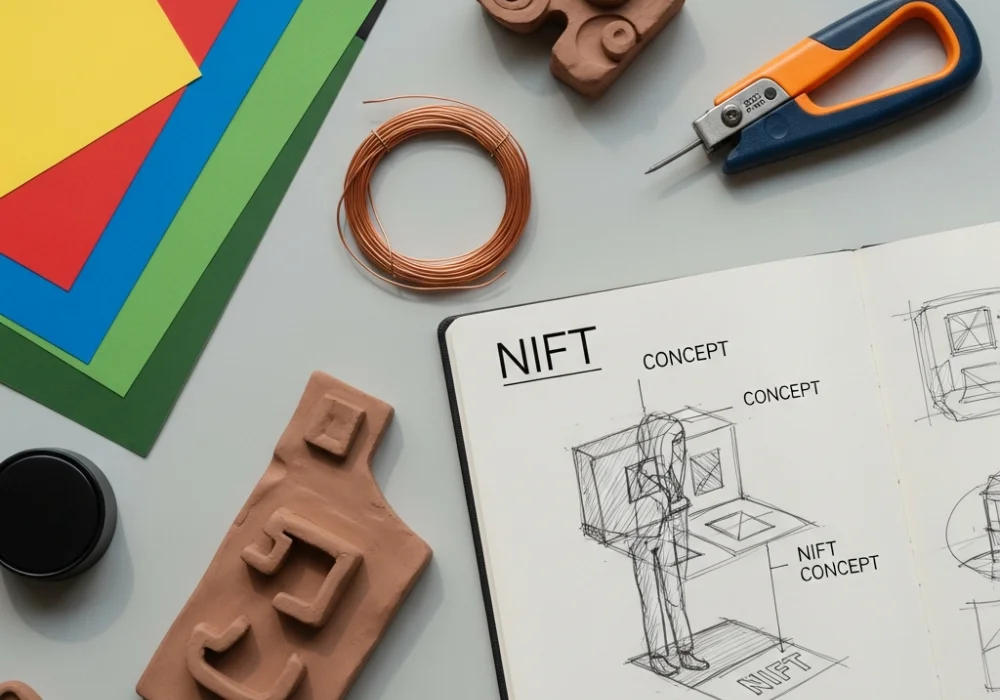
To master material handling, you must build a practice kit. Since you won’t know the materials beforehand, practicing with a variety of textures is key. Here are the top recommended materials for your home study:
- Cardboard and Ivory Sheets: These are the base of most models. Practice different thicknesses.
- Wire (Copper or Aluminum): Excellent for creating structural skeletons or intricate details.
- Clay or Plasticine: Essential for learning how to create organic, fluid shapes.
- Fabric Scraps and Threads: Practice draping, weaving, and texture creation.
- Straws, Sticks, and Corrugated Sheets: Great for architectural elements or adding height to models.
- Adhesives: Master the use of Fevicol, glue sticks, and double-sided tape without leaving messy residue.
Recommended Books and Guides
While physical practice is dominant, theoretical knowledge of Design Principles is vital. These books are highly recommended for the current syllabus:
- NIFT Entrance Exams by Arihant Experts: Offers a structured approach to previous years’ situational test themes.
- Design Drawing by Francis D.K. Ching: Helps you understand how to translate 2D thoughts into 3D structures.
- The Design of Everyday Things by Don Norman: Essential for developing a functional mindset for your models.
Additionally, digital resources and mock test series from platforms like myentrance.in provide a simulated environment that is indispensable for time management.
Material vs. Application Comparison
Different materials serve different purposes in your 3D model. Here is a quick reference table:
| Material Type | Best Used For | Manipulation Technique |
|---|---|---|
| Mount Board | Sturdy bases, walls | Scoring, cutting |
| Wire | Outlines, kinetic parts | Bending, twisting |
| Handmade Paper | Textured surfaces, flowers | Crumpling, quilling |
| Thermocol/Foam | Volumes, massing | Carving, shaping |
Step-by-Step Preparation Strategy
Follow this actionable plan to maximize your efficiency:
- Analyze Previous Themes: Study past themes like ‘Design a workspace for a potter’ or ‘Create a model for a futuristic park’.
- Master One Technique Daily: One day focus on paper quilling, the next on wire bending, and so on.
- Time-Bound Mock Drills: Set a timer for 2 hours. Use only limited materials to finish a model and write a 100-word explanation.
- Seek Feedback: Use the expert guidance and community at myentrance.in to get your models reviewed.
The Role of Mock Tests at MyEntrance
Mock tests are the secret weapon for NIFT aspirants. At myentrance.in, we provide curated Situational Test scenarios that reflect the latest trends and evaluation criteria. These tests help you:
- Understand how to manage time between ideation, construction, and writing.
- Learn how to optimize minimal materials for maximum impact.
- Develop a unique design vocabulary that impresses the examiners.
Practice makes perfect, and our mock tests are designed to push your creative boundaries.
Quick Knowledge Check
Test your situational test readiness with these questions!
1. What is the primary purpose of ‘Scoring’ in material handling?
Scoring involves making a shallow cut on a material (like mount board or thick paper) to allow it to bend sharply and cleanly without breaking or fraying.
2. How long is the NIFT Situational Test usually?
The test is typically 2 hours long, during which you must complete the model and the written explanation.
3. Can you use external decorative items in the final exam?
No. You are only allowed to use the materials provided in the envelope at the exam center. Bringing outside materials can lead to disqualification.
Frequently Asked Questions
What is the weightage of the Situational Test?
For the B.Des program, the Situational Test usually carries a 20% weightage in the final merit list.
Do I need to be good at drawing for this test?
While drawing helps in the ideation phase, the test primarily focuses on your ability to create 3D forms and your conceptual clarity.
Where can I find sample questions for the Situational Test?
You can find a dedicated section for sample themes and mock tests on myentrance.in, specifically designed for upcoming NIFT exams.
Ready to Ace the NIFT Situational Test?
Get personalized guidance, professional feedback on your models, and access to the latest mock test series to ensure your success.
💬 Chat with our Experts on WhatsApp (+91 9526806124)




