
Table of Contents
Understanding Heritage in the NID DAT Latest Pattern
For aspirants eyeing a seat at the National Institute of Design (NID), the Design Aptitude Test (DAT) is more than just a test of sketching skills; it is a holistic evaluation of an individual’s observational powers, cultural sensitivity, and awareness of the world. A significant portion of the General Ability Test (GAT) and the creative section often revolves around National Heritage. In the latest pattern, NID has shifted its focus from rote memorization of dates to the application of heritage knowledge in solving contemporary design problems.
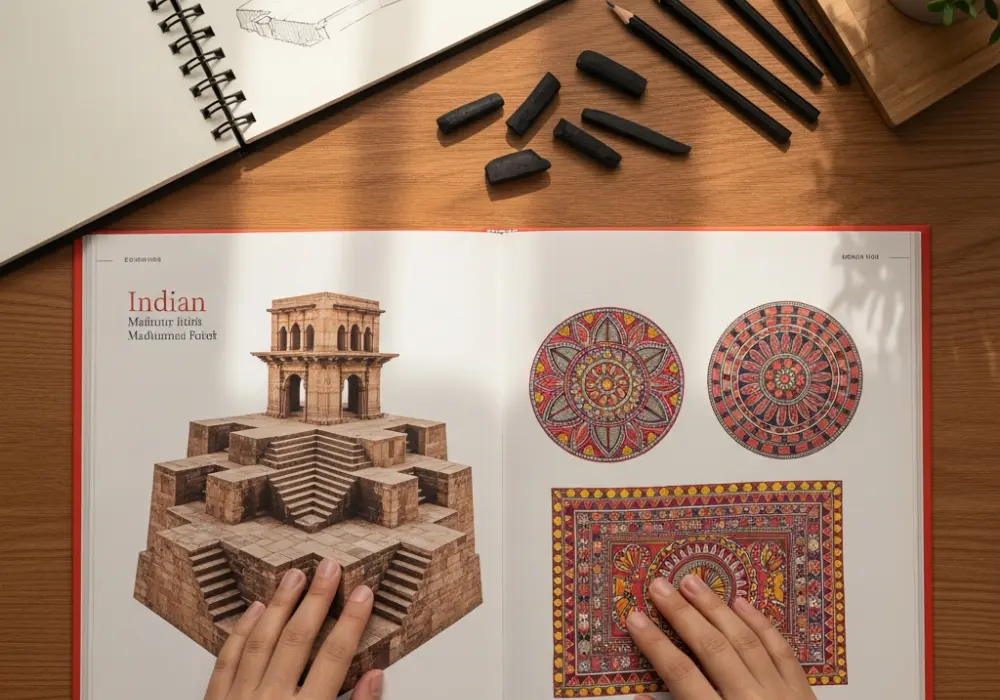
National heritage encompasses everything from architectural marvels and traditional textiles to folk performing arts and ancient scientific innovations. For a designer, heritage is a repository of solutions. Whether it is the sustainable cooling systems of Jharokhas in Rajasthan or the ergonomic brilliance of traditional weaving looms, the upcoming exams demand that students understand the ‘why’ behind the ‘what’.
💡 Pro-Tip: Heritage as a Design Tool
Don’t just study heritage as history. Study it as a design case study. Ask yourself: How does this traditional craft solve a modern problem of sustainability or material efficiency?
Trend Analysis: Historical vs. Modern Shifts
Analyzing past trends reveals a clear trajectory in how heritage questions are framed. Earlier, questions were direct (e.g., “Where is the Sun Temple located?”). However, the upcoming exams are expected to feature more integrated questions. Candidates might be asked to design a modern packaging solution inspired by Madhubani art or to critique a modern building’s lack of traditional ventilation techniques.
This shift highlights the need for Generative Design Thinking. NID seeks students who can synthesize traditional aesthetics with modern functionality. Utilizing mock tests on myentrance.in can help students practice these cross-functional questions, ensuring they are not caught off guard by the evolving complexity of the GAT section.
Core Thematic Areas to Focus On
To excel in the upcoming exams, students should categorize their heritage study into four primary pillars:
- Architectural Heritage: Focus on temple architecture (Nagara, Dravida, Vesara), Indo-Islamic features, and the colonial influence on Indian urban planning.
- Textile and Craft: Understand the regional significance of weaves like Patola, Kanjeevaram, and Chanderi, alongside crafts like Dhokra metal casting and Blue Pottery.
- Intangible Heritage: This includes classical dances, folk music, and festivals which often appear in visual composition tasks.
- Scientific Heritage: Ancient Indian contributions to metallurgy, mathematics, and astronomy (e.g., Jantar Mantar) are increasingly popular topics.
Comparative Analysis: Heritage vs. Contemporary Design
Understanding the bridge between the old and the new is vital for the NID DAT. Below is a comparison highlighting how traditional heritage elements translate into modern design principles.
| Heritage Element | Key Design Principle | Modern Application |
|---|---|---|
| Stepwells (Baoris) | Thermal Mass & Water Mgmt | Sustainable Urban Cooling |
| Warli Art | Geometric Minimalism | Iconography & UX/UI Symbols |
| Terracotta Crafts | Biodegradable Materiality | Eco-friendly Product Packaging |
| Jaali Work | Light & Air Filtration | Parametric Facades in Architecture |
Strategic Preparation for Upcoming Exams
Success in NID requires a structured approach. Simply reading a history book is insufficient. Follow these steps to master the national heritage component:
1. Visual Mapping
Create visual journals. Instead of writing notes about Ajanta Caves, draw the pillars, the mudras in the frescoes, and the layout. Visual memory is crucial for the sketching section of the DAT.
2. Analyze the GI Tags
Geographical Indication (GI) tags are a goldmine for NID aspirants. Every year, questions appear regarding the origin of specific crafts. Keeping an updated list of recent GI tags in India is a must for the latest pattern.
3. Integrated Mock Testing
Practice with the comprehensive mock tests at myentrance.in. Our tests are designed to mimic the interdisciplinary nature of the actual NID exam, blending heritage knowledge with logical reasoning and creative problem-solving.
Quick Knowledge Check
Test your heritage IQ for the upcoming exams with these three quick questions:
1. Which traditional Indian embroidery style originates from Lucknow and uses a variety of stitches on fine muslin?
💡 Click to Reveal Answer
Chikan (Chikankari). It is renowned for its intricate floral patterns and elegance.
2. The ‘Bibi Ka Maqbara’ is often compared to which famous Indian monument?
💡 Click to Reveal Answer
The Taj Mahal. It is located in Aurangabad and was commissioned by Aurangzeb.
3. Which craft involves the use of lost-wax casting technique and is common among tribal communities in Odisha and Chhattisgarh?
💡 Click to Reveal Answer
Dhokra Craft. It is one of the oldest known methods of metal casting in India.
Frequently Asked Questions (FAQs)
How important is National Heritage for the NID Prelims?
It is extremely important. Typically, 10-15% of the GAT marks and several drawing prompts are rooted in cultural and heritage contexts.
Do I need to memorize years and names of kings?
No, NID focuses more on the visual elements, materials, and the cultural logic of the heritage site or craft rather than dry dates.
Where can I find sample papers for the latest pattern?
You can access high-quality sample papers and mock tests specifically tailored for the latest NID pattern on www.myentrance.in.
Ready to Ace Your NID Journey?
Get access to expert-curated mock tests, heritage analysis modules, and personalized guidance to crack the upcoming design exams with flying colors!
💬 Chat with our Experts on WhatsApp (+91 9526806124)




