
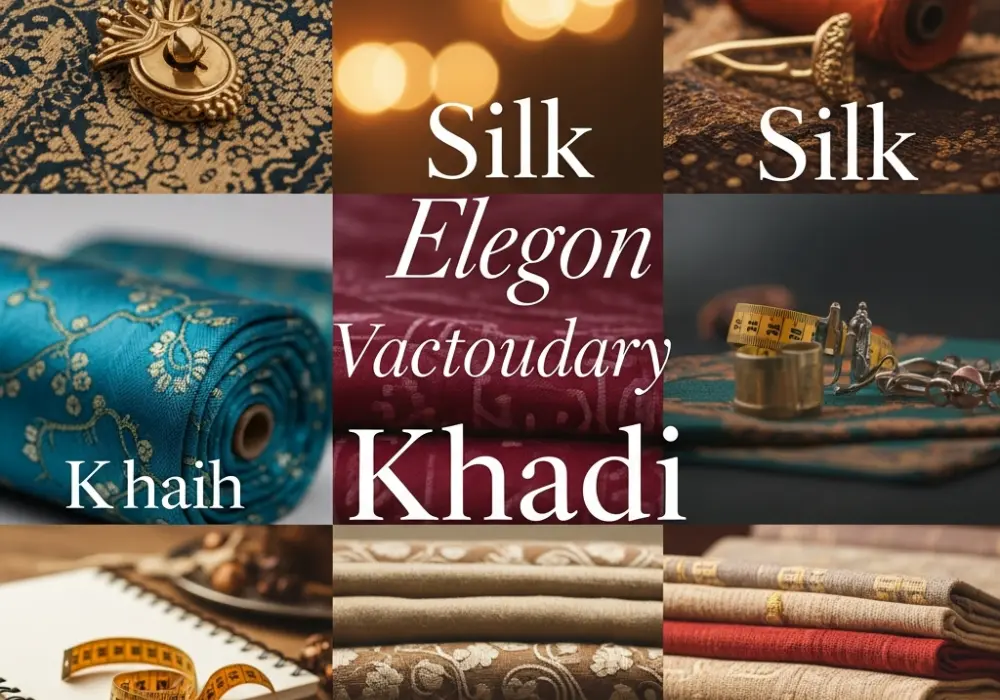
Mastering the NIFT GAT: Your Ultimate GK and Vocabulary Deep-Dive
The National Institute of Fashion Technology (NIFT) entrance exam demands more than just creative flair; it requires a robust General Ability Test (GAT) score. To excel, students must bridge the gap between artistic intuition and analytical knowledge. This booster is designed to immerse you in the historical context of Indian heritage and the nuances of the English language, ensuring you are well-equipped for the current competitive landscape.
💡 Pro-Tip for GAT Preparation
Don’t just memorize facts. Connect GK topics to fashion trends. For example, when studying the Khadi movement, think about how it translates to modern sustainable fashion runways. This cross-linking helps in both GAT and the Situation Test!
Part 1: High-Yield General Knowledge & Current Affairs
1. The Legacy of Banarasi Silk: A Historical Perspective
Banarasi silk is synonymous with luxury and Indian tradition. Originating from the holy city of Varanasi, these sarees are known for their gold and silver brocade or zari, fine silk, and opulent embroidery. Historically, the craft flourished during the Mughal era, where Persian motifs like the ‘Buti’ (floral patterns) and ‘Jhallar’ (upright leaves) merged with Indian aesthetics. Today, the Banarasi saree is protected under a Geographical Indication (GI) tag, ensuring that only authentic products from the specified region can use the name. For a NIFT aspirant, understanding the complexity of the ‘Jacquard’ loom—which revolutionized these intricate patterns—is crucial as it represents the intersection of technology and handloom.
2. Geographical Indications (GI Tags) and Craft Preservation
GI tags are legal protections given to products that have a specific geographical origin and possess qualities or a reputation that are due to that origin. In India, this is governed by the Geographical Indications of Goods (Registration and Protection) Act. For the fashion industry, GI tags like ‘Kashmiri Pashmina’, ‘Chanderi Fabric’, and ‘Kancheepuram Silk’ are vital. They protect local artisans from cheap imitations and preserve the unique cultural heritage of the region. Knowing the latest additions to the GI list is a common requirement in the GAT section, as it reflects the government’s commitment to the ‘Make in India’ and ‘Vocal for Local’ initiatives.
3. The Swadeshi Movement and the Modern Khadi Transformation
Khadi is not just a fabric; it is a symbol of self-reliance and the Indian freedom struggle. Mahatma Gandhi popularized Khadi to boycott foreign-made cloth and promote village industries. Historically, the Charkha became a tool of revolution. In the current fashion scenario, Khadi has undergone a massive transformation. It is now positioned as a high-end, eco-friendly, and sustainable luxury fabric. The Khadi and Village Industries Commission (KVIC) collaborates with top designers to make Khadi globally relevant. Aspirants should focus on how Khadi bridges the gap between grassroots ethics and global fashion aesthetics.
4. UNESCO World Heritage Sites: Architectural Inspiration
NIFT often tests your awareness of Indian architecture as it heavily influences textile patterns and garment silhouettes. UNESCO sites like the Rani-ki-Vav (The Queen’s Stepwell) in Gujarat feature intricate carvings that have been directly translated into Patola silk designs. Similarly, the geometric precision of the Sun Temple at Konark or the floral lattices of the Taj Mahal provide endless inspiration for surface ornamentation. Understanding the historical context of these sites—such as the dynasty that built them (e.g., the Chalukyas or Mughals)—helps in answering multifaceted GK questions.
5. Sustainable Fashion Initiatives: Project SU.RE
Sustainability is the biggest trend in the global fashion industry. In India, the ‘SU.RE’ (Sustainable Resolution) project is a significant milestone. Launched by the Ministry of Textiles along with the Clothing Manufacturers Association of India (CMAI), it aims to set a common industry standard for sustainable fashion. The resolution involves a commitment to use sustainable raw materials and reduce the carbon footprint. Students should be aware of terms like ‘Circular Fashion’, ‘Upcycling’, and ‘Slow Fashion’ as these are frequently discussed in the context of current industry policies.
6. Tribal Arts and Craft: The Warli and Madhubani Influence
Tribal arts are the backbone of Indian decorative heritage. Warli art, originating from the tribal groups of Maharashtra, uses simple geometric shapes (circles, triangles, squares) to depict daily life. Madhubani (or Mithila) painting from Bihar is known for its vibrant colors and mythological themes. These art forms have transitioned from mud walls to high-fashion runways, appearing on everything from modern tunics to designer handbags. Understanding the pigments used (like turmeric, indigo, and rice paste) is essential for questions related to natural dyes and sustainable practices.
7. The Ministry of Textiles and Current Policy Framework
The Ministry of Textiles is the central body responsible for the policy, planning, and development of the textile industry. Key current schemes include the National Technical Textiles Mission and the PM-MITRA (Mega Integrated Textile Region and Apparel) parks. These initiatives aim to make India a global textile hub. For NIFT students, knowing the current Union Minister for Textiles and the objectives of these schemes is vital for the GK section, as they directly impact the industry you are about to enter.
8. Indian Haute Couture and Global Recognition
Indian designers are increasingly making their mark on global platforms like the Paris Fashion Week and the Met Gala. Designers such as Rahul Mishra, Sabyasachi Mukherjee, and Iris van Herpen (in collaboration with Indian artisans) are redefining ‘Couture’. Knowing the difference between ‘Prêt-à-porter’ (Ready-to-wear) and ‘Haute Couture’ (High dressmaking) is a fundamental vocabulary and GK requirement. Furthermore, tracking which Indian celebrities represent global brands (like Deepika Padukone for Louis Vuitton) is a common current affairs topic.
9. The Evolution of Indian Jewelry: Temple and Meenakari
Jewelry is an integral part of the Indian ensemble. Temple jewelry, which originated in the Chola dynasty, was used to adorn idols and later became popular among Bharatnatyam dancers. Meenakari, the art of enameling metal surfaces, was brought to India by the Mughals and perfected in Rajasthan. Understanding these techniques—along with ‘Kundan’ and ‘Jadau’—is important for the design and GK components of NIFT, as jewelry often complements the overall garment narrative.
10. Digital Transformation in the Fashion Industry
The rise of E-commerce and Virtual Reality (VR) is changing how fashion is consumed. Concepts like ‘Digital Clothing’, ‘NFTs in Fashion’, and ‘Metaverse Fashion Weeks’ are no longer science fiction. In India, platforms like Myntra and Nykaa Fashion are revolutionizing the retail landscape. Awareness of how Artificial Intelligence (AI) is used for trend forecasting and inventory management is a cutting-edge topic that can give you an edge in the GAT and the creative thinking process.
📝 Quick Quiz: Test Your Knowledge
Which state is famous for the ‘Pochampally Ikat’ weave?
Answer: Telangana. (This was the first traditional craft to receive a GI tag in India!)
Part 2: High-Frequency Vocabulary for NIFT GAT
1. Avant-garde (Adjective)
Meaning: New and experimental ideas and methods in art, music, or literature, which are often very different from what is traditional.
Example 1: The designer’s avant-garde collection featured garments made entirely of recycled glass.
Example 2: NIFT encourages students to think outside the box and produce avant-garde concepts for their portfolios.
Synonyms: Innovative, ground-breaking, pioneering, radical.
Antonyms: Traditional, conservative, conventional, status quo.
Mnemonic: Think of “Advance-Guard”—the soldiers at the very front of the army who are the first to enter new territory.
2. Ephemeral (Adjective)
Meaning: Lasting for a very short time; fleeting.
Example 1: Fashion trends are often ephemeral, lasting only a single season before being replaced.
Example 2: The beauty of a sunset is ephemeral, so one must appreciate it in the moment.
Synonyms: Transient, momentary, passing, short-lived.
Antonyms: Eternal, permanent, everlasting, enduring.
Mnemonic: Think of “E-f-funeral”—funerals mark the end of life, which is ephemeral or short-lived compared to eternity.
3. Sartorial (Adjective)
Meaning: Relating to tailoring, clothes, or style of dress.
Example 1: His sartorial choices were impeccable, always opting for perfectly fitted suits.
Example 2: The museum hosted an exhibition celebrating the sartorial history of the Victorian era.
Synonyms: Vestiary, stylistic, garment-related.
Antonyms: Unstylish, non-fashionable.
Mnemonic: Think of “Smart Tutorial”—A tutorial on how to look smart in clothes.
4. Pragmatic (Adjective)
Meaning: Dealing with things sensibly and realistically in a way that is based on practical rather than theoretical considerations.
Example 1: While her designs were artistic, she took a pragmatic approach to ensure they were wearable.
Example 2: A pragmatic business model is essential for any startup to survive the first year.
Synonyms: Practical, realistic, down-to-earth, sensible.
Antonyms: Idealistic, impractical, visionary.
Mnemonic: Pragmatic = Practical. Both start with ‘Pr’ and deal with reality.
5. Fastidious (Adjective)
Meaning: Very attentive to and concerned about accuracy and detail; very concerned about matters of cleanliness.
Example 1: The master weaver was fastidious about the tension of the silk threads.
Example 2: He is fastidious about his appearance, spending hours choosing the right accessories.
Synonyms: Scrupulous, punctilious, painstaking, meticulous.
Antonyms: Careless, easy-going, sloppy.
Mnemonic: If you are “Fastidious”, you are “Fussy”. Both start with ‘F’.
6. Luminous (Adjective)
Meaning: Giving off light; bright or shining, especially in the dark.
Example 1: The gala featured models wearing luminous fabrics that glowed under UV lights.
Example 2: Her luminous skin glowed even in the dim light of the studio.
Synonyms: Radiant, dazzling, glowing, lustrous.
Antonyms: Dark, dull, matte, dim.
Mnemonic: Think of “LUMEN”—the unit of light. Luminous things have many lumens.
7. Iconoclastic (Adjective)
Meaning: Characterized by attack on cherished beliefs or institutions; breaking conventions.
Example 1: Alexander McQueen was known for his iconoclastic runway shows that challenged social norms.
Example 2: The young artist’s iconoclastic style initially shocked the conservative art community.
Synonyms: Irreverent, non-conformist, dissident, radical.
Antonyms: Orthodox, traditional, conformist.
Mnemonic: Icon + Clash. You are clashing with the existing icons or standards.
8. Aesthetic (Adjective/Noun)
Meaning: Concerned with beauty or the appreciation of beauty; a set of principles underlying the work of a particular artist.
Example 1: The overall aesthetic of the brand is minimalist and clean.
Example 2: She chose the furniture for its aesthetic appeal rather than its utility.
Synonyms: Artistic, tasteful, elegant, beautiful.
Antonyms: Ugly, grotesque, unattractive.
Mnemonic: Think of “Eyes-thetic”—it is pleasing to the eyes.
9. Verisimilitude (Noun)
Meaning: The appearance of being true or real.
Example 1: The CGI in the fashion commercial had a high degree of verisimilitude, making the virtual models look human.
Example 2: For a historical drama, designers must ensure the costumes have period verisimilitude.
Synonyms: Realism, authenticity, credibility, truthfulness.
Antonyms: Falseness, impossibility, implausibility.
Mnemonic: “Very-Similar-to-Truth”.
10. Resilience (Noun)
Meaning: The capacity to recover quickly from difficulties; toughness.
Example 1: The artisan community showed great resilience by adapting to digital sales during the global lockdowns.
Example 2: Silk is prized for its resilience and strength despite its delicate appearance.
Synonyms: Flexibility, durability, grit, spirit.
Antonyms: Fragility, weakness, vulnerability.
Mnemonic: Think of a “Rubber” band. It has resilience because it snaps back to its shape.
Connecting the Dots: Vocabulary in Context
In the NIFT GAT, you won’t just be asked for definitions. You will see these words in reading comprehension passages or sentence completion tasks. For example, a passage might describe a designer’s avant-garde approach to sartorial challenges, noting that while their vision is iconoclastic, they maintain a pragmatic handle on production costs. Mastering these words allows you to navigate complex texts with ease and confidence.
💡 Vocabulary Challenge
Try to write a paragraph about your favorite fashion brand using at least 5 of the words above. This active recall technique is the best way to move words from your short-term to your long-term memory!
Conclusion: Your Path to Success
Preparation for NIFT is a marathon, not a sprint. By consistently building your knowledge of Indian crafts, heritage, and current affairs, and by expanding your vocabulary, you are building a solid foundation for the GAT. Remember that every detail matters—from the specific weave of a Banarasi saree to the precise use of the word ‘verisimilitude’. Stay curious, keep reading, and practice daily.
Ready to Ace the NIFT Entrance Exam?
Don’t let doubts slow you down. Our experts are here to help you with personalized guidance, mock tests, and deep-dive study materials designed for the upcoming exam cycle.
💬 Chat with our Experts on WhatsApp (+91 9526806124)




