
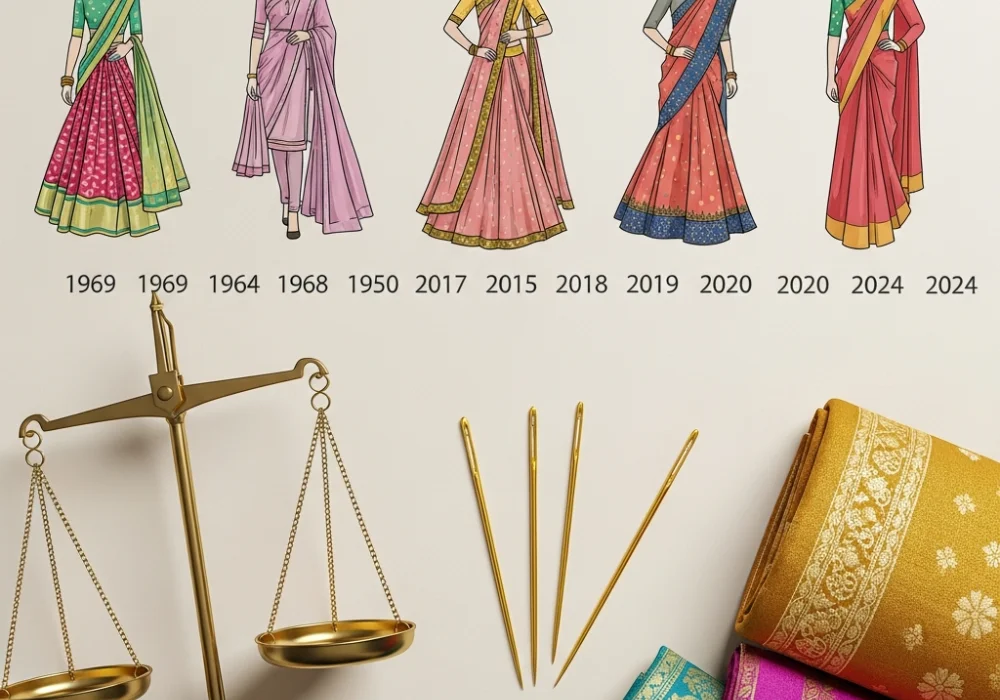
The Evolution of Indian Couture: A NIFT Study Guide
Understanding the Visionaries who Shaped the Indian Fashion Landscape
Why Designer Histories Matter for NIFT Aspirants
For students preparing for the National Institute of Fashion Technology (NIFT) entrance examination, knowledge of Indian designers is more than just general awareness—it is a critical component of the General Ability Test (GAT) and the Creative Ability Test (CAT). Whether it is identifying signature motifs in a visual question or understanding the socio-economic impact of the ‘Make in India’ movement through fashion, these iconic figures provide the blueprint for the industry you are about to enter.
Indian fashion is a unique tapestry that weaves together ancient textile traditions with contemporary silhouettes. This ‘Interactive History Timeline’ explores the pioneers who transitioned Indian clothing from local tailor-made outfits to a multi-billion dollar global industry. As you study this timeline, pay close attention to the signature styles, craft revival techniques, and major milestones associated with each designer, as these are frequently tested in NIFT papers.
1969 – THE GENESIS
Ritu Kumar: The Revivalist
Ritu Kumar started her journey in a small village near Kolkata with just two tables and hand-block printing techniques. She is credited with bringing traditional Indian crafts, particularly Zardozi and Block printing, back into the mainstream fashion consciousness. For NIFT, remember her as the pioneer of the ’boutique culture’ in India.
1987 – RETAIL REVOLUTION
Tarun Tahiliani & Ensemble
Tahiliani co-founded ‘Ensemble’, India’s first multi-designer boutique. He is often called the ‘Karl Lagerfeld of India’ for his ability to merge Italian tailoring with Indian craftsmanship. His signature ‘Draped Saree’ is a frequent topic in design history questions regarding garment construction.
1990 – CINEMATIC COUTURE
Manish Malhotra: Bollywood’s Stylist
Malhotra revolutionized the role of costume design in Indian cinema. By creating a cohesive ‘look’ for characters in films like Rangeela, he bridged the gap between films and high fashion. In exams, he represents the commercial power and glamorization of the Indian ethnic wear market.
1992 – ROYAL MAGNIFICENCE
JJ Valaya: The Monarch of Style
A founding member of FDCI, JJ Valaya is known for his royal aesthetic and heavy bridal collections. His use of fine fabrics and embroidery inspired by the Mughal era makes him a key figure when studying the ‘Royal Indian’ theme in design portfolios.
1995 – ETHICAL LUXURY
Anita Dongre: The Business Visionary
Dongre created a massive empire (House of Anita Dongre) encompassing luxury, sustainable ‘Grassroot’ labels, and affordable ready-to-wear. She is a vital case study for NIFT aspirants interested in the business of fashion and sustainable retail management.
2002 – HERITAGE GLOBALIZED
Sabyasachi Mukherjee: The Brand Master
Starting with ‘Sabyasachi’ in 1999, his 2002 debut at India Fashion Week changed the industry. Known for ‘international styling with an Indian soul’, his use of unusual fabrics and ‘Sabya-pink’ defines modern luxury. For CAT, observe his branding—the Bengal Tiger logo is iconic.
2009 – QUIRKY MODERNISM
Masaba Gupta: Print Queen
Introducing ‘House of Masaba’, she brought a youthful, quirky energy to Indian fashion with prints like cows, cameras, and fans on sarees. She represents the ‘Gen-Next’ movement in NIFT terminology, emphasizing creativity over tradition.
2014 – GLOBAL FOOTPRINT
Rahul Mishra & Bibhu Mohapatra
Rahul Mishra became the first Indian to win the International Woolmark Prize, and Bibhu Mohapatra gained fame dressing Michelle Obama. These designers represent the ‘Global Indian’—mastering international silhouettes while keeping Indian roots intact through slow fashion.
Study Tips for NIFT Preparation
Memorizing names is only half the battle. To excel in the NIFT entrance exam, follow these strategic steps:
- Analyze Motifs: If you see a ‘lotus’ or ‘peacock’ motif in a refined, dark palette, think Rohit Bal. If you see ‘birds and trees’ in white on white, think Rahul Mishra or Anita Dongre.
- Follow Fashion Weeks: Keep an eye on Lakme Fashion Week and India Couture Week. The opening and closing designers are usually high-priority for current affairs questions.
- Understand Textures: Designers like Gaurav Gupta are known for ‘structural drapes’ and ‘sculptural’ fashion. This terminology is essential for the NIFT GAT.
- Sustainability Focus: Increasingly, NIFT is asking about designers who work with khadi and handloom. Study the work of Wendell Rodricks and his contribution to Goan fashion and eco-friendly designs.
In conclusion, the journey of Indian fashion from the looms of artisans to the red carpets of Cannes is a testament to the vision of these designers. As a future student at NIFT, you are the next link in this timeline. Start observing the world around you through the lens of these visionaries, and you will find that the exam questions become much more intuitive.





