
The Shift Toward Conscious Design: Why Material Choice Matters
In the current design landscape, the National Institute of Design (NID) has moved far beyond evaluating mere aesthetic appeal. As a panelist, I can tell you that we are no longer just looking for the ‘best-looking’ product or the most ‘skilled’ sketch. We are searching for designers who understand the weight of their decisions. Every time you choose a material—be it a specific grade of paper, a type of plastic, or a digital medium—you are making an ethical choice. In the upcoming personal interview rounds, expect the panel to probe deep into these choices through the lens of sustainability. This masterclass will provide you with the linguistic and conceptual tools to defend your portfolio with confidence and intellectual depth.
What the Panel is Secretly Evaluating
When we ask, ‘Why did you use acrylic for this prototype instead of a biodegradable alternative?’ we aren’t necessarily looking for you to apologize. We are evaluating three core competencies:
- Systems Thinking: Do you understand where your material comes from and where it goes after the product’s life ends?
- Material Intelligence: Do you understand the properties of the medium? Why was this specific material functionally superior to others?
- Ethical Accountability: Have you considered the social and environmental cost of your creative process, or did you just pick what was cheapest or easiest?
The goal is to show that your choice was intentional rather than accidental. A student who says, ‘I used plastic because it was available,’ will always lose to a student who says, ‘I used high-density polyethylene because the product requires a ten-year lifespan in a high-moisture environment, which organic composites cannot yet sustain without toxic binders.’
The Framework for Material Justification
1. The Argument of Longevity vs. Disposability
Sustainability isn’t always about being biodegradable. Sometimes, a long-lasting synthetic material is more sustainable than a ‘natural’ material that breaks down in two months and requires constant replacement. In the interview, if you have used non-green materials, justify them by highlighting the Product Service Life. Explain that by creating something durable, you are reducing the frequency of replacement and, consequently, the waste stream.
2. The Lifecycle Narrative
Be prepared to discuss the ‘Cradle to Grave’ or ‘Cradle to Cradle’ journey of your project. If you used paper, was it FSC-certified? If you used digital media, did you consider the energy consumption of the servers? You don’t need to be perfect, but you need to be aware. Mentioning that you explored eco-friendly alternatives but found them lacking in specific structural properties shows that you did your research.
3. The Context of the User
Design is for people. If your material choice was dictated by the user’s economic constraints or cultural context, state that clearly. For example, ‘While bamboo would be more sustainable globally, for this specific rural intervention, recycled scrap metal was more locally accessible and culturally accepted by the blacksmiths in that region.’
Sample Mock Interview: The Sustainability Grill
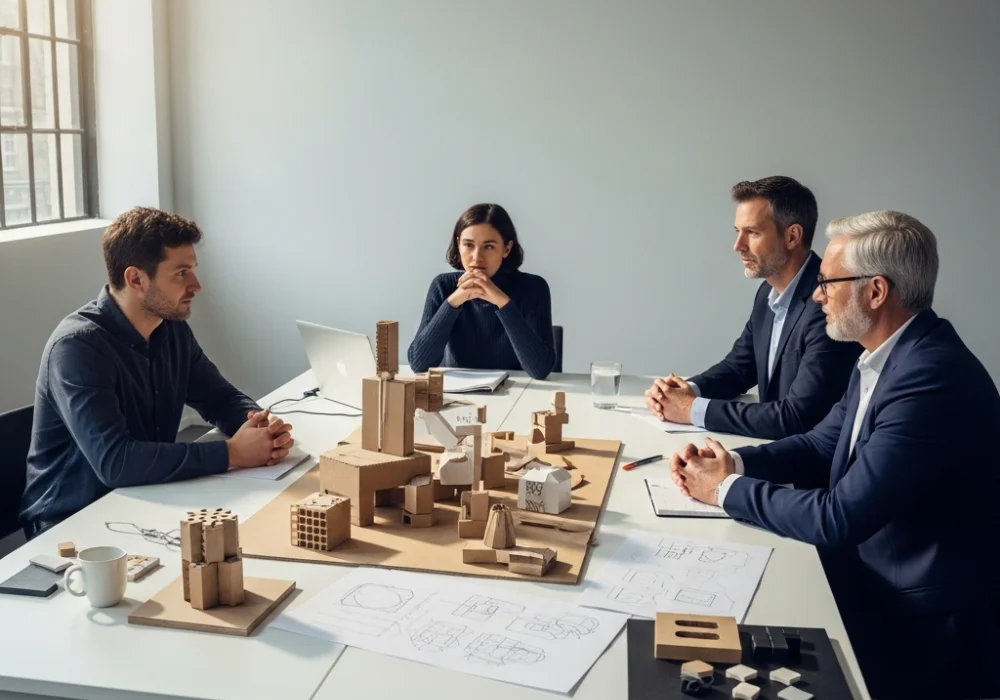
To help you visualize the pressure of the NID panel, let’s look at a simulated dialogue involving a student (S) and a Panelist (P).
Panelist (P): I see this lamp prototype in your portfolio. It’s primarily made of 3D-printed PLA. Given the current global plastic crisis, don’t you think using 3D printing is a bit irresponsible for a ‘sustainable’ design student?
Student (S): That is a very valid concern. When I chose PLA, I weighed it against traditional wood turning. I chose 3D printing for three reasons. First, it allowed for ‘topology optimization,’ meaning I could use 40% less material by weight than a solid wood structure while maintaining the same strength. Second, PLA is a bio-plastic derived from corn starch, which, while requiring specific industrial composting conditions, is a step away from petroleum-based plastics. Finally, this was a ‘Design for Disassembly’ project. Every part of this lamp can be snapped apart without tools, making it easier to sort for recycling at the end of its life.
Panelist (P): But isn’t industrial composting rare in India? Isn’t your ‘sustainable’ choice actually destined for a landfill?
Student (S): You’re right; the infrastructure for PLA composting is currently limited in our local context. This realization was actually a turning point in my process. In my documentation on page 12, you’ll see a ‘failed’ second iteration where I tried using mycelium (fungus) growth. While it didn’t hold the weight of the bulb for this prototype, my long-term goal is to transition this form into a mycelium-based material as the technology matures. I chose the PLA prototype to demonstrate the form, but my material research didn’t stop there.
Panelist Feedback on the Dialogue:
The student succeeded because they didn’t get defensive. They acknowledged the flaw (lack of composting infrastructure) and demonstrated Iterative Thinking. They showed that they aren’t just following trends but are deeply investigating the science of materials. Most importantly, they linked the material choice to ‘Material Savings’ (using 40% less material), which is a key pillar of sustainability.
Strategies for Different Media
If you use Digital Media (UI/UX or Animation):
Discuss ‘Digital Sobriety.’ Mention how you optimized image sizes to reduce data transfer energy or why you chose a ‘Dark Mode’ interface to save battery life on OLED screens. This shows a high level of contemporary awareness.
If you use Physical Craft (Textiles or Product):
Focus on the sourcing. Talk about the ‘Km’ value—how far did the material travel? Using local clay or local handloom counts as a sustainability choice because it reduces the carbon footprint of logistics.
Preparation Checklist Before the Interview
- Trace the Origin: Know exactly where your materials came from. If it’s a store-bought board, know what it’s made of.
- Analyze the Waste: How much material did you throw away while making the model? Could that waste have been a ‘secondary resource’?
- Study the ‘Green’ Alternatives: For every material in your portfolio, know one sustainable alternative and why you did or did not use it.
- The ‘Why’ for Medium: If your portfolio is 100% digital, be ready to justify why you didn’t explore physical tactile mediums. Is it resource-saving or a lack of skill? (Hint: Always frame it as a conscious choice for scalability).
Final Advice from the Panel
The NID interview is a conversation between a budding designer and a veteran designer. We value honesty over perfection. If you used a material that isn’t sustainable, tell us why it was the only choice at the time and how you would change it if you had a budget for research and development. This shows ‘Reflective Practice,’ which is the hallmark of a great designer.
Ready to Ace Your NID Interview?
Don’t leave your material justifications to chance. Get expert feedback on your portfolio and participate in realistic mock interviews with our NID alumni mentors.
💬 Chat with our Experts on WhatsApp (+91 9526806124)




