
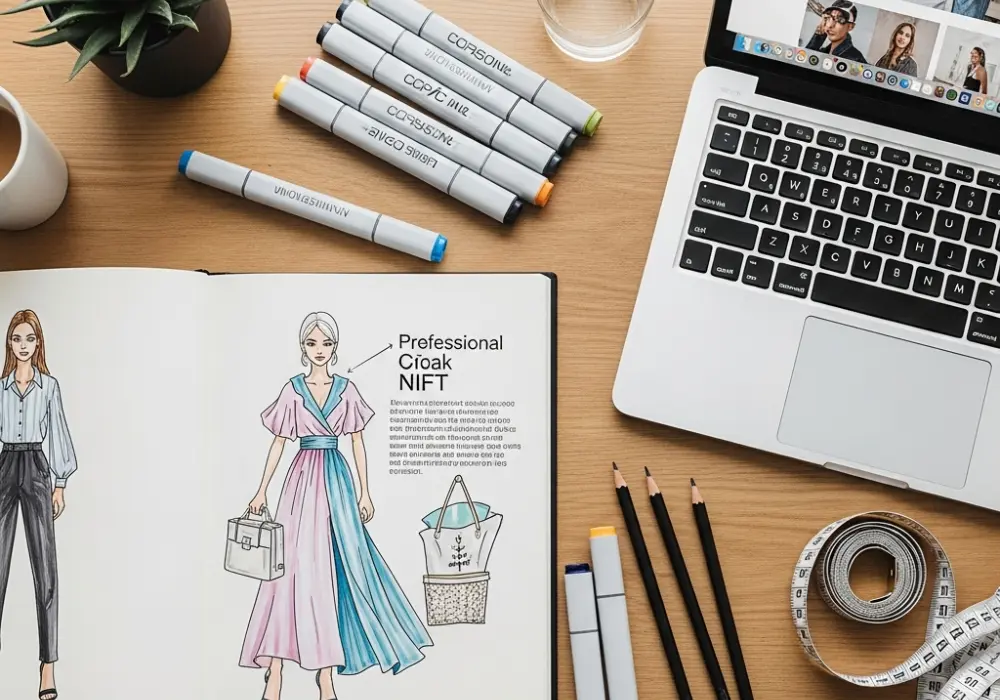
Cracking the NIFT B.Des Entrance Exam: The Ultimate Roadmap
Securing a seat at the National Institute of Fashion Technology (NIFT) is a dream for thousands of aspiring designers across India. As one of the most prestigious institutions for design education, the NIFT Bachelor of Design (B.Des) entrance exam is naturally competitive. Success requires more than just artistic flair; it demands a strategic approach toward two distinct phases: the General Ability Test (GAT) and the Creative Ability Test (CAT). In this guide, we provide expert tips to help you navigate the latest exam pattern and excel in your preparation journey.
Understanding the Exam Pattern
Before diving into preparation, it is crucial to understand how you will be evaluated. The NIFT B.Des entrance exam primarily consists of two written tests. The Creative Ability Test (CAT) evaluates your intuition, design sense, and observation skills, while the General Ability Test (GAT) tests your quantitative ability, English comprehension, and logical reasoning.
Key Components of the Entrance Test
To give you a clearer picture of what to expect, here is a comparison of the two main sections of the NIFT entrance exam:
| Feature | Creative Ability Test (CAT) | General Ability Test (GAT) |
|---|---|---|
| Weightage | 50% | 30% |
| Mode | Paper-based (Drawing) | Computer-based / OMR |
| Core Focus | Creativity, Sketching, Observation | Maths, English, GK, Reasoning |
| Preparation Needs | Regular Sketching, Design Thinking | Speed, Accuracy, Mock Tests |
Note: Following these written rounds, shortlisted candidates usually undergo a Situation Test, which accounts for the remaining 20% of the total weightage.
Expert Tips for the Creative Ability Test (CAT)
The CAT is the heart of the NIFT entrance exam. It challenges your ability to conceptualize ideas and translate them onto paper. Here are some expert strategies for this section:
- Master Your Basics: Don’t jump into complex portraits immediately. Focus on basic shapes, perspective, and human anatomy. Understanding how light and shadow work is essential for adding depth to your sketches.
- Improve Your Observation: Designers see the world differently. Practice sketching everyday objects, the texture of fabrics, or the architectural details of your surroundings.
- Think Out of the Box: NIFT examiners look for unique perspectives. If a question asks you to design a poster, avoid the most common layouts. Experiment with different compositions.
- Time Management: You only have a limited time to complete 3-4 detailed sketches. Practice finishing your drawings within 30-40 minutes each without compromising on quality.
- Coloring Techniques: Use color sparingly but effectively. Whether you use pencil colors or markers, ensure your work is neat. Smudged colors can negatively impact your score.
Acing the General Ability Test (GAT)
While design is a creative field, the GAT measures your analytical and communication skills. It is often the deciding factor in overall ranking. Here is how to prepare:
- Strengthen Quantitative Ability: Focus on school-level mathematics, including percentages, ratios, profit and loss, and simple interest. The questions are generally based on 10th-grade concepts.
- Enhance English Communication: Work on your vocabulary, grammar, and reading comprehension. Since the NIFT curriculum is primarily in English, proficiency is non-negotiable.
- Stay Updated with General Knowledge: Keep an eye on current affairs, especially those related to the fashion industry, textile history, and famous designers. Reading the newspaper daily is a great habit.
- Logical Reasoning: Practice puzzles, series completion, and coding-decoding. This section tests your mental alertness and problem-solving speed.
The Power of Practice: Using Mock Tests
One of the most effective ways to gauge your readiness is through consistent practice. At myentrance.in, we offer specialized NIFT mock tests designed to mimic the latest exam pattern. Practicing with these tests helps you:
- Identify your weak areas and work on them before the actual exam.
- Build the stamina needed for a multi-hour examination.
- Learn how to manage time effectively between different sections.
- Get familiar with the type of questions asked in recent years without focusing on a specific date.
Common Mistakes to Avoid
Many talented students miss out on a seat because of avoidable errors. Be mindful of the following:
- Ignoring the GAT: Many students focus solely on sketching and neglect the theory part. Remember, GAT marks are vital for a good rank.
- Over-detailing: In the CAT section, don’t spend too much time on one sketch. It is better to finish all questions decently than to leave one blank while perfecting another.
- Using Erasers Too Much: Excessive erasing makes the paper look untidy and wastes time. Try to draw light strokes initially and only darken them when you are confident.
- Lack of Rest: Creative block is real. Ensure you get enough sleep before the exam day to keep your mind fresh and imaginative.
Frequently Asked Questions (FAQ)
What is the minimum qualification for NIFT B.Des?
Candidates must have passed the 10+2 level examination from any recognized Central/State Board of Secondary Education. Students appearing for their final exams are also eligible to apply.
Is there negative marking in the NIFT GAT?
Yes, typically there is negative marking for wrong answers in the GAT section. It is advisable to skip questions you are unsure about rather than guessing blindly.
Do I need to be a professional artist to clear NIFT CAT?
No, you do not need to be a professional artist. NIFT looks for creative potential, observation skills, and the ability to communicate ideas through drawing. Proficiency in basic sketching is sufficient if your ideas are strong.
How important are mock tests for NIFT preparation?
Mock tests are crucial. They help you understand the difficulty level and provide a realistic exam experience. You can find high-quality mock tests on myentrance.in to sharpen your skills.
What materials should I carry for the CAT exam?
Usually, you are required to carry your own pencils (HB, 2B, 4B, 6B), erasers, sharpeners, and coloring materials like pencil colors. Always check the latest admit card instructions for specific requirements.
Ready to Start Your Design Journey?
Don’t leave your NIFT preparation to chance. Get access to the best study materials, expert guidance, and comprehensive mock tests today. Our team at myentrance.in is dedicated to helping you achieve your fashion dreams.
💬 Chat with our Experts on WhatsApp (+91 9526806124)




