
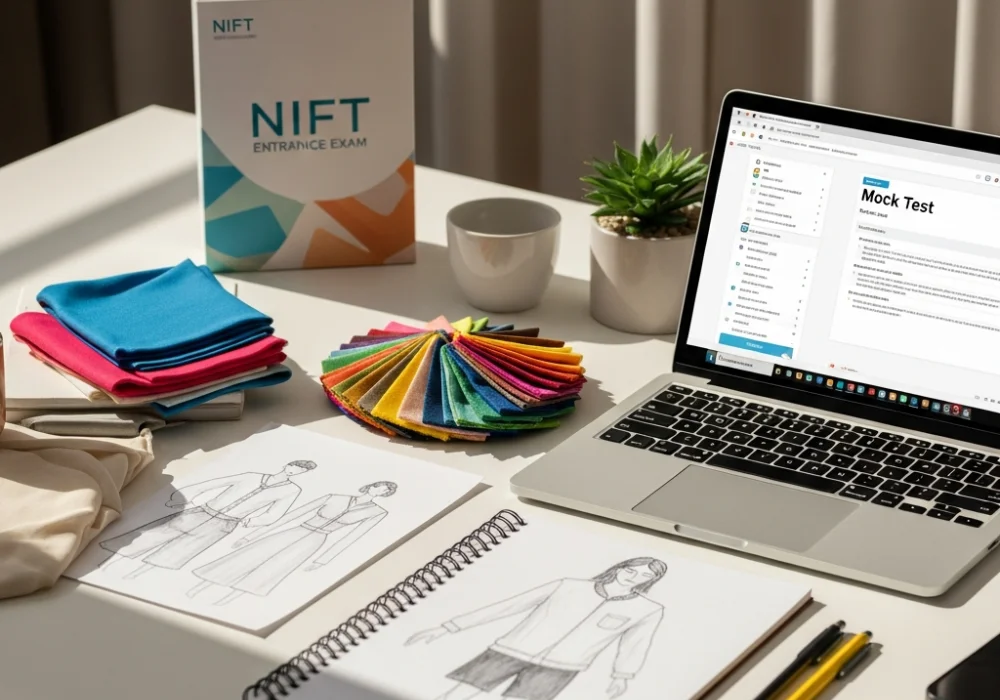
Introduction to NIFT Admissions
The National Institute of Fashion Technology (NIFT) is the premier destination for students aspiring to carve a niche in the global fashion and design industry. Established as a statutory body, NIFT provides a holistic education that blends creativity with management and technology. Securing admission into one of its many campuses across India requires a deep understanding of the multi-stage entrance process. In this guide, we break down the latest admission requirements, exam structures, and reservation policies to help you navigate your journey toward becoming a design professional.
Overview of the Entrance Examination
The NIFT admission process is designed to test both the creative and cognitive abilities of candidates. Depending on the program chosen—whether it is Bachelor of Design (B.Des), Bachelor of Fashion Technology (B.FTech), or Master’s degrees—the components of the exam vary. Generally, the entrance exam comprises the Creative Ability Test (CAT) and the General Ability Test (GAT). For B.Des and M.Des candidates, those who clear the written tests must proceed to a second round involving a Situation Test or Group Discussion and Personal Interview (GD/PI).
1. Creative Ability Test (CAT)
The CAT is specifically designed to judge the intuition, power of observation, and design ability of the candidate. A key aspect of this test is the innovative use of color and illustration. Candidates are expected to showcase their sketching skills and their ability to conceptualize designs that are not only aesthetically pleasing but also functional.
2. General Ability Test (GAT)
The GAT is the standardized test for all programs, though the difficulty level varies. It covers Quantitative Ability, Communication Ability, English Comprehension, Analytical Ability, and General Knowledge. For students looking to excel in this section, practicing with mock tests available on myentrance.in is highly recommended, as it familiarizes candidates with the speed and accuracy required for the current syllabus.
Weightage for Different Programs
The following table outlines the distribution of marks across various stages of the selection process for different academic programs at NIFT. Understanding this weightage is crucial for prioritizing your preparation strategy.
| Program | CAT Weightage | GAT Weightage | Situation Test / GD-PI |
|---|---|---|---|
| Bachelor of Design (B.Des) | 50% | 30% | 20% |
| Bachelor of Fashion Technology (B.FTech) | – | 100% | – |
| Master of Design (M.Des) | 40% | 30% | 30% |
| Master of Fashion Management (M.F.M) | – | 70% | 30% |
| Master of Fashion Technology (M.FTech) | – | 70% | 30% |
Detailed Eligibility Criteria
Before applying, candidates must ensure they meet the specific eligibility requirements for the upcoming exams. For undergraduate programs, candidates should have completed their 10+2 from a recognized board. For B.FTech, students must have studied Physics, Chemistry, and Mathematics. There is also an age limit for undergraduate courses, usually capped at 24 years for the general category, with a relaxation of 5 years for SC/ST/PwD candidates. Post-graduate applicants must hold a recognized undergraduate degree, with no age limit specified for these programs.
NIFT Reservation Policies
NIFT follows the Government of India’s reservation norms to ensure inclusive access to fashion education. These seats are reserved for various categories as follows:
- Scheduled Castes (SC): 15% of the total seats.
- Scheduled Tribes (ST): 7.5% of the total seats.
- Other Backward Classes (OBC-NCL): 27% of the total seats.
- Economically Weaker Sections (EWS): 10% of the total seats.
- Persons with Disability (PwD): 5% horizontal reservation across all categories.
Additionally, there are supernumerary seats available for Foreign Nationals, SAARC candidates, and NRIs, as well as specific provisions for candidates from the state where a particular NIFT campus is located (State Domicile).
Preparing for the Situation Test and GD/PI
For B.Des candidates, the Situation Test is a hands-on examination where they are provided with a set of materials to create a 3D model. Evaluation is based on material handling, innovation, and the write-up explaining the concept. For Master’s programs, the GD/PI rounds test the candidate’s leadership qualities, communication skills, and knowledge of the fashion industry. Success in these rounds requires consistent practice and a clear understanding of current trends.
Why Choose myentrance.in for Your Preparation?
Preparing for an elite institute like NIFT requires a structured approach. At myentrance.in, we provide specialized mock tests that simulate the actual exam environment. Our resources cover the latest pattern of GAT questions, helping you improve your speed in the Quantitative and Analytical sections. By regularly taking these tests, you can identify your weak areas and work on them before the upcoming entrance cycle. Whether you are aiming for a B.Des or B.FTech, our study materials and mock exams are designed to give you a competitive edge.
Important Documents for Admission
During the counseling and admission phase, candidates must produce several documents for verification. Failure to provide valid documents can lead to the cancellation of the seat. These include:
- Class 10 and 12 Marksheets and Certificates.
- Category Certificate (SC/ST/OBC-NCL/EWS/PwD) if applicable.
- Medical Fitness Certificate signed by a registered medical practitioner.
- Transfer and Migration Certificates.
- NIFT Entrance Exam Admit Card and Result Copy.
Frequently Asked Questions (FAQ)
What is the difference between CAT and GAT in NIFT?
CAT (Creative Ability Test) focuses on your sketching and design skills, whereas GAT (General Ability Test) focuses on your English, Math, Logic, and General Knowledge abilities.
Can a commerce student apply for B.FTech?
No, candidates for the Bachelor of Fashion Technology (B.FTech) must have studied Physics, Chemistry, and Mathematics in their 10+2 level. However, commerce students are eligible for the Bachelor of Design (B.Des) program.
Is there a negative marking in the NIFT GAT?
Yes, the current pattern typically includes a negative marking of 0.25 for every incorrect answer in the GAT section. It is important to practice with mock tests on myentrance.in to learn how to manage your attempts effectively.
How are domicile seats allocated?
Domicile seats are reserved for candidates who have completed their qualifying education (10+2) in the same state where the NIFT campus is located. These seats are offered in addition to the regular reservation categories.
What materials are provided in the Situation Test?
Candidates are usually given materials like cardboard, wire, thread, buttons, cloth, and clay. No outside materials are allowed during the test.
Need Assistance with NIFT Admissions?
If you have any doubts regarding the entrance exam, reservation policies, or need guidance on choosing the right mock tests, our experts are here to help you succeed.
💬 Chat with our Experts on WhatsApp (+91 9526806124)




