
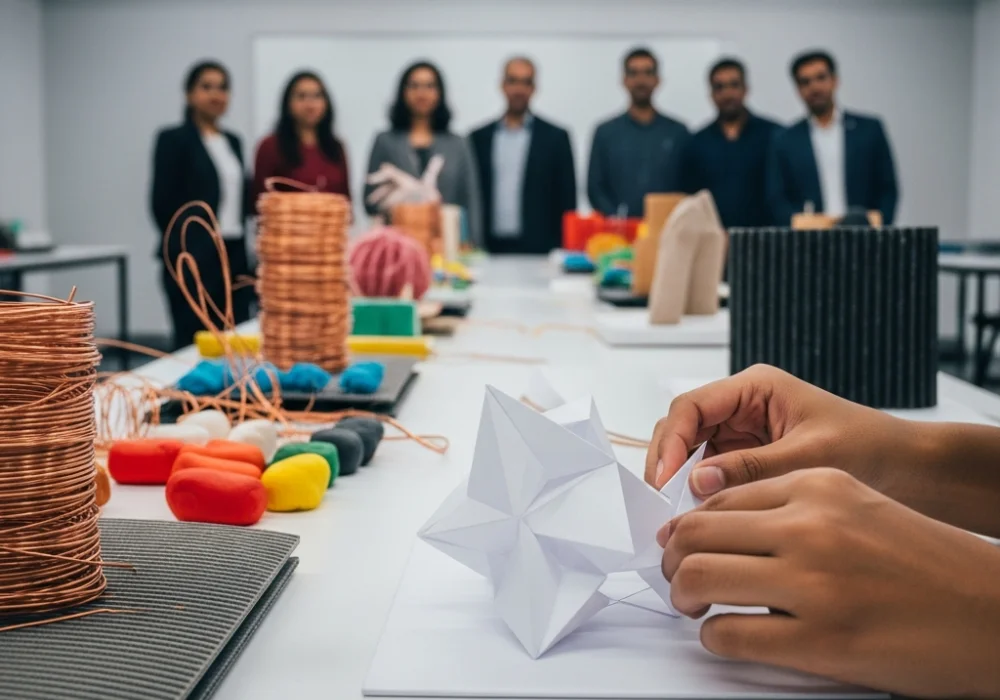
Introduction to the NIFT Situation Test
The National Institute of Fashion Technology (NIFT) Situation Test is the final hurdle in your journey toward a premier design education. While the written examination tests your aptitude and creativity on paper, the Situation Test evaluates your three-dimensional thinking, material manipulation skills, and your ability to conceptualize a physical solution under intense time pressure. As an elite panelist, I have seen thousands of models, ranging from the mundane to the extraordinary. To succeed in the upcoming cycle, you must understand that this test is not just about making something beautiful; it is about communicating an idea through form and material.
The Core Evaluation Criteria: What We Secretly Look For
When the jury walks into the room after the session ends, we evaluate your model based on several distinct parameters. Understanding these is crucial for high scoring. Each criterion holds weightage, and neglecting one can significantly lower your overall score.
1. Concept and Innovation
We are not looking for a literal representation of the topic. If the topic is ‘A Railway Station for the Blind,’ we do not want to see a simple platform. We look for the ‘Big Idea.’ How have you integrated haptic feedback? Are there textural changes on the floor? Innovation is about the uniqueness of your solution. We want to see how you have interpreted the prompt beyond the obvious first thoughts that come to every student’s mind.
2. Material Manipulation and Technique
This is perhaps the most technical part of the marking. We observe how you have used the provided materials. Have you used the paper only as flat sheets, or have you explored folding (origami), scoring, pleating, and curling? If you were given wire, did you use it as a decorative element or a structural support? High marks are awarded for students who show a variety of techniques—braiding, weaving, interlocking, and layering.
3. Aesthetics and Proportions
Design is inherently visual. Your model must look balanced. Proportion refers to the relationship between different parts of the model. If you are creating a garden landscape, the size of the bench should be in proportion to the fountain. Aesthetics involve the cleanliness of the model. Glue marks, messy edges, and visible tape are signs of poor craftsmanship and will lead to point deductions.
4. Structural Stability and Neatness
Your model must stand on its own without leaning or collapsing. We often check the stability by gently moving the table or observing the base. A model that looks great but falls apart when moved is considered a failure in structural design. Neatness is equally important. Ensure there are no jagged cuts or pencil marks left on the white surfaces of your materials.
5. The Narrative: The Write-Up
Often ignored, the write-up is where you explain your thought process. It serves as your voice when you are not there to present. We look for a logical flow: Problem Identification -> Design Strategy -> Choice of Materials -> Final Solution. A well-written 100-word summary can boost your score by bridging the gap between your model and the examiner’s understanding.
Mastering Material Handling: Expert Tips
The kit provided is usually limited. Here is how to maximize its potential:
- Paper and Cardboard: Never use them just as they are. Score the back of the paper to create sharp 90-degree folds. Use the edge of your scissor to curl paper strips for organic shapes.
- Wire: Use it for skeletal structures or as a line element to guide the viewer’s eye. Ensure the ends are tucked in to avoid sharp edges.
- Cloth and Thread: These add texture. Try crumpling the cloth for a ‘crushed’ look or use the thread to create a web-like tension structure.
- Clay: Use it for heavy bases or to create intricate organic details. However, avoid making the entire model out of clay as it can become too heavy and unstable.
Step-by-Step Model Making Strategy
To manage your time effectively during the upcoming test, follow this disciplined approach:
Phase 1: Ideation and Sketching (First 15 Minutes)
Do not touch the materials immediately. Read the prompt three times. List down keywords. Sketch 2-3 thumbnail versions of your model. Decide on your primary material. This phase ensures you have a roadmap and prevents ‘designer’s block’ halfway through.
Phase 2: Base Construction (Next 20 Minutes)
A strong foundation is essential. Use the most rigid material (usually corrugated sheet or thick cardboard) to create the base. If your model needs height, build the vertical supports now. Ensure the base is clean and proportionate to the desk space provided.
Phase 3: Building the Main Components (60 Minutes)
This is the bulk of your work. Create the main focal point of your model first. Use a combination of techniques like scoring and interlocking. Avoid using too much glue; it takes time to dry and can look messy. If possible, use mechanical joints like slots and tabs.
Phase 4: Detailing and Refining (15 Minutes)
Add the smaller elements that provide context. If you are making a park, add the blades of grass or the textures on the walkway. Clean up any excess glue and ensure the model is securely attached to the base.
Phase 5: The Write-Up (Final 10 Minutes)
Write your explanation in clear, concise English. Focus on the ‘Why’ behind your design. Use design terminology like ‘ergonomics,’ ‘sustainability,’ ‘modular,’ and ‘form follows function.’
Important Points to Remember: The Panelist’s Advice
“The difference between an average student and a topper is the ability to communicate a complex idea through a simple, elegant form. Don’t overcomplicate; refine.”
Here are some final tips to keep in mind:
- Read the instructions: Sometimes specific materials are forbidden for certain parts. Following the rules is the first step to passing.
- Do not bring outside materials: Use only what is provided in the official kit. Bringing your own glue or beads can lead to disqualification.
- Manage your waste: Keep your workspace clean. A cluttered desk leads to a cluttered mind and potentially a messy model.
- Focus on Utility: If the prompt asks for a functional object (like a bag or a lamp), ensure it looks like it can actually function.
The Situation Test is a celebration of your creativity. Approach it with a calm mind and a playful yet structured spirit. By following the marking criteria and focusing on neatness and innovation, you will surely secure a top rank.
🚀 Ready to Ace Your NIFT Situation Test?
Don’t leave your design dreams to chance! Join our expert-led sessions for personalized feedback, mock tests, and secret material handling workshops designed by NIFT alumni.
💬 Chat with our Experts on WhatsApp (+91 9526806124)




