
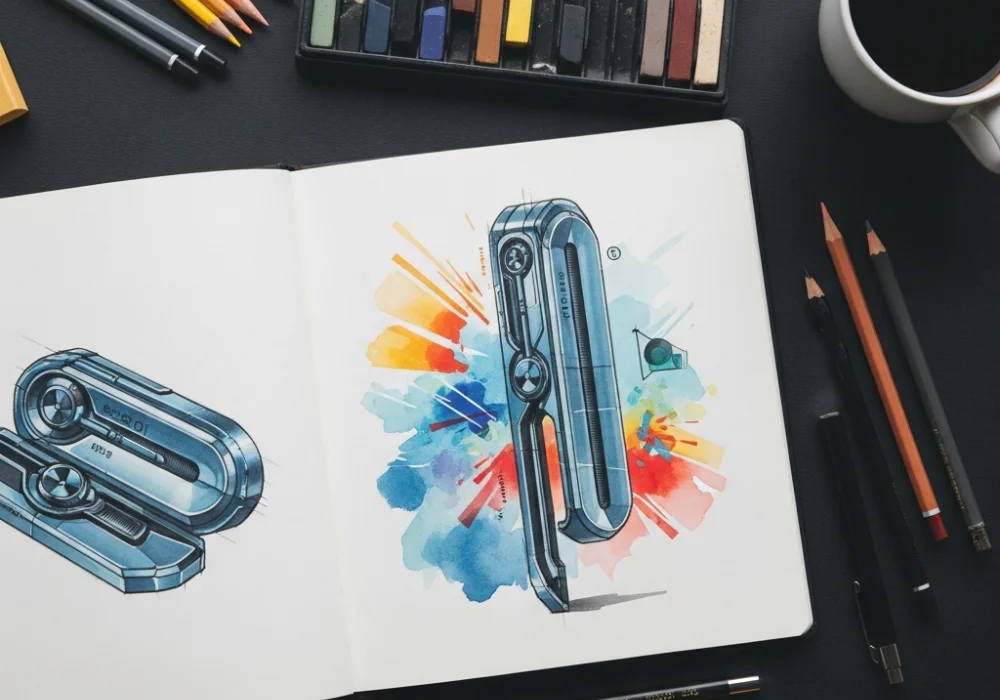
The Ultimate Guide to Conquering the NIFT Creative Ability Test
Stepping into the world of fashion and design begins with a single, often daunting step: the NIFT Creative Ability Test (CAT). While many students focus heavily on the General Ability Test (GAT), the CAT is where true designers are born. It is a three-hour window into your imagination, testing your ability to observe the world, conceptualize unique ideas, and execute them with technical finesse. At myentrance.in, we understand that moving from a blank page to a top score requires more than just talent; it requires a strategic approach and consistent practice with the latest pattern mock tests.
Understanding the Core of NIFT CAT
The Creative Ability Test is designed to evaluate your intuition, power of observation, innovation in development of a concept, and design ability. Unlike traditional academic exams, there is no single ‘right’ answer. Instead, the examiners look for how you interpret a prompt and how effectively you communicate that interpretation through visuals. The weightage of CAT is significant, often accounting for 50% of the total written score for B.Des aspirants, making it the most critical component of your entrance journey.
| Feature | Creative Ability Test (CAT) | General Ability Test (GAT) |
|---|---|---|
| Focus | Design, Sketching, and Ideation | Logic, Math, English, and GK |
| Duration | 3 Hours | 2 Hours |
| Weightage | 50% (For B.Des) | 30% (For B.Des) |
| Evaluation | Subjective & Creative | Objective & Analytical |
The Four Pillars of a High CAT Score
To master this exam, you must focus on four distinct areas of development. Neglecting even one can lower your overall score, regardless of how good your drawing skills are.
- Ideation and Innovation: This is the most important factor. If the question asks you to design a futuristic kitchen tool, a simple spoon won’t cut it. You need to think about ergonomics, utility, and a ‘wow’ factor that sets your design apart from thousands of other candidates.
- Sketching and Perspective: Your ability to represent 3D objects on a 2D surface is vital. Mastering one-point, two-point, and three-point perspectives will give your drawings depth and realism. Line quality should be confident, avoiding ‘hairy’ or multiple overlapping lines.
- Color Theory and Rendering: Understanding how colors interact—complementary, analogous, and monochromatic schemes—is essential. Your choice of colors should reflect the mood of the prompt. For example, a poster on ‘Global Warming’ might benefit from harsh oranges and dry browns versus cooling blues.
- Composition and Layout: How you place elements on the page matters. Use the ‘Rule of Thirds’ or ‘Golden Ratio’ concepts to create a balanced visual flow that guides the examiner’s eye through your entire story.
Step-by-Step Strategy for the Exam Hall
When you receive the question paper, the clock starts ticking. Here is a proven workflow to manage your time effectively:
- The 10-Minute Brainstorm: Do not start drawing immediately. Spend the first ten minutes reading the prompts and jotting down 3-4 different concepts. Choose the one that is most unique but also within your technical ability to draw.
- Rough Thumbnailing: Use a small corner of your page (or a rough sheet) to create tiny 2-inch boxes where you sketch the layout. This prevents you from running out of space on the final drawing.
- Light Penciling: Start the final drawing with very light H-grade pencils. This allows you to erase and correct mistakes without leaving marks on the paper.
- Final Inking and Rendering: Once the structure is perfect, go in with darker pencils or waterproof pens. Use your coloring medium (usually color pencils or dry pastels) to bring the design to life.
- The Description: Most CAT questions require a short write-up (30-50 words) explaining your concept. Ensure this is legible and clearly links your visual to the prompt.
Common Questions in the NIFT CAT
Based on the latest pattern observed in previous years, candidates are often tested on the following types of questions:
- Poster Design: Creating awareness for social issues like water conservation, girl child education, or environmental protection.
- Mascot Creation: Designing a character for an event like a sports meet or a new brand of eco-friendly shoes.
- Storyboarding: Representing a sequence of events, such as ‘A day in the life of a street vendor’ or ‘A futuristic travel experience,’ across 4 to 6 frames.
- Product Redesign: Taking a common object like a teapot or a bicycle and reimagining its form and function for a specific user group (e.g., the elderly or children).
How myentrance.in Boosts Your Preparation
Self-study is important, but professional feedback is the catalyst for growth. On myentrance.in, we provide specialized NIFT mock tests that mimic the current syllabus and difficulty level. Our platform allows you to access a variety of CAT prompts and sample solutions that help you understand what examiners are looking for. Practicing with our mock tests ensures that you are familiar with time management and the diversity of questions that could appear in the upcoming exams.
Final Tips for Success
Consistency is key. Carry a small sketchbook everywhere you go. Draw people at the bus stop, the clutter on your desk, or the architecture of your neighborhood. Observation is a muscle; the more you use it, the stronger your creative intuition becomes. Remember, the NIFT CAT is not just about being a great artist; it is about being a great communicator through art.
Frequently Asked Questions (FAQ)
What mediums are allowed in NIFT CAT?
Generally, NIFT allows dry mediums such as color pencils, oil pastels, and dry pastels. While some centers may allow light watercolors, it is safest to master color pencils as they are easier to control and do not warp the paper. Avoid using sketch pens for large areas as they can look messy.
How important is the written explanation in CAT?
Extremely important. The written explanation provides the rationale behind your design. If your drawing is slightly abstract, the text helps the examiner understand your thought process. It should be concise, professional, and emphasize the ‘innovation’ in your design.
Is drawing human figures mandatory?
While not always mandatory, many prompts (like storyboarding or fashion illustration) naturally require human figures. Learning basic human anatomy and proportions will significantly boost your score and give you the freedom to tackle any question with confidence.
How can I manage time during the three-hour exam?
Divide your time: 10 minutes for planning, 45 minutes per question (assuming 3-4 questions), and 10 minutes for final touches and checking your descriptions. Practice with full-length mock tests from myentrance.in to build this stamina.
Do I need to be a ‘born artist’ to clear NIFT CAT?
No. NIFT looks for design thinking and creativity. While basic sketching skills are necessary, they can be learned through practice. Many students with average drawing skills score highly by providing brilliant, original concepts that solve the problem presented in the prompt.





