
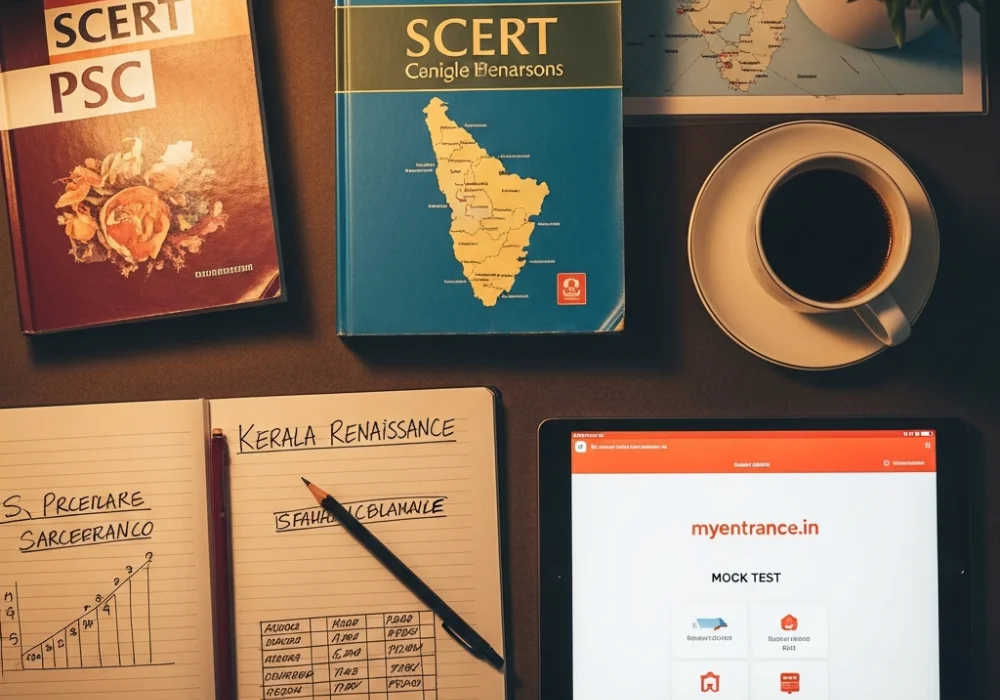
Introduction to the Kerala PSC 10th Level Prelims
The Kerala Public Service Commission (PSC) 10th Level Preliminary Examination is one of the most competitive exams in the state, serving as the primary gateway for various prestigious government positions. With thousands of aspirants vying for a limited number of vacancies, having a structured approach is not just an advantage; it is a necessity. This comprehensive guide is designed to help you navigate the latest pattern of the exam, identify high-scoring topics, and implement a study plan that ensures success. By leveraging the right resources, such as the mock tests available on myentrance.in, you can transform your preparation from average to exceptional.
Understanding the Exam Pattern and Syllabus
Before diving into the books, it is crucial to understand the structure of the Kerala PSC 10th Level Prelims. The exam typically consists of 100 objective-type questions to be answered in 75 minutes. Each correct answer earns you one mark, while a wrong answer results in a negative marking of 1/3. The syllabus is broad, covering General Knowledge, Current Affairs, General Science, Public Health, Social Science, Arithmetic, and Mental Ability, along with Regional Language (Malayalam/Tamil/Kannada).
Subject-Wise Weightage
To prioritize your study time effectively, you must know which areas carry the most weight. While the exact number of questions per section can vary slightly in the latest pattern, the following table provides a general distribution based on recent trends.
| Subject Category | Key Topics Included | Approximate Marks |
|---|---|---|
| General Knowledge & Current Affairs | History, Geography, Economics, Latest Events | 40 – 50 |
| General Science | Physics, Chemistry, Biology, Public Health | 15 – 20 |
| Simple Arithmetic & Mental Ability | Numbers, Percentages, Interest, Logical Reasoning | 20 |
| Regional Language (Malayalam) | Grammar, Vocabulary, Translation | 10 – 15 |
High-Scoring Topics You Cannot Ignore
Focusing on high-yield topics is the secret to scoring above the cutoff. Here is a breakdown of the areas where you can easily score maximum marks if prepared well:
1. Kerala History and Renaissance
The history of Kerala and the Kerala Renaissance movement are pillars of the PSC syllabus. You must be well-versed in the contributions of leaders like Sree Narayana Guru, Chattampi Swamikal, Ayyankali, and Vakkom Moulavi. Focus on important dates, social reform movements, and the evolution of modern Kerala.
2. Physical Science and Biology
In the General Science section, Biology often takes the lead, particularly topics related to human physiology, diseases, and vitamins. In Physics and Chemistry, focus on everyday applications, such as the laws of motion, units of measurement, and common chemical compounds. Don’t forget to study the latest developments in public health and environmental science.
3. Arithmetic and Mental Ability
This is a section where you can score 100% marks with practice. High-scoring topics include:
- Number Systems and Simplification
- Percentage, Profit and Loss
- Time and Work, Time and Distance
- Simple and Compound Interest
- Coding-Decoding and Series Completion
- Blood Relations and Direction Sense
4. Regional Language (Malayalam)
For most candidates in Kerala, the Malayalam section is a scoring opportunity. Focus on ‘Sandhi’, ‘Samasam’, synonyms (Paryayam), antonyms (Viparitham), and correct spelling (Shuddha Roopam). Mastery over basic grammar can ensure a perfect score in this segment.
A Winning 60-Day Study Plan
Consistency is the key to cracking any competitive exam. Here is a strategic 60-day plan to cover the syllabus thoroughly:
Phase 1: Foundation (Days 1 – 25)
During this phase, focus on understanding concepts. Read the SCERT textbooks from Class 5 to 10 as they are the primary source of questions for Kerala PSC. Spend 3 hours on GK/Current Affairs, 2 hours on Science, and 2 hours on Arithmetic daily.
Phase 2: Intensive Subject Coverage (Days 26 – 45)
Start diving deeper into specific topics like the Indian Constitution, Geography of India and Kerala, and the Renaissance movement. Begin solving topic-specific quizzes. This is the time to identify your weak areas and work on them.
Phase 3: Mock Tests and Revision (Days 46 – 60)
The final phase should be dedicated to revision and full-length mock tests. Attempting mock tests on myentrance.in will give you a real-time exam experience and help you manage time effectively. Analyze every mistake made in the mock tests to ensure you don’t repeat them in the actual exam.
The Role of Mock Tests in Your Success
Many students study hard but fail to clear the exam because they lack practice. Mock tests are essential for several reasons:
- Time Management: They teach you how to allocate time to different sections.
- Reducing Anxiety: Familiarity with the exam format reduces stress on the actual exam day.
- Identifying Gaps: You discover which topics you have misunderstood or forgotten.
- Current Pattern Alignment: Quality mock tests, like those provided by myentrance.in, are designed based on the latest pattern of upcoming exams.
Tips for Success
Success in the Kerala PSC 10th Level Prelims is a mix of hard work and smart work. Here are some pro tips:
- Read Questions Carefully: Negative marking can ruin your chances. Only mark answers you are confident about.
- Stay Updated: Read a daily newspaper or follow a reliable current affairs portal to stay updated on latest events in Kerala and India.
- Short Notes: Prepare short notes for quick revision during the last few days of the exam.
- Health Matters: Ensure you get enough sleep and maintain a healthy diet to keep your brain sharp.
Conclusion
Crushing the Kerala PSC 10th Level Prelims is an achievable goal with a structured study plan and the right resources. By focusing on high-scoring topics, utilizing SCERT textbooks, and consistently practicing with mock tests on myentrance.in, you can secure your place in the main examination. Stay focused, stay disciplined, and your dream of a government job will soon become a reality.
Frequently Asked Questions (FAQ)
What is the qualification for Kerala PSC 10th Level Prelims?
As the name suggests, the basic qualification is a pass in the 10th standard (SSLC) or its equivalent from a recognized board.
Is there negative marking in the 10th Level Prelims?
Yes, there is a negative marking of 1/3 for every wrong answer. This means for every three wrong answers, one mark will be deducted from your total score.
Which books are best for Kerala PSC preparation?
The most recommended books are the SCERT textbooks from Class 5 to 10. Additionally, a good PSC bulletin and quality online resources like myentrance.in for mock tests are highly beneficial.
How many marks are required to pass the prelims?
There is no fixed passing mark. The cutoff depends on the number of vacancies, the difficulty level of the exam, and the performance of other candidates. Aiming for a score above 70 is usually considered safe.
How often should I take mock tests?
In the initial stages, once a week is sufficient. However, as the exam approaches, you should try to take at least three to four full-length mock tests per week to build stamina and speed.





