
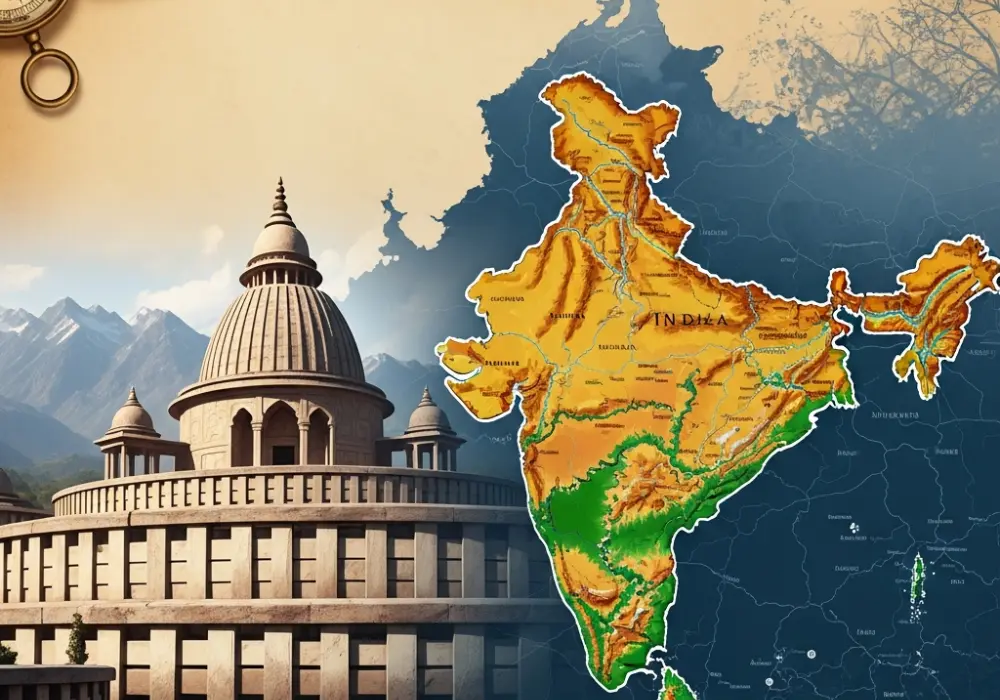
The Importance of Static GK in Competitive Examinations
For any aspirant preparing for prestigious exams like the Kerala PSC, SSC, NID DAT, or NIFT GAT, General Knowledge (GK) serves as the backbone of the syllabus. Among the various segments, Static GK—specifically Indian History and Geography—remains a constant. Unlike current affairs, these facts do not change, making them high-yield topics. Mastering these fundamentals is essential for securing a top rank in the latest pattern of competitive exams. At myentrance.in, we provide specialized mock tests that focus on these core areas to ensure you are fully prepared.
Understanding Indian History: From Ancient Origins to Independence
Indian History is a vast subject categorized into three distinct periods: Ancient, Medieval, and Modern. Each era has contributed significantly to the socio-political fabric of the country. Understanding the timeline is crucial for answering chronological questions in upcoming exams.
1. Ancient Indian History
Ancient history begins with the Indus Valley Civilization, known for its advanced urban planning. Aspirants should focus on the Vedic Period, the rise of Mahajanapadas, and the influential reigns of the Mauryan and Gupta Empires. The Golden Age of India under the Guptas saw immense progress in science, art, and literature.
2. Medieval Indian History
The medieval era is marked by the arrival of Islamic rulers and the establishment of the Delhi Sultanate. This was followed by the Mughal Empire, which left a lasting architectural and cultural legacy. The rise of the Marathas and the Vijayanagara Empire are also vital topics for those appearing for state-level PSC exams.
3. Modern Indian History
Modern history focuses on the arrival of European powers, the establishment of the British Raj, and India’s long struggle for independence. Key events include the Revolt of 1857, the formation of the Indian National Congress, and the various movements led by Mahatma Gandhi. This section is often the most weighted in SSC and Kerala PSC question papers.
Fundamentals of Indian Geography
Geography is not just about maps; it is about understanding the physical and political landscape of our nation. A strong grasp of Indian Geography is indispensable for the NIFT GAT and SSC exams.
Physiographic Divisions of India
India is divided into several unique geographic regions: the Great Himalayas, the Northern Plains, the Peninsular Plateau, the Indian Desert, and the Coastal Plains. Each region has specific climatic conditions and resource distributions that are frequently tested in competitive exams.
Drainage Systems: Rivers of India
The river systems are categorized into Himalayan rivers (Ganga, Indus, Brahmaputra) and Peninsular rivers (Godavari, Krishna, Narmada, Tapi). Knowing the origins, tributaries, and the states they flow through is a mandatory requirement for any serious aspirant.
Climate and Soil Types
The Monsoonal climate of India and the distribution of soil types—Alluvial, Black, Red, and Laterite—are fundamental topics. These factors directly influence Indian agriculture, which is a common theme in GK sections.
Comparative Overview of Major Indian Dynasties
To help you visualize the vast timeline of Indian History, here is a comparative table of some of the most significant dynasties that shaped the subcontinent.
| Dynasty | Founder | Key Ruler | Major Contribution |
|---|---|---|---|
| Mauryan Dynasty | Chandragupta Maurya | Ashoka the Great | Spread of Buddhism and Rock Edicts |
| Gupta Empire | Sri Gupta | Samudragupta | Advancements in Mathematics and Arts |
| Mughal Empire | Babur | Akbar | Administrative Reforms and Architecture |
| Maratha Empire | Shivaji Maharaj | Sambhaji Maharaj | Guerilla Warfare and Naval Strength |
Strategy to Ace Static GK for Upcoming Exams
Studying Static GK can be overwhelming due to the volume of information. Here are some strategies to streamline your preparation:
- Use Mnemonics: Create short phrases to remember chronological orders of kings or the sequence of rivers.
- Map Pointing: For geography, always study with an atlas. Visualizing the location of mountains and rivers helps in long-term retention.
- Categorize Information: Group historical events by their impact—political, social, or economic.
- Consistent Revision: Since static facts don’t change, regular revision ensures they are etched in your memory.
- Practice Mock Tests: The best way to test your knowledge is through practice. Visit myentrance.in to access high-quality mock tests specifically designed for NID, NIFT, SSC, and Kerala PSC.
Why Practice at MyEntrance.in?
Our platform offers curated study materials and timed mock tests that simulate the real exam environment. Whether you are preparing for the creative entrance exams like NID and NIFT or the rigorous recruitment exams of the SSC and Kerala PSC, our resources cover the latest pattern of questions. By focusing on Indian History and Geography fundamentals, we ensure that you build a solid foundation for the general awareness section.
Frequently Asked Questions (FAQ)
How should I start preparing for Indian History for Kerala PSC?
Start with the SCERT/NCERT textbooks to build a basic understanding. Focus heavily on the Kerala Renaissance and the Indian Freedom Struggle, as these are high-priority areas for state-level exams.
Is Geography important for NIFT GAT?
Yes, the General Ability Test (GAT) in NIFT includes a segment on General Knowledge and Current Affairs. Basic geographic facts about Indian states, textiles, and culture are often integrated into the questions.
What are the most important topics in Ancient History for SSC?
The Indus Valley Civilization, Buddhism and Jainism, and the Maurya and Gupta periods are the most frequently asked topics in SSC exams.
Where can I find mock tests for Static GK?
You can find comprehensive mock tests covering Indian History, Geography, and other Static GK topics on myentrance.in. These tests are updated to reflect the latest pattern of various competitive exams.
Do I need to remember specific dates in History?
While exact dates are helpful, focusing on the sequence of events and the significance of major movements is more beneficial for most competitive exams today.





