
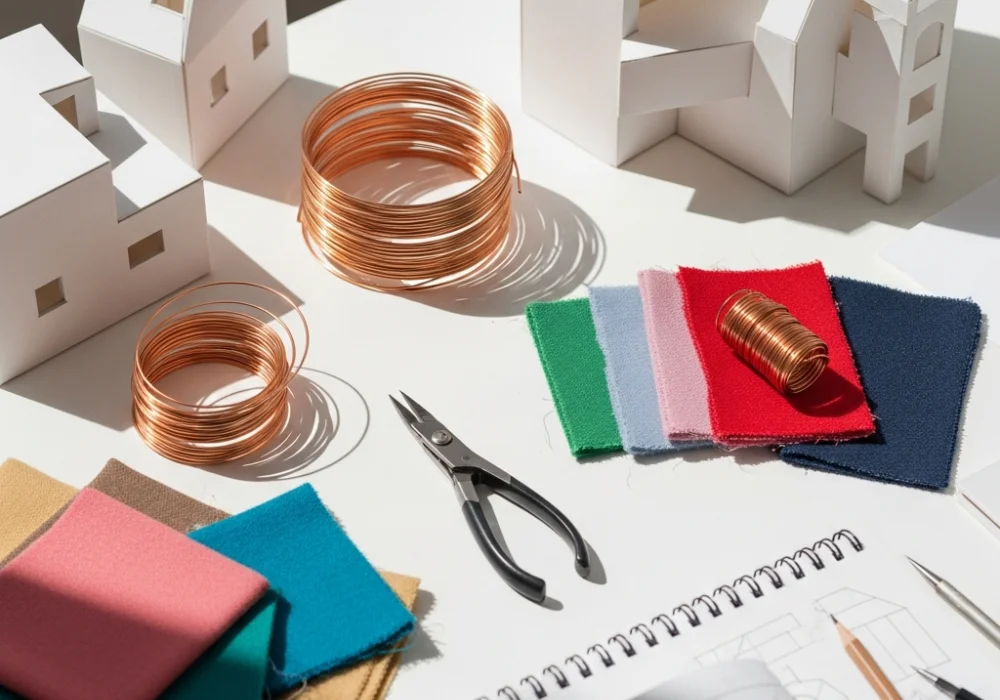
Understanding the NIFT Situation Test: The Final Hurdle
The National Institute of Fashion Technology (NIFT) Situation Test is the final and perhaps most crucial stage for aspirants seeking admission into the Bachelor of Design (B.Des) programs. Unlike the written GAT and CAT exams, this phase evaluates your spontaneous creativity, material handling skills, and ability to translate 2D concepts into 3D models. To succeed, you need more than just artistic flair; you need a strategic understanding of the materials provided in the exam hall. At myentrance.in, we provide comprehensive mock tests and study materials tailored to help you navigate this high-pressure environment with ease.
Why the Material Checklist Matters
During the Situation Test, you are provided with a specific set of materials and a limited timeframe—usually two hours. You are not allowed to bring any outside materials. Therefore, knowing how to manipulate what you are given is the key to creating a standout model. A well-structured preparation involves practicing with the exact types of materials NIFT typically provides. By simulating these conditions through the latest pattern mock tests on myentrance.in, you can build the muscle memory required for precision and speed.
The Essential Material Checklist
While the exact kit varies slightly every year to keep the challenge fresh, there is a core set of materials that NIFT consistently includes. Understanding the properties of these items is the first step toward mastery.
- Cardboard & Mounting Board: Usually provided as the base or for structural elements. It requires clean scoring and folding.
- Handmade Paper & Gateway Paper: Used for adding texture, creating curves, or representing translucent elements like glass or water.
- Copper or Aluminum Wire: Essential for creating skeletons, linear structures, or organic shapes that need to hold their form.
- Fabric & Ribbons: Used to introduce softness, drapes, or specific thematic colors to your model.
- Thermocol & Sunpack Sheets: Often provided for bulk or thick structural walls.
- Straws, Buttons, & Pins: These small accessories act as connectors or decorative elements that add detail to your design.
- Adhesives: Usually a combination of Fevicol, glue drops, or cello tape.
Strategic Material Utility Table
To help you plan your model construction, refer to this strategic breakdown of material usage:
| Material Category | Primary Purpose | Manipulation Technique |
|---|---|---|
| Heavy Structural | Base, Walls, Furniture | Scoring, Interlocking, Butt-joining |
| Flexible/Linear | Human figures, Outlines, Spirals | Bending, Coiling, Twisting |
| Translucent/Soft | Windows, Curtains, Shadows | Pleating, Layering, Crumpling |
| Detailing Units | Buttons, Knobs, Texture | Pinning, Sticking, Grouping |
Advanced Material Manipulation Strategies
Success in the Situation Test isn’t just about making something that looks like the prompt; it is about demonstrating “Material Handling.” Here is how you can elevate your work:
1. Master the Art of Scoring
Instead of cutting through cardboard, learn to score it—cutting only halfway through the thickness. This allows you to fold the board at sharp angles without it snapping, creating professional-looking edges for buildings or furniture models.
2. Thinking Beyond 2D
Don’t just stick paper flat on a surface. Use techniques like quilling, accordion folding, or fringe cutting to give paper a 3D volume. This shows the examiners that you understand the three-dimensional nature of design.
3. Structural Integrity
Your model must be sturdy. A beautiful model that collapses when moved to the evaluation table will lose significant marks. Practice building stable bases using the mock test scenarios available on myentrance.in to ensure your structures are sound.
Tips for the Exam Hall
Managing your time and workspace is as important as the model itself. Here are some pro-tips for the big day:
- Read the Question Carefully: Ensure your model addresses all parts of the prompt. If the question asks for a ‘Creative Workspace’, don’t just build a desk; build an environment.
- Keep it Clean: Excessive glue marks or messy tape can ruin the aesthetic. Use adhesives sparingly and hide joinery where possible.
- The Write-Up: You will be required to write a short explanation of your concept. Use design terminology (e.g., ‘ergonomics’, ‘contrast’, ‘balance’) to explain your material choices.
- Time Management: Dedicate 15 minutes to brainstorming, 80 minutes to construction, and the final 25 minutes to finishing and the write-up.
Prepare with myentrance.in
Transitioning from a 2D sketch to a 3D reality is a skill that improves with repetition. Our platform, myentrance.in, offers curated mock tests for the NIFT Situation Test, providing you with diverse prompts and expert feedback on how to improve your material utilization. Whether it is understanding the current syllabus for NIFT GAT or mastering the latest pattern for Phase 2, we are your dedicated partner in design education.
Frequently Asked Questions (FAQ)
What is the NIFT Situation Test?
It is a hands-on exam where candidates are given a set of materials to create a 3D model based on a specific theme or problem statement within two hours.
Are we allowed to carry scissors or cutters?
In most instances, NIFT provides the basic tools like a cutter or scissors within the kit. However, always check the latest admit card instructions for any changes in the permitted stationery.
How is the Situation Test evaluated?
Examiners look for material handling, creative innovation, neatness, conceptual clarity, and how well you describe your model in the written note.
Can I use my own colors?
No, you are restricted to using only the materials provided in the kit. Bringing any external items, including colors or extra adhesives, can lead to disqualification.





