
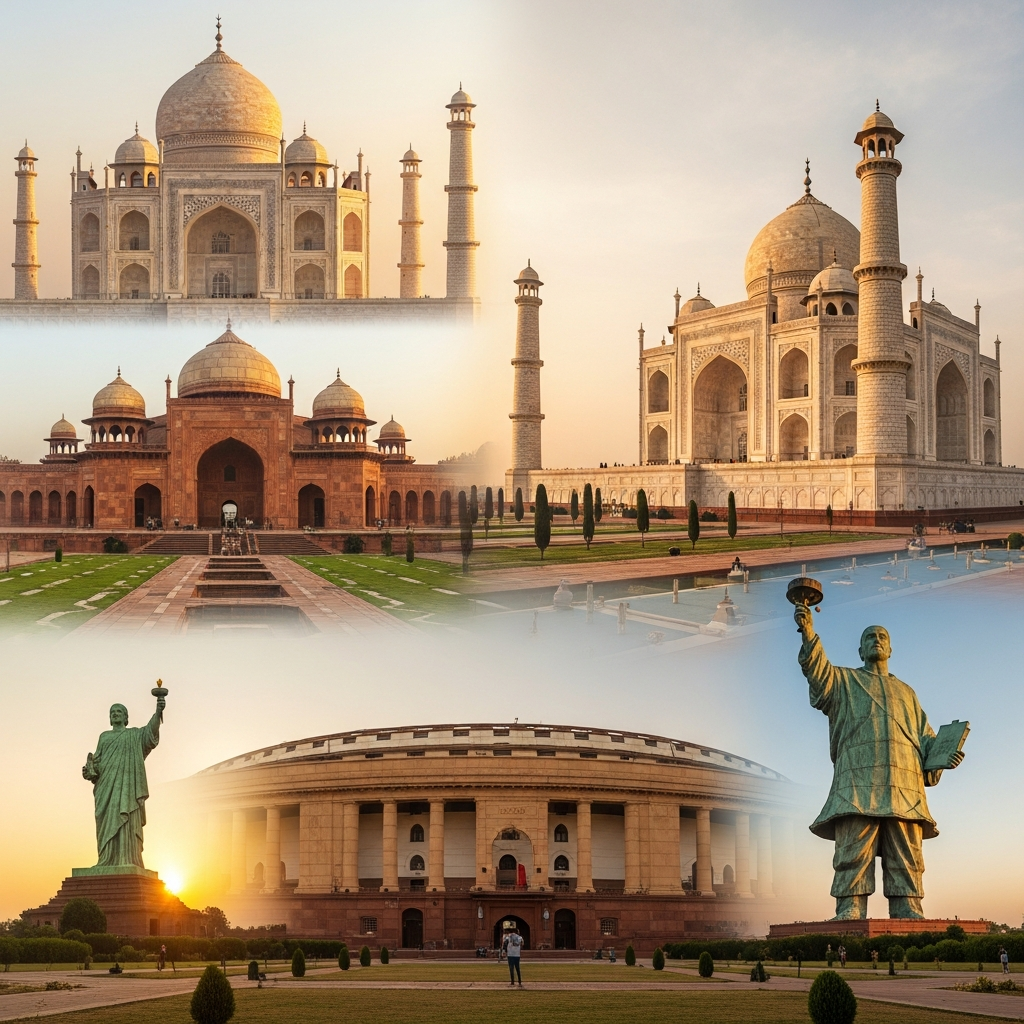
The Significance of Architectural History in Competitive Exams
For aspirants targeting prestigious institutions like the National Institute of Design (NID) and the National Institute of Fashion Technology (NIFT), or candidates preparing for government sectors via SSC and Kerala PSC, General Knowledge (GK) is a crucial pillar. Among the various subjects, Static GK focusing on ‘Historical Monuments and Their Architects’ is highly relevant. Architecture is not just about buildings; it is a reflection of history, culture, and design evolution. Understanding who built these masterpieces helps candidates tackle questions related to art history, design sensitivity, and general awareness.
Why Static GK Matters for NID, NIFT, and SSC
In the latest pattern of the NID DAT and NIFT GAT exams, visual perception and cultural knowledge are tested extensively. Questions often link a monument’s aesthetic style to its architect. Similarly, for SSC CGL or Kerala PSC, historical facts regarding the construction of major landmarks are frequent. To excel in these competitive environments, students must go beyond just the name of the monument and delve into the masterminds behind them. Practicing with specialized mock tests on myentrance.in can help you identify the frequent architectural questions appearing in the current syllabus.
Iconic Indian Monuments and Their Architects
India is a land of architectural wonders, ranging from the Mughal era to the colonial period and modern-day marvels. Below is a comprehensive table of essential monuments and the architects who designed them, which is a must-know for upcoming exams.
| Monument / Structure | Location | Architect(s) |
|---|---|---|
| Taj Mahal | Agra | Ustad Ahmad Lahori |
| New Parliament House (Sansad Bhavan) | New Delhi | Bimal Patel |
| Statue of Unity | Gujarat | Ram V. Sutar |
| Rashtrapati Bhavan | New Delhi | Edwin Lutyens |
| Victoria Memorial | Kolkata | William Emerson |
| Lotus Temple | New Delhi | Fariborz Sahba |
| Gateway of India | Mumbai | George Wittet |
| Chattrapati Shivaji Terminus | Mumbai | Frederick William Stevens |
| Vidhana Soudha | Bengaluru | Kengal Hanumanthaiah |
| Howrah Bridge | Kolkata | Rendel, Palmer and Tritton |
Detailed Insights into Architectural Marvels
1. The Mughal Mastery: Taj Mahal
The Taj Mahal, a UNESCO World Heritage site, is the pinnacle of Mughal architecture. While commissioned by Shah Jahan, the credit for its architectural design goes primarily to Ustad Ahmad Lahori. Design aspirants should note the perfect symmetry and the use of Pietra Dura (stone inlay work) which are common topics in NID and NIFT examinations.
2. The British Legacy: Lutyens’ Delhi
The layout of New Delhi, often called ‘Lutyens’ Delhi’, was the brainchild of Sir Edwin Lutyens and Sir Herbert Baker. They were responsible for the Rashtrapati Bhavan and the Secretariat Building. Their style blended classical European elements with Indian motifs, a style known as Indo-Saracenic architecture.
3. Modern Landmarks: The New Parliament House
As part of the Central Vista Redevelopment Project, the New Parliament House is a key topic for the latest pattern of exams. Designed by Bimal Patel of HCP Design Planning and Management, its triangular shape and peacock-themed interiors represent a modern shift in Indian state architecture.
How to Prepare for Static GK effectively
- Visual Learning: Try to associate the architect’s name with a picture of the building. This is particularly helpful for NID and NIFT aspirants.
- Comparative Study: Learn the architectural styles (Gothic, Mughal, Modernist) associated with each architect.
- Regular Revision: Static GK can be volatile. Use flashcards to remember names like Ram V. Sutar or Fariborz Sahba.
- Mock Tests: The best way to test your retention is through rigorous practice. Visit myentrance.in to access updated mock tests for SSC, Kerala PSC, and Design entrance exams.
Frequently Asked Questions (FAQ)
Who was the chief architect of the Statue of Unity?
The Statue of Unity, the world’s tallest statue located in Gujarat, was designed by the renowned Indian sculptor Ram V. Sutar.
Which architect designed the Old Parliament House in India?
The Old Parliament House (now Samvidhan Sadan) was designed by British architects Sir Edwin Lutyens and Sir Herbert Baker.
Who is known for designing the Lotus Temple in Delhi?
The Lotus Temple, known for its flower-like shape, was designed by Iranian architect Fariborz Sahba.
What style of architecture is the Victoria Memorial?
Designed by William Emerson, the Victoria Memorial in Kolkata is a grand example of Indo-Saracenic revival architecture, blending British and Mughal elements.
How can I find mock tests for the latest syllabus of NID and NIFT?
You can find comprehensive and updated mock tests for NID, NIFT, and other government exams on myentrance.in to ensure you are ready for the upcoming exam sessions.





