
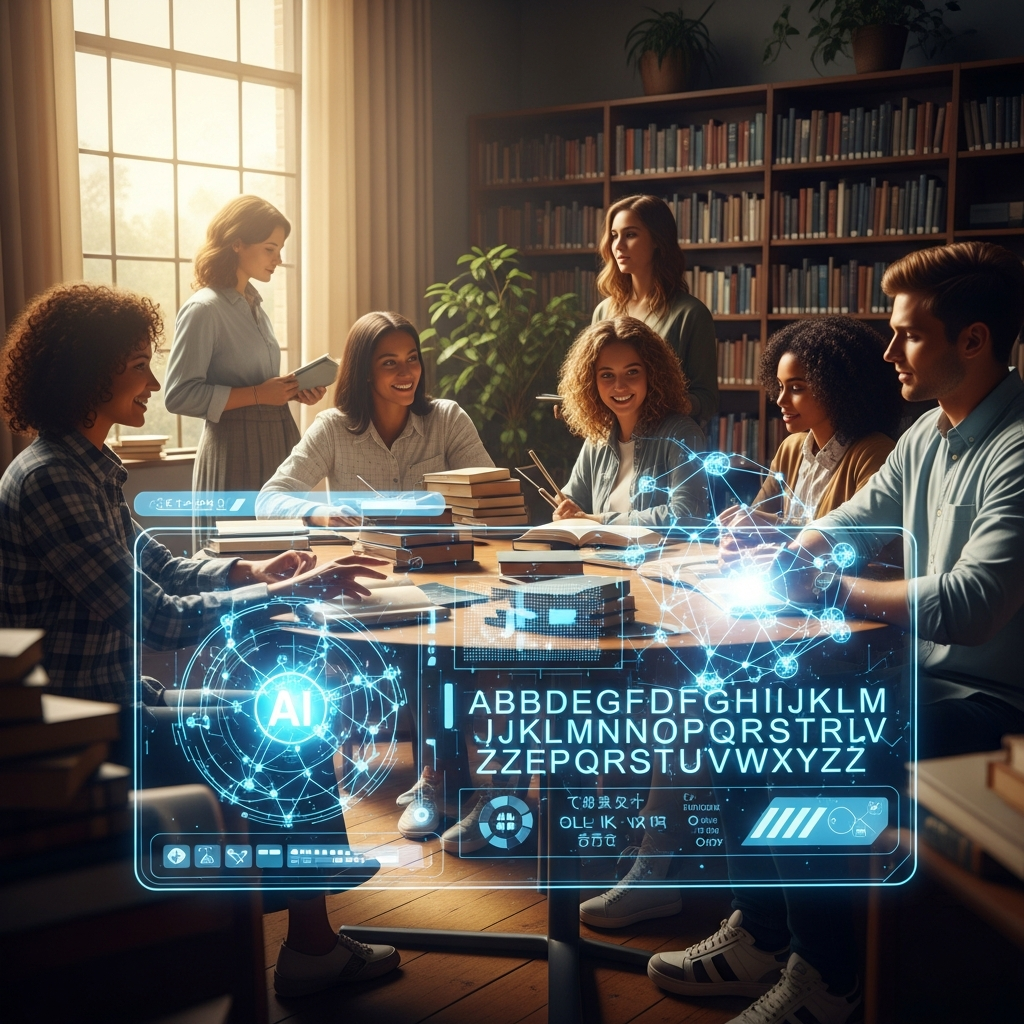
Introduction to AI in Modern Education
Literacy has long been the cornerstone of human development, yet millions across the globe still lack basic reading and writing skills. In the current syllabus of competitive examinations like the Kerala PSC, SSC, and NIFT GAT, understanding the intersection of technology and social progress is vital. Artificial Intelligence (AI) is no longer a futuristic concept; it is a present-day tool that is significantly impacting global literacy rates by providing personalized, scalable, and accessible learning solutions.
How AI is Transforming Literacy
The latest pattern of global education focuses heavily on leveraging technology to reach underserved populations. AI contributes to literacy in several key ways:
- Personalized Learning Paths: AI algorithms analyze a learner’s progress in real-time, identifying specific weaknesses and adjusting the curriculum accordingly.
- Language Translation and Localized Content: For non-native speakers, AI-driven translation tools help bridge the gap between their mother tongue and instructional languages.
- Voice-to-Text and Text-to-Voice: These tools assist individuals with visual impairments or dyslexia, ensuring that literacy is inclusive for all.
- 24/7 Virtual Tutors: Unlike human instructors, AI tutors are available at any time, providing instant feedback to students in remote areas.
Comparative Analysis: Traditional vs. AI-Enhanced Literacy
To understand the magnitude of this shift, let us compare the traditional methods of literacy outreach with the modern, AI-integrated approach often discussed in current affairs modules for upcoming exams.
| Feature | Traditional Literacy Programs | AI-Powered Literacy Programs |
|---|---|---|
| Learning Pace | Fixed, classroom-based speed | Adaptive and personalized to the learner |
| Accessibility | Limited by physical infrastructure | Available globally via mobile devices |
| Feedback Mechanism | Delayed (Manual grading) | Instant and data-driven |
| Scalability | Requires more teachers for more students | Can reach millions simultaneously at low cost |
| Content Variety | Static textbooks | Dynamic, interactive, and multimedia-rich |
Bridging the Digital Divide with AI
While AI offers immense potential, the ‘digital divide’ remains a challenge. For aspirants of exams like the NID DAT and NIFT GAT, understanding the socio-economic implications of technology is crucial. AI can bridge this divide by operating on low-bandwidth devices and providing offline functionality in areas with poor internet connectivity. Initiatives by global organizations are now integrating AI into basic mobile phones to teach phonics and vocabulary to children in sub-Saharan Africa and South Asia.
The Role of AI in Competitive Exam Preparation
The impact of AI isn’t just limited to basic literacy; it extends to higher education and competitive exam coaching. At myentrance.in, we recognize the power of technology in education. Our mock tests for NID DAT, NIFT GAT, Kerala PSC, and SSC are designed to mimic the latest pattern of exams, helping students identify their strengths and weaknesses just like an AI tutor would. Staying updated with current affairs regarding AI is essential, as questions on technological trends are frequently featured in the General Knowledge sections of current syllabus exams.
AI Literacy as a New Essential Skill
In the modern era, literacy is not just about reading and writing; it includes ‘AI Literacy.’ This involves understanding how to interact with AI systems, recognizing algorithmic bias, and using AI ethically. This theme is increasingly appearing in essay topics and group discussions for prestigious entrance tests.
Challenges and Ethical Considerations
Despite the benefits, AI in literacy is not without risks. Privacy concerns, the potential for biased algorithms, and the lack of human emotional intelligence are significant hurdles. However, when used as a supplement to traditional teaching rather than a replacement, AI has the power to accelerate the goal of 100% global literacy.
Why Aspirants Should Care
Whether you are preparing for the SSC or the Kerala PSC, topics like ‘Technology in Education’ and ‘Artificial Intelligence’ are high-yield areas. Practicing with mock tests on myentrance.in ensures you are familiar with how these concepts are tested in the latest pattern. Knowledge of global literacy trends provides a competitive edge in both written exams and personal interviews.
Frequently Asked Questions (FAQ)
How does AI specifically help in improving adult literacy?
AI helps adult learners by providing a non-judgmental environment where they can practice reading and writing at their own pace, reducing the stigma often associated with adult education.
Can AI replace teachers in the literacy process?
No, AI is best used as a tool to assist teachers. It handles repetitive tasks and data analysis, allowing human educators to focus on mentorship and emotional support.
Is AI literacy a part of the current syllabus for competitive exams?
Yes, most competitive exams like SSC, NIFT, and Kerala PSC include sections on current affairs and technology, where the impact and ethics of AI are frequently tested.
Where can I find mock tests to stay updated with these topics?
You can access a wide range of mock tests and study materials tailored to the latest exam patterns for NID DAT, NIFT GAT, Kerala PSC, and SSC at myentrance.in.





