
The Critical Path from NID Prelims to the Studio Test
Securing a high score in the NID Design Aptitude Test (DAT) Prelims is a significant milestone for every design aspirant. However, the journey toward gaining admission into the National Institute of Design does not end there. The transition from the Prelims to the Mains—which includes the Studio Test and Portfolio Review—is where the real challenge begins. While the Prelims evaluate your observational skills, logic, and creative thinking on paper, the Mains stage assesses your tactile skills, personality, and your unique design voice.
Understanding the Shift in Evaluation
Many students make the mistake of treating the Studio Test and Portfolio Review as a mere extension of the Prelims. In reality, the criteria change drastically. The examiners are no longer just looking for a correct answer; they are looking for a designer’s perspective. This is why developing a robust portfolio is the most critical bridge between these two stages. At myentrance.in, we emphasize that your portfolio is a silent interview that speaks before you do.
| Feature | NID DAT Prelims | NID DAT Mains (Portfolio/Studio) |
|---|---|---|
| Focus | Aptitude, Logic, Visualization | Execution, Material Handling, Personality | Medium | Paper and Pencil (Mostly 2D) | 3D Modeling, Physical Portfolio, Interaction | Time Frame | 3 Hours | Multiple Days / Interview Rounds | Outcome | Shortlisting for the next round | Final Selection and Ranking |
What Makes an NID-Ready Portfolio?
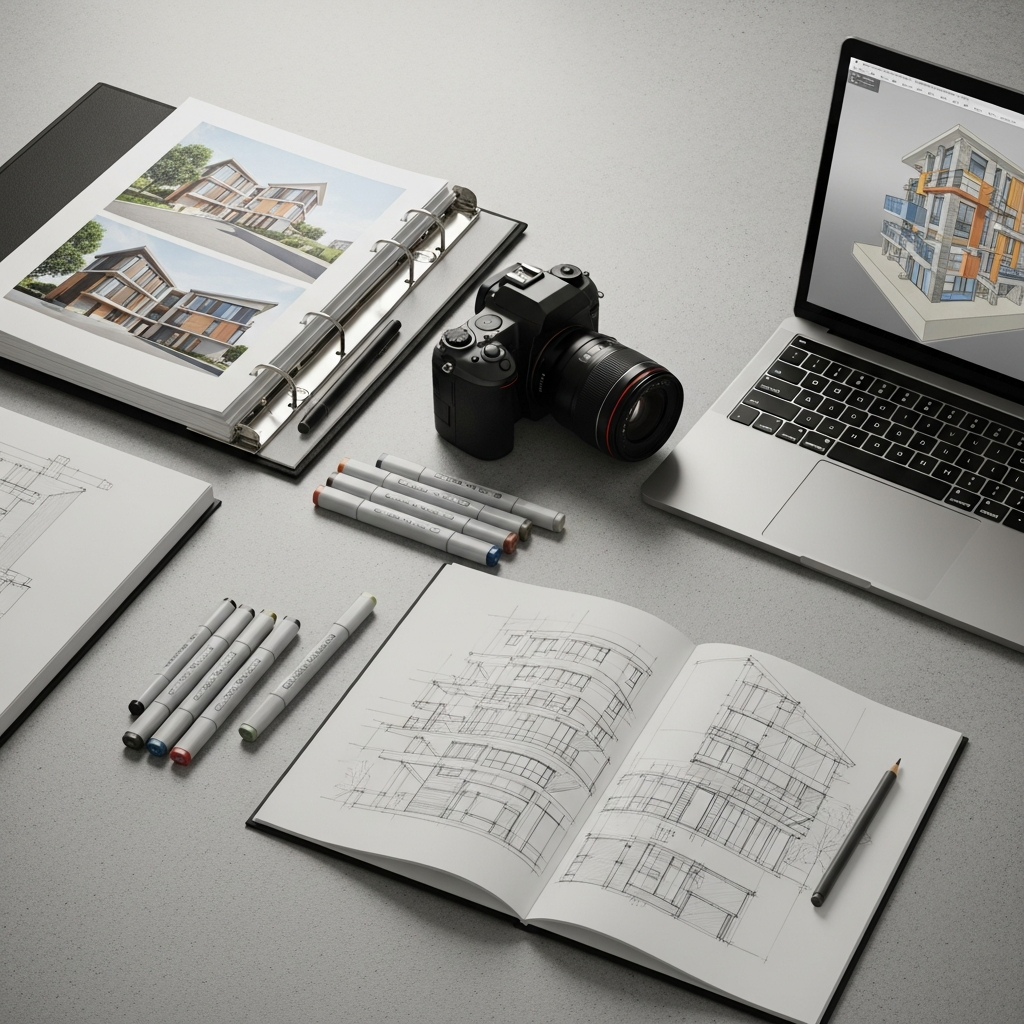
A portfolio is not just a collection of your best drawings. It is a curated narrative of your creative journey. When building your portfolio for the upcoming exams, focus on diversity and depth. Your selection should reflect your ability to experiment with different mediums and your willingness to solve problems.
- Variety of Work: Include sketches, digital art, photography, 3D models, and even craftwork.
- The Process: Show your rough sketches and ideation phases, not just the finished product.
- Personal Projects: Demonstrate your passion by including work done outside of a classroom setting.
- Professional Presentation: Ensure that your work is neatly mounted or digitally curated for easy viewing.
The Role of Storytelling in Your Design Journey
Every piece in your portfolio should have a story. Why did you choose that specific color palette? What problem were you trying to solve with that product design? During the interview, the jury often asks about the “why” rather than the “how.” Utilizing the mock tests and resource materials at myentrance.in can help you refine your ability to articulate these thoughts under pressure. Our latest pattern mock tests include situational awareness exercises that mirror the challenges faced during the Studio Test.
Bridging the Gap: Practical Steps
To successfully bridge the gap between Prelims and Finals, you must start early. Do not wait for the Prelims results to begin your portfolio. The latest pattern of the NID admission process demands a sophisticated level of documentation that takes time to compile. Documentation involves photographing your 3D works, scanning your sketches, and writing brief descriptions for each project.
Common Pitfalls to Avoid
One of the most common mistakes is over-polishing. A portfolio that looks too perfect can sometimes come across as unauthentic. The NID jury values raw creativity and a visible learning curve. Another mistake is including too much work. Quality always triumphs over quantity. Select 10 to 15 of your absolute best pieces that show a range of skills rather than 50 mediocre ones.
Leveraging Resources at myentrance.in
Preparing for the Studio Test requires a different mindset compared to the written exam. At myentrance.in, we provide specialized study material and mock tests designed to simulate the hands-on nature of the NID DAT Mains. By practicing with our latest pattern materials, you gain the confidence to handle unexpected materials and briefs during the actual Studio Test, ensuring your portfolio and performance are perfectly aligned.
Frequently Asked Questions
What should be the ideal size of an NID portfolio?
There is no fixed size, but it should be manageable. Typically, an A3 or A4 size folder is preferred for physical portfolios. If submitting digitally, ensure the file size is optimized for viewing without losing quality.
Can I include school art projects in my portfolio?
Yes, but only if they demonstrate high-level design thinking or exceptional skill. Avoid generic school assignments and focus on projects where you added a personal or innovative touch.
Is a digital portfolio better than a physical one?
Both have their merits. A physical portfolio allows the jury to feel the textures and see the details up close, while a digital portfolio is easier to organize and present. Often, the latest pattern of interviews may require a digital submission followed by a physical presentation.
How many projects should I include?
Aim for 10 to 15 well-rounded projects. It is better to have ten diverse, high-quality pieces than twenty pieces that look the same.
Does the portfolio carry more weight than the Studio Test?
Both are integral parts of the Mains stage. The Studio Test evaluates your on-the-spot creativity, while the portfolio demonstrates your long-term commitment and skill development. They complement each other in the final scoring process.





