
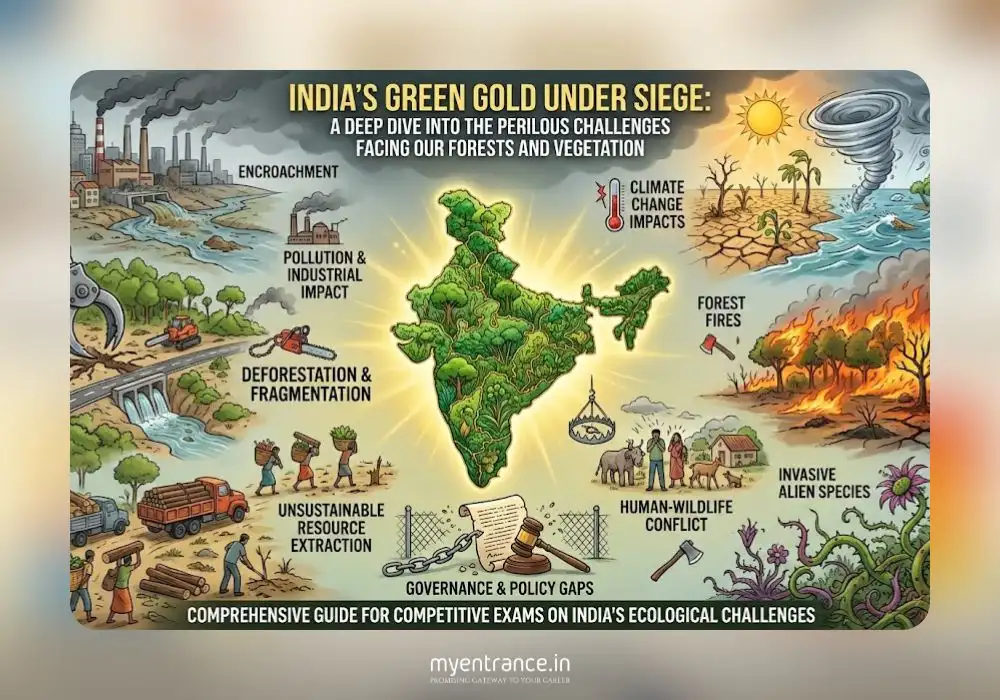
India, a land blessed with remarkable biodiversity, holds its forests and vegetation as invaluable natural assets. These green covers are not merely tracts of land; they are vital lifelines, critical for ecological balance, climate regulation, biodiversity conservation, and the livelihoods of millions. From the majestic Himalayas to the tropical Western Ghats, India’s diverse ecosystems play an indispensable role in maintaining the planet’s health. However, beneath this verdant veneer lies a complex web of challenges, threatening the very existence and vitality of India’s green gold. Understanding these multifaceted threats is crucial for students aspiring to contribute to sustainable development and environmental governance.
The Growing Pressure: Why India’s Forests are Under Threat
The increasing population, rapid industrialization, and evolving socio-economic landscape exert immense pressure on India’s natural resources. This pressure manifests in various forms, leading to a progressive degradation and loss of forest cover and native vegetation. Each challenge, whether direct or indirect, contributes to a cumulative impact that undermines the ecological integrity and resilience of these vital ecosystems.
Major Challenges to India’s Forest and Vegetation Cover
Deforestation and Habitat Fragmentation
One of the foremost challenges is the relentless pace of deforestation and subsequent habitat fragmentation. This phenomenon involves the permanent removal of forest cover for non-forest purposes, primarily driven by the expansion of agricultural land to feed a growing population, large-scale infrastructure projects such as road construction, dam building, and railway lines, and the burgeoning demands of urbanisation and industrial development. Furthermore, extensive mining activities, particularly in resource-rich regions, lay waste to vast forest tracts. The immediate impact is the direct loss of trees, but the long-term consequence is the breaking up of continuous forest areas into smaller, isolated patches, which severely restricts wildlife movement, reduces genetic diversity, and makes populations more vulnerable to extinction.
Unsustainable Resource Extraction
Forests are a source of numerous resources, and their over-extraction beyond regenerative capacities poses a significant threat. This includes the unsustainable harvesting of timber for commercial purposes, the collection of fuelwood and fodder by local communities heavily dependent on forests for their daily needs, and the indiscriminate collection of minor forest produce. While these activities often support local livelihoods, a lack of sustainable practices and effective management can lead to widespread degradation, thinning of forest density, and a decline in specific plant species. Shifting cultivation, a traditional agricultural practice in some tribal areas, also contributes to this challenge when the fallow periods are shortened, preventing forest regeneration.
Forest Fires
Forest fires, both natural and anthropogenic, represent a destructive force that sweeps across vast areas of India’s forests annually. While some fires are naturally caused by lightning, the overwhelming majority are human-induced, resulting from negligence, intentional arson, traditional slash-and-burn practices, or sparks from agricultural burning. These fires destroy valuable flora and fauna, degrade soil quality, release significant amounts of greenhouse gases into the atmosphere, and leave behind barren landscapes that take years to recover. The frequency and intensity of these fires are escalating, exacerbated by changing climatic conditions that lead to longer dry spells and hotter temperatures, creating ideal conditions for fire outbreaks.
Climate Change Impacts
The overarching threat of climate change presents a complex and insidious challenge to India’s forest and vegetation cover. Altered rainfall patterns, including both prolonged droughts and more intense floods, directly impact plant growth and survival. Rising temperatures stress vegetation, making it more susceptible to pests and diseases. The shifting climatic zones force species to migrate to more suitable habitats, but rapid changes can outpace the ability of many species to adapt or move, leading to localized extinctions. Furthermore, extreme weather events like cyclones and heatwaves can cause widespread damage to forest ecosystems, disrupting delicate ecological balances and reducing their resilience.
Encroachment and Illegal Activities
Illegal encroachment into forest lands for agricultural expansion, human settlements, or illicit resource extraction is a persistent problem. This often involves the clearing of forests to claim land, leading to direct habitat loss. Coupled with this are various illegal activities such as illicit logging, which decimates valuable tree species, and poaching, which targets endangered wildlife, disrupting food chains and overall ecosystem health. Illegal mining operations within forest areas further degrade land, pollute water bodies, and destroy habitat, often operating with impunity due to weak enforcement or corruption.
Pollution and Industrial Impact
The burgeoning industrial sector and urban centers contribute significantly to air, water, and soil pollution, which inevitably impacts adjacent forest ecosystems. Air pollutants, including sulfur dioxide and nitrogen oxides, can lead to acid rain, damaging foliage, altering soil chemistry, and hindering plant growth. Water pollution from industrial effluents and domestic sewage contaminates rivers and streams flowing through forests, harming aquatic life and plants reliant on clean water. Soil contamination from hazardous waste can render forest land infertile, jeopardizing the health and long-term viability of vegetation.
Invasive Alien Species
The introduction of invasive alien species, both intentionally and unintentionally, poses a silent but significant threat to native vegetation. These non-native plants often outcompete indigenous species for resources like sunlight, water, and nutrients, disrupt local food webs, and alter habitat structures. Species like Lantana camara, Parthenium hysterophorus, and Prosopis juliflora have aggressively colonized vast areas of Indian forests, reducing biodiversity and making it challenging for native flora to thrive. This ecological imbalance can lead to a decline in populations of native plants and animals dependent on them.
Human-Wildlife Conflict
As human populations expand and encroach upon forest fringes, the incidence of human-wildlife conflict escalates. Loss of natural habitat and fragmentation force wild animals to venture into human settlements in search of food and water, leading to crop damage, livestock predation, and sometimes even loss of human life. This conflict often results in retaliatory killings of wildlife and fuels negative perceptions towards conservation efforts, creating a significant impediment to protecting both forest areas and their inhabitants.
Governance and Policy Gaps
Underlying many of these challenges are issues related to governance and policy implementation. Gaps in policy frameworks, weak enforcement of existing environmental laws, and corruption can undermine conservation efforts. A lack of adequate funding for forest management, insufficient human resources, and limited community participation in conservation programs further exacerbate the problem. Effective protection and sustainable management require robust policies, strong political will, and the active involvement of all stakeholders, from local communities to national agencies.
The Path Forward
Addressing these pervasive challenges requires a comprehensive, multi-pronged approach that integrates scientific research, technological innovation, robust policy frameworks, and active community engagement. Protecting India’s forests and vegetation cover is not merely an environmental imperative but a crucial investment in the nation’s ecological security, climate resilience, and the well-being of its future generations. For students preparing for competitive examinations, understanding these challenges is essential to grasping the complexities of environmental issues and formulating sustainable solutions for India’s green future.
Frequently Asked Questions (FAQs)
Q1: What is the most significant human-induced challenge to India’s forests and vegetation cover?
A1: The most significant human-induced challenge is deforestation and habitat fragmentation, primarily driven by population pressure, the expansion of agriculture, large-scale infrastructure projects like roads and dams, urban development, and extensive mining activities. These factors directly reduce forest cover and break up continuous natural habitats.
Q2: How does climate change specifically manifest its impact on India’s forest and vegetation?
A2: Climate change impacts India’s forests through altered rainfall patterns, including more frequent droughts and intense floods, rising temperatures that stress vegetation, and an increase in extreme weather events. These changes lead to shifts in species distribution, increased susceptibility to pests and diseases, and a reduction in overall forest productivity and resilience.
Q3: Are all forest fires in India naturally occurring events?
A3: While natural causes like lightning can ignite forest fires, a significant majority of forest fires in India are anthropogenic. They result from human activities such as negligence, intentional arson, traditional slash-and-burn agricultural practices, or sparks from agricultural stubble burning, often exacerbated by dry conditions linked to climate change.
Q4: What role do invasive alien species play in threatening India’s native flora and vegetation?
A4: Invasive alien species pose a significant threat by outcompeting native plants for essential resources like sunlight, water, and nutrients. They disrupt local ecosystems, alter habitat structures, and reduce the biodiversity of indigenous flora, making it difficult for native species to survive and thrive.
Q5: How do governance and policy gaps contribute to the challenges faced by India’s forests?
A5: Gaps in governance and policy contribute significantly through issues such as weak enforcement of environmental laws, corruption, insufficient funding for forest management, inadequate human resources, and limited participation of local communities in conservation efforts. These deficiencies hinder effective protection, sustainable management, and long-term conservation of India’s forest resources.





