
The landscape of Indian governance has witnessed a transformative shift with the advent of platforms designed for greater efficiency and accountability. Among these, the Prime Minister’s flagship initiative, PRAGATI, stands out as a beacon of Pro-Active Governance and Timely Implementation. Its recent achievement of conducting its 50th meeting marks a significant milestone, underscoring its enduring impact and central role in accelerating India’s developmental agenda, particularly in vital sectors like power projects, a key focus of this landmark session. Understanding PRAGATI is not merely about staying updated with current affairs; it is crucial for aspirants preparing for competitive examinations such as UPSC, SSC, and various PSCs, as it exemplifies modern governance mechanisms and administrative reforms.
What is PRAGATI? Defining Pro-Active Governance and Timely Implementation
PRAGATI, an acronym for Pro-Active Governance and Timely Implementation, is much more than just a review mechanism; it is a multi-modal, multi-purpose platform designed to address public grievances, and monitor and expedite the implementation of various government projects across the country. It serves as a unique information and communication technology (ICT) based platform, leveraging digital tools to foster better coordination between the Central and State governments. Its fundamental objective is to bring synergy to governance, ensuring that vital infrastructure projects and public services are delivered efficiently and without undue delays, ultimately benefiting the citizens.
When and How was PRAGATI Launched? The Genesis of a Governance Revolution
The PRAGATI platform was conceptualized and launched by Prime Minister Narendra Modi in 2015. Recognizing the challenges of project delays, inter-ministerial coordination issues, and the backlog of public grievances, the Prime Minister envisioned a system that could directly oversee these critical areas. The platform was designed to enable the Prime Minister to review and monitor projects and programs across various sectors, including railways, roads, power, and petroleum, among others. It integrates three crucial technologies: Digital India data management, video-conferencing, and geo-spatial technology, thereby creating a powerful and transparent monitoring system. This blend of technology allows for real-time tracking of progress and bottlenecks, making it a truly revolutionary step in administrative oversight.
Why PRAGATI? The Vision Behind the Platform for Enhanced Governance
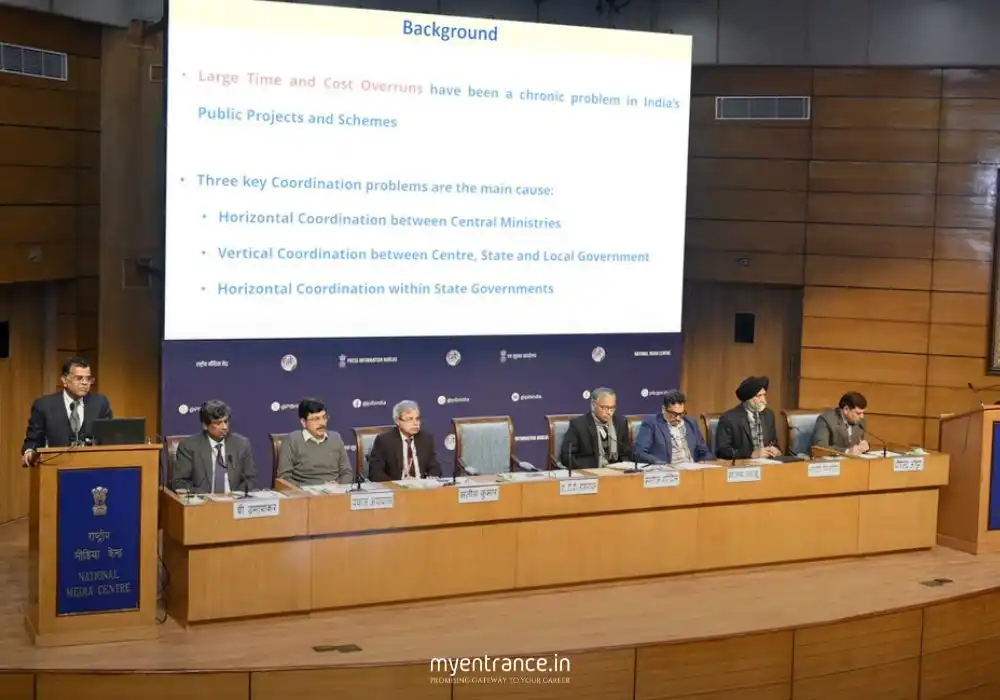
The primary impetus behind establishing PRAGATI was to inject a sense of urgency and accountability into India’s governance framework. Before its inception, project delays were a perennial issue, leading to cost overruns and hindering economic growth. Public grievances often took a long time to resolve, eroding trust in the administration. PRAGATI was designed to tackle these challenges head-on by providing a direct channel for the Prime Minister to interact with secretaries of central government ministries and chief secretaries of state governments. This direct interface enables top-level intervention to resolve pending issues, clear hurdles, and ensure timely completion of projects. Furthermore, it aims to enhance cooperative federalism by fostering better collaboration between the Union and State governments on development initiatives, leading to more synchronized and effective policy implementation.
How Does PRAGATI Function? Mechanism and Modus Operandi
The operational mechanism of PRAGATI is both systematic and highly effective. The Prime Minister chairs the PRAGATI meetings, which typically occur on the fourth Wednesday of every month. Before the meeting, the Prime Minister’s Office (PMO) collects data on various ongoing projects and pending public grievances from relevant central ministries and state governments. These issues are then meticulously prepared and presented for discussion. During the meeting, the Prime Minister engages directly with the concerned Union Secretaries and State Chief Secretaries via video conferencing, scrutinizing the progress of projects and the status of grievance redressal. Critical issues that are causing delays or discrepancies are identified, and immediate solutions are sought. This direct, high-level oversight ensures that accountability is fixed, and decisions are made on the spot, cutting through bureaucratic red tape. The platform also utilizes geo-tagging and real-time project photographs to verify physical progress, adding another layer of transparency and precision to the monitoring process.
The Scope and Impact of PRAGATI: Addressing India’s Developmental Challenges
Since its launch, PRAGATI has cast a wide net over various sectors critical to India’s development. It regularly reviews massive infrastructure projects spanning roads, railways, power, renewable energy, irrigation, and urban development, among others, many of which involve investments running into lakhs of crores. Beyond infrastructure, it also monitors the implementation of significant social sector schemes and addresses public grievances lodged through the Centralized Public Grievance Redress and Monitoring System (CPGRAMS). The 50th meeting itself served as a testament to PRAGATI’s expansive scope, with a particular focus on reviewing critical power projects. These reviews are essential for ensuring India’s energy security and expanding access to electricity, directly impacting the lives of millions. By continuously tracking these projects, PRAGATI ensures that vital resources are optimally utilized and developmental goals are met, driving inclusive growth across the nation.
Significance for Governance and Development: A Paradigm Shift
PRAGATI represents a paradigm shift in Indian governance, moving towards a more proactive, responsive, and accountable administration. It embodies the principles of ‘minimum government, maximum governance’ by streamlining processes, promoting inter-departmental coordination, and ensuring that citizens’ concerns are addressed promptly. Its technology-driven approach brings transparency to government functioning, making project implementation more visible and verifiable. For a developing nation like India, where timely completion of infrastructure projects is paramount for economic growth and job creation, PRAGATI plays a pivotal role. It reinforces the ethos of good governance, fostering an environment where projects are not just launched but also completed efficiently, delivering tangible benefits to the public and strengthening the fabric of democracy through improved service delivery.
PRAGATI’s Importance for Competitive Exam Aspirants
For students preparing for competitive examinations, PRAGATI is a critical topic that encapsulates several key areas of the syllabus. It falls under current affairs, governance, public administration, and government schemes and policies. Understanding PRAGATI provides insights into how the modern Indian government functions, its approach to problem-solving, and its commitment to transparency and accountability. Questions related to government initiatives, digital governance, cooperative federalism, and administrative reforms often feature prominently in exams like the UPSC Civil Services Examination (General Studies Paper II and III), SSC CGL, and various State Public Service Commission examinations. Analyzing PRAGATI helps aspirants grasp the practical application of theoretical concepts of governance and public policy, making it an indispensable subject for thorough preparation.
Frequently Asked Questions (FAQs)
1. What is the full form of PRAGATI and what is its core purpose?
PRAGATI stands for Pro-Active Governance and Timely Implementation. Its core purpose is to monitor and expedite the implementation of various government projects and programs, as well as to address public grievances, through a direct interaction platform led by the Prime Minister.
2. When was the PRAGATI platform launched and by whom?
The PRAGATI platform was launched in 2015 by Prime Minister Narendra Modi, with the aim of bringing greater efficiency, transparency, and accountability to governance.
3. What specific technologies does PRAGATI utilize for its functioning?
PRAGATI leverages a combination of three key technologies: Digital India data management, video-conferencing for direct interaction, and geo-spatial technology for real-time monitoring and verification of project progress.
4. How often are PRAGATI meetings conducted and who typically attends them?
PRAGATI meetings are typically conducted on the fourth Wednesday of every month. These meetings are chaired by the Prime Minister and involve direct interaction with Union Secretaries of concerned ministries and Chief Secretaries of various State governments via video conferencing.
5. Why is PRAGATI considered significant for India’s governance and for competitive exam aspirants?
PRAGATI is significant for governance as it ensures timely project completion, resolves public grievances, enhances inter-governmental coordination, and promotes accountability and transparency. For competitive exam aspirants, it is a crucial topic covering current affairs, public administration, government schemes, and digital governance, providing practical insights into the functioning of the Indian administrative system.





