
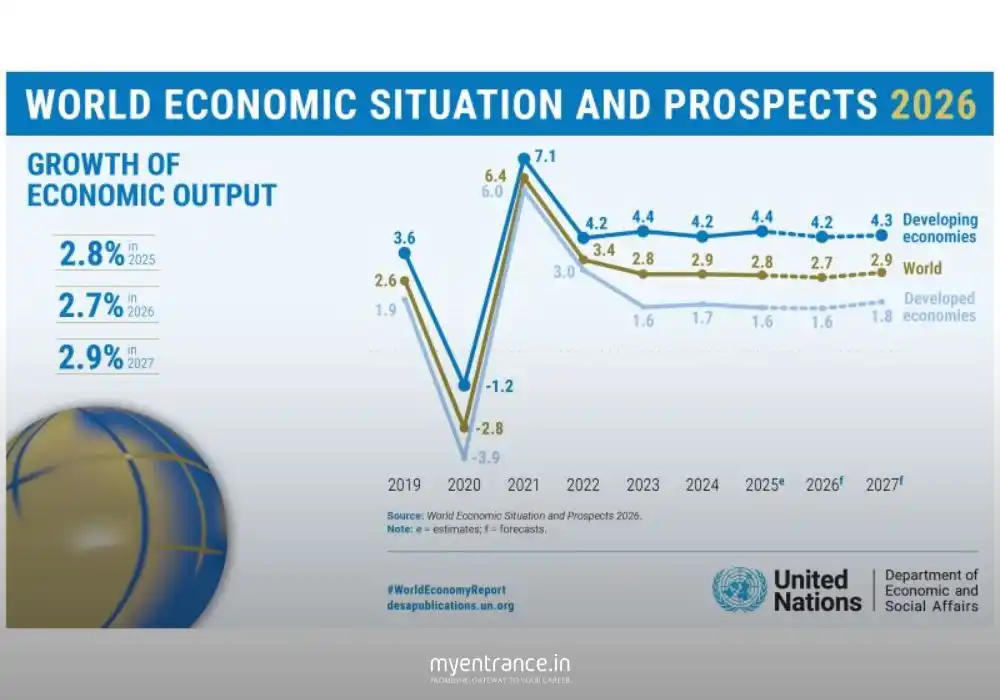
The journey to cracking competitive exams like UPSC, SSC, and PSC demands more than just rote learning; it requires a deep understanding of global dynamics and their profound implications. Among the myriad of reports and analyses available, the United Nations’ World Economic Situation and Prospects (WESP) Report stands out as an indispensable resource. Far from being just another economic publication, the WESP Report, including its future iterations like the WESP 2026, offers a panoramic view of global economic health, making it a powerful tool for aspirants seeking to build a comprehensive and authoritative knowledge base crucial for success. Understanding its purpose, scope, and how to effectively leverage its insights can significantly enhance your preparation, providing you with data-driven arguments and a nuanced perspective on critical world issues.
What Exactly is the World Economic Situation and Prospects (WESP) Report?
The World Economic Situation and Prospects Report is the flagship publication of the United Nations concerning the global economy. It provides an authoritative and comprehensive assessment of the world economic situation, offering both short-term forecasts and analyses of key development issues. The report delves into current economic trends, major challenges, and potential policy recommendations for sustainable development. It is designed to inform policymakers, researchers, and the general public about the state of the global economy, making it a critical barometer of worldwide economic health and future trajectories. Through its rigorous analysis, the WESP report aims to foster international dialogue and cooperation on economic and social development issues, aligning directly with the broader objectives of the United Nations.
When and By Whom is This Crucial Report Released?
The World Economic Situation and Prospects Report is an annual publication, typically launched in January of each year, providing forecasts for the current and upcoming years. For instance, the WESP 2026, when it is eventually released, will offer projections and analyses relevant for that year and the immediate future. This timely release ensures that the data and insights are fresh and pertinent to contemporary global challenges. The report is a collaborative effort, produced jointly by the United Nations Department of Economic and Social Affairs (UN DESA), the United Nations Conference on Trade and Development (UNCTAD), and the five United Nations regional commissions. This collaborative authorship ensures a global perspective, incorporating diverse regional economic realities and challenges into its overarching assessment. The rigorous methodology and broad participation lend immense credibility and authority to its findings, making it a globally recognized economic benchmark.
Why the WESP Report is Indispensable for Your Competitive Exam Preparation
The importance of the WESP Report for competitive exams, particularly the UPSC Civil Services Examination, cannot be overstated. It serves as a goldmine of information, directly relevant to various aspects of the syllabus.
Firstly, for General Studies Paper III (Economy and Development), the WESP Report provides up-to-date information on global economic growth trends, inflation, trade, investment, and unemployment. It offers insights into the performance of major economies, global supply chains, and the impact of geopolitical events on economic stability. Understanding these global dynamics is essential for analyzing India’s economic position and policy responses. Moreover, the report often discusses specific challenges like debt sustainability, poverty eradication, and food security, which are core themes in the development section of the syllabus.
Secondly, for General Studies Paper II (Governance, Constitution, Polity, Social Justice & International Relations), the report touches upon themes of social development, inequality, and the progress towards Sustainable Development Goals (SDGs). Economic trends highlighted in the report often have direct implications for social justice and human development. Furthermore, its analysis of global economic cooperation, trade policies, and the impact of international financial institutions provides a crucial backdrop for understanding international relations. Questions on global governance and multilateral organizations often require knowledge of their economic mandates, which the WESP report elucidates.
Thirdly, the WESP Report is a vital source for Current Affairs preparation. Given its annual release and focus on contemporary economic challenges, studying the report keeps aspirants abreast of the latest global developments. This knowledge is not only crucial for objective-type questions in Prelims but also forms the foundation for well-rounded answers in the Mains examination and thoughtful contributions during the interview stage. It equips candidates with concrete data and expert analysis to support their arguments on a wide array of topics, from climate finance to digital economy challenges.
Finally, the report significantly enhances your analytical capabilities and essay writing skills. By presenting complex economic issues in a structured manner, it helps you develop a holistic understanding of interconnections between various global forces. When writing essays or long answers, referencing data and insights from an authoritative UN report like WESP adds weight and credibility to your arguments, demonstrating a comprehensive and informed perspective that examiners highly value. It moves your answers beyond mere opinions to evidence-based analysis, reflecting a deeper grasp of global issues.
How to Effectively Leverage the WESP Report for Maximum Benefit
To extract maximum value from the WESP Report for your competitive exam preparation, a strategic approach is necessary. Begin by focusing on the executive summary and key messages, as these encapsulate the most important findings and policy recommendations. Next, identify the major global economic trends highlighted – is global growth accelerating or decelerating? What are the primary drivers or drag factors? Pay close attention to projections for key economic indicators like GDP growth, inflation rates, and trade volumes, not just globally but also for significant regions and economies, including India.
Crucially, look for sections that discuss challenges such as climate change impacts, technological disruption, growing inequalities, or debt crises, as these are frequently tested topics. Understand the policy implications and recommendations provided by the UN for addressing these issues. It is not enough to merely know the data; you must also grasp the underlying causes and potential solutions. Connect the report’s findings with India’s economic context – how do global trends impact India’s growth, trade, and development goals? Are there specific policy recommendations that India could adopt or is already implementing?
Finally, integrate the insights gained from the WESP Report into your answer writing practice. Use specific data points, trends, and UN recommendations to enrich your Mains answers and essays. For Prelims, create concise notes on key facts, definitions, and the roles of the UN bodies involved. Regularly reviewing the key takeaways will ensure that the information stays current in your memory and is readily accessible during the examination. Approaching the WESP Report with this structured methodology will transform it from a mere document into a powerful strategic asset for your exam success.
Frequently Asked Questions
1. What is the primary objective of the UN’s World Economic Situation and Prospects (WESP) report?
The primary objective of the WESP report is to provide an authoritative and comprehensive assessment of the global economic situation, offering short-term forecasts and in-depth analysis of key development challenges. It aims to inform policymakers, researchers, and the public about global economic trends and to foster international dialogue on economic and social development.
2. Which specific UN bodies are responsible for publishing the WESP report?
The WESP report is a collaborative effort published jointly by the United Nations Department of Economic and Social Affairs (UN DESA), the United Nations Conference on Trade and Development (UNCTAD), and the five United Nations regional commissions. This joint authorship ensures a comprehensive global perspective.
3. How often is the WESP report released, and why is its timing important for competitive exam aspirants?
The WESP report is an annual publication, typically launched in January each year, providing forecasts for the current and upcoming years. Its timely release is crucial for aspirants as it ensures they have access to the most up-to-date global economic data and analyses, which are essential for current affairs sections, answer writing in Mains exams, and staying informed for interviews.
4. Beyond economics, which other UPSC General Studies papers benefit significantly from studying the WESP report?
While directly relevant to General Studies Paper III (Economy and Development), the WESP report also offers substantial benefits for General Studies Paper II (Governance, Constitution, Polity, Social Justice & International Relations). It provides insights into social development, inequality, SDGs progress, global governance issues, and international trade dynamics, all of which are core components of GS Paper II.
5. What are the most effective ways for a student to extract valuable information from the WESP report for competitive exam preparation?
Students should focus on the executive summary and key messages, identify major global economic trends and projections (including for India), and understand the underlying causes and policy recommendations for challenges like climate change or inequality. Integrating this information into answer writing practice with specific data points, and making concise notes for Prelims, are highly effective strategies.





