
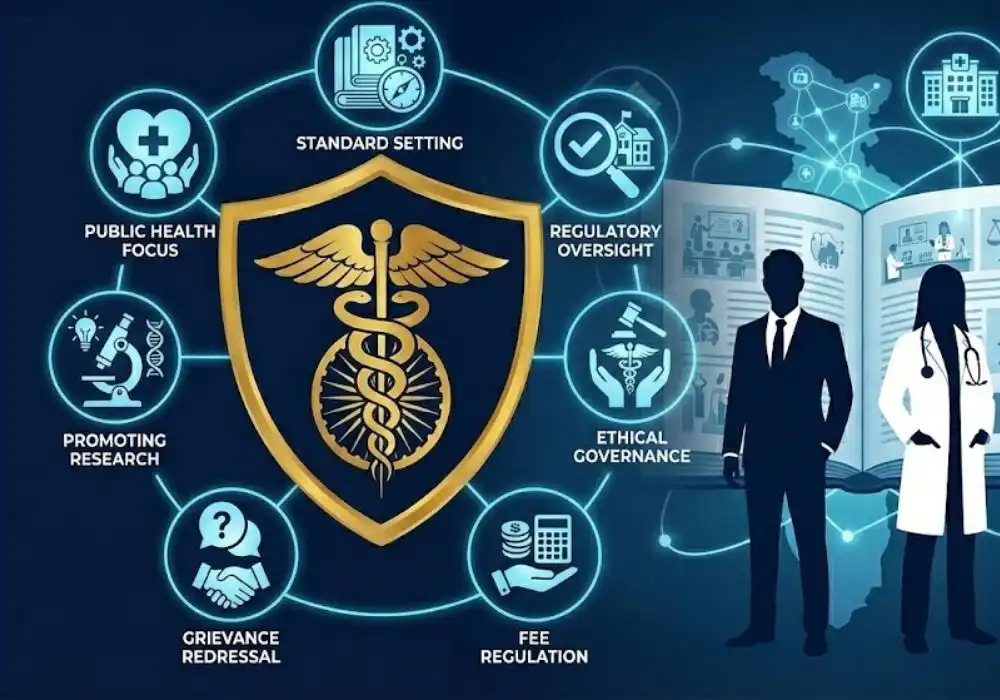
India’s healthcare landscape is constantly evolving, and at its heart lies the National Medical Commission (NMC), a pivotal institution that has reshaped the regulation of medical education and practice across the nation. For anyone aspiring to clear competitive examinations like the UPSC, SSC, or PSC, a thorough understanding of the NMC is not just beneficial, but absolutely essential. This comprehensive guide will illuminate the intricacies of the NMC, detailing its genesis, structure, objectives, and profound impact, presented in an expert yet accessible manner to equip you for exam success.
Understanding the National Medical Commission: What it is
The National Medical Commission (NMC) stands as India’s premier regulatory body for medical education and medical professionals. Essentially, it is the successor to the erstwhile Medical Council of India (MCI), established with a mandate to bring about significant reforms in the country’s medical regulatory framework. Its core purpose is to elevate the quality of medical education, ensure ethical medical practice, and provide efficient healthcare services to the populace. The NMC acts as the guardian of standards, overseeing everything from the curriculum taught in medical colleges to the licensing of doctors and the overall ethical conduct within the medical fraternity.
Why the NMC was Established: A Call for Reform
The establishment of the National Medical Commission was not merely a change of name but a profound response to persistent challenges and criticisms faced by its predecessor, the Medical Council of India. Over the years, the MCI had come under scrutiny for issues related to corruption, opacity, and an outdated approach to regulating medical education. There was a strong perceived need for a more transparent, accountable, and dynamic body capable of fostering excellence and addressing the modern complexities of healthcare. The primary driving force behind the NMC’s creation was to dismantle the perceived nexus of corruption, streamline the regulatory processes, introduce merit-based decision-making, and significantly enhance the quality and accessibility of medical education across India. It sought to create a system that prioritizes public health needs, promotes medical research, and maintains the highest standards of professional conduct among medical practitioners.
When the NMC Came into Effect: A Timeline of Transition
The journey towards the National Medical Commission culminated with the passage of the National Medical Commission Act, 2019, by the Parliament of India. This landmark legislation received presidential assent on August 8, 2019, paving the way for the NMC’s formal establishment. Subsequently, the NMC officially superseded the Medical Council of India on September 25, 2020. This date marked a significant shift in the governance of medical education and practice in India, heralding a new era of reforms and a more structured approach to maintaining medical standards.
How the NMC Functions: Its Structure and Operations
The National Medical Commission operates through a well-defined and robust structure designed to ensure efficiency, transparency, and specialization in various domains of medical regulation. At its helm is the main Commission, comprising a chairperson, ten ex-officio members, and twenty-two part-time members, representing a diverse range of expertise.
Crucially, the NMC is supported by four autonomous boards, each with distinct responsibilities, allowing for a focused approach to specific aspects of medical governance:
1. Undergraduate Medical Education Board (UGMEB): This board is responsible for setting standards for undergraduate medical education, including curriculum development, admission criteria, and examinations for MBBS and other equivalent courses. Its role is to ensure that future doctors receive a foundational education of the highest quality.
2. Postgraduate Medical Education Board (PGMEB): Focusing on specialized medical training, the PGMEB oversees postgraduate medical education. It formulates standards for various MD, MS, and super-specialty courses, regulating admissions, examinations, and the overall training framework for medical specialists.
3. Medical Assessment and Rating Board (MARB): The MARB plays a critical role in assessing and rating medical institutions. It grants permission for the establishment of new medical colleges, monitors existing ones, and assesses their infrastructure, faculty, and adherence to prescribed standards. This board ensures that only colleges meeting specific quality benchmarks are allowed to operate.
4. Ethics and Medical Registration Board (EMRB): This board is tasked with maintaining the National Register of all licensed medical practitioners in India. More importantly, it is responsible for enforcing medical ethics, investigating complaints against doctors, and taking disciplinary action when necessary. The EMRB upholds the integrity of the medical profession and safeguards patient interests.
Through these specialized boards, the NMC effectively manages the entire spectrum of medical education, from entry-level training to advanced specializations, alongside ensuring ethical practice and robust institutional oversight.
Where the NMC Operates: Its Jurisdiction and Scope
The National Medical Commission’s jurisdiction extends throughout the length and breadth of India. Its regulations and standards apply to all medical colleges, institutions, and medical professionals operating within the country. This pan-India scope ensures uniformity in medical education and practice standards, irrespective of geographical location, thereby contributing to a consistently high quality of healthcare services across all states and union territories. Every medical student, medical college, and practicing doctor in India falls under the regulatory ambit of the NMC.
Key Objectives and Functions of the NMC
The overarching mission of the National Medical Commission is multifaceted and aims at holistic improvement in the medical sector. Its core objectives and functions include:
* Standard Setting: The NMC is primarily responsible for establishing and maintaining high standards for medical education, including curriculum, teaching methodologies, and examination processes for both undergraduate and postgraduate courses.
* Regulatory Oversight: It regulates medical institutions by granting permissions for new colleges, increasing seat intake, and conducting regular assessments to ensure adherence to quality benchmarks.
* Ethical Governance: The Commission enforces ethical conduct among medical practitioners and registers all licensed doctors, maintaining a comprehensive National Medical Register.
* Fee Regulation: A crucial function is to regulate fees and other charges for a significant percentage of seats in private medical colleges and deemed universities, making medical education more accessible and affordable.
* Grievance Redressal: It provides a transparent mechanism for addressing grievances related to medical education and practice.
* Promoting Research: The NMC aims to encourage medical research and integrate it into the educational framework, fostering innovation and evidence-based practice.
* Public Health Focus: Ultimately, all its functions converge on improving public health outcomes by ensuring a steady supply of well-trained, ethical, and competent medical professionals.
By diligently performing these functions, the NMC endeavors to create a robust and dynamic medical ecosystem in India that serves both the aspirations of medical students and the healthcare needs of the nation.
Significance and Impact on Medical Education
The National Medical Commission represents a monumental shift with far-reaching implications for India’s medical education and healthcare system. Its establishment is expected to bring greater transparency and accountability to the regulatory process, reduce corruption, and foster a merit-based environment. By streamlining the process for setting up new medical colleges and increasing seats, it aims to address the shortage of doctors, particularly in rural and underserved areas. The NMC’s emphasis on standardized curriculum, competency-based education, and continuous professional development will undoubtedly enhance the quality of medical graduates. Furthermore, the regulation of fees in private institutions makes medical education more equitable, offering opportunities to a wider spectrum of students. Ultimately, the NMC is poised to create a more responsive, ethical, and world-class medical education system in India, directly impacting the quality of healthcare delivered to its citizens.
Frequently Asked Questions (FAQs)
Q1: What was the primary reason for replacing the Medical Council of India (MCI) with the National Medical Commission (NMC)?
A1: The primary reason for replacing the MCI with the NMC was to address long-standing criticisms regarding the MCI’s alleged corruption, lack of transparency, and its inability to effectively regulate medical education and maintain high standards. The NMC was envisioned as a more accountable, efficient, and modern regulatory body focused on quality and ethics.
Q2: How does the NMC ensure quality in medical education across India?
A2: The NMC ensures quality through several mechanisms, including setting standards for undergraduate and postgraduate medical education via its respective boards (UGMEB and PGMEB), assessing and rating medical institutions through the Medical Assessment and Rating Board (MARB), and continuously monitoring their adherence to prescribed standards for infrastructure, faculty, and curriculum.
Q3: What are the main responsibilities of the four autonomous boards under the NMC?
A3: The Undergraduate Medical Education Board (UGMEB) sets standards for MBBS education, the Postgraduate Medical Education Board (PGMEB) regulates postgraduate medical courses, the Medical Assessment and Rating Board (MARB) assesses and permits medical colleges, and the Ethics and Medical Registration Board (EMRB) maintains the national medical register and enforces ethical conduct among doctors.
Q4: Does the National Medical Commission have a role in regulating the fees charged by private medical colleges?
A4: Yes, a significant function of the NMC is to regulate fees and all other charges in not less than fifty percent of the total seats in private medical institutions and deemed universities. This provision aims to make medical education more affordable and accessible to a broader section of students.
Q5: How will the NMC’s policies impact medical students preparing for their careers in India?
A5: The NMC’s policies will significantly impact medical students by ensuring a standardized and higher quality of education, promoting competency-based learning, and fostering a more ethical professional environment. While the regulations on fee structures may ease the financial burden for many, students will also be expected to meet rigorous academic and ethical standards set by the Commission.





