
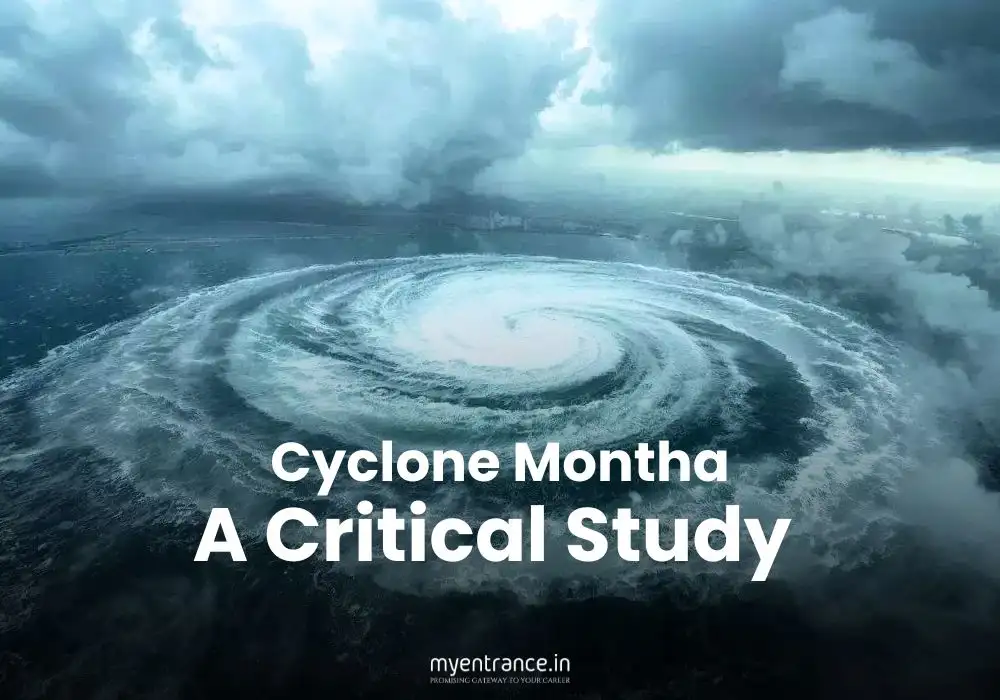
The recent news of Cyclone Montha impacting the coastal regions of Tamil Nadu, Andhra Pradesh, and Odisha, leading to school closures and high alerts from the India Meteorological Department (IMD), is far more than just a fleeting headline. For aspirants gearing up for competitive examinations like UPSC, SSC, PSC, NID, NIFT, and other government roles, such events serve as crucial case studies, testing your understanding of geography, disaster management, current affairs, and environmental science. At MyEntrance.in, we believe in transforming daily news into actionable knowledge, equipping you not just with facts, but with a deeper conceptual clarity vital for cracking these challenging exams. Let’s delve into the multi-faceted aspects of Cyclone Montha and understand its broader implications for your exam preparation.
Understanding Cyclones – The Core Concepts for Aspirants
When we talk about phenomena like Cyclone Montha, we’re referring to powerful weather systems characterized by rapidly circulating air around a low-pressure center. These systems often bring torrential rains, strong winds, and storm surges, especially to coastal areas. For your exams, it’s essential to grasp how these tropical cyclones form: they typically develop over warm ocean waters (above 26.5°C) due to evaporating moisture, which then rises, condenses, and releases latent heat, fueling the system. The Earth’s rotation, known as the Coriolis effect, then causes this rising air to spin, giving the cyclone its characteristic rotating structure. The naming of cyclones, like “Montha,” follows a systematic process established by regional specialized meteorological centers (RSMCs) and tropical cyclone warning centers (TCWCs) to avoid confusion, ensure clear communication, and aid in disaster mitigation efforts. India falls under the purview of the IMD, which is one of the six RSMCs globally responsible for naming cyclones in the North Indian Ocean basin. Knowing the science behind these natural events is fundamental for questions on physical geography and environmental studies in various competitive exams.
India’s Preparedness: The IMD’s Critical Role and Alert Systems
The India Meteorological Department (IMD) stands as the primary agency responsible for weather forecasting and seismic activities in India. Its role becomes paramount during events like Cyclone Montha. When the IMD issues a “red alert,” as it did for the affected states, it signifies an extremely dangerous weather situation where severe weather conditions are expected, requiring immediate action. This alert is not just a warning; it’s a directive for authorities to take proactive measures, including evacuation orders, to minimize loss of life and property. The IMD utilizes sophisticated satellite imagery, radar data, and numerical weather prediction models to track cyclone trajectories, predict their intensity, and forecast their landfall. Understanding this intricate early warning system, including the different color-coded alerts (green, yellow, orange, red) and their implications, is a frequent subject in current affairs and disaster management sections of exams like UPSC and PSC. The effectiveness of these warnings directly influences how state disaster response forces and local administrations can prepare and execute evacuation plans, safeguarding vulnerable populations in states such as Tamil Nadu, Andhra Pradesh, and Odisha, which are historically prone to cyclonic disturbances.
Beyond the Storm: Socio-Economic Impacts and Disaster Management Framework
The repercussions of a cyclone extend far beyond the immediate damage. Schools closing, as reported, highlights the disruption to education. Economically, sectors like agriculture and fisheries bear the brunt, with significant losses impacting livelihoods. Infrastructure, including roads, power lines, and communication networks, often suffer extensive damage, demanding substantial resources for rehabilitation. Environmentally, coastal ecosystems, including mangroves and coral reefs, can be severely affected. To counter these challenges, India has a robust National Disaster Management Authority (NDMA) and State Disaster Management Authorities (SDMAs), which formulate policies and guidelines for disaster risk reduction. Their work, alongside the National Disaster Response Force (NDRF) and State Disaster Response Force (SDRF), focuses on a cycle of preparedness, response, relief, and rehabilitation. Knowledge of these institutional frameworks, various disaster management acts, and government initiatives like the National Cyclone Risk Mitigation Project (NCRMP) is indispensable for questions related to governance, public administration, and socio-economic development, especially in UPSC Mains and descriptive papers for other exams. Analyzing how communities, often in unison with government bodies, respond to and recover from such natural disasters provides valuable insights into resilience and effective governance.
MyEntrance.in: Your Gateway to Mastering Such Dynamic Topics
At MyEntrance.in, we understand that competitive exams demand more than rote memorization. They require an analytical approach and the ability to connect current events to static general knowledge. Our platform is meticulously designed to help you master topics like cyclones, disaster management, and environmental science through various interactive resources. From comprehensive daily news quizzes that test your understanding of current affairs to in-depth study materials on static general knowledge covering geography and disaster preparedness, we ensure you have all the tools. Our interactive examinations provide real-time practice, helping you to apply theoretical knowledge to exam-style questions. By regularly engaging with our content on current events, you’ll not only stay updated but also gain the critical insights needed to articulate well-rounded answers for both objective and subjective questions across exams like SSC, UPSC, PSC, NID, NIFT, and other critical government service selections.
Frequently Asked Questions (FAQs)
1. Q: What is a “red alert” issued by the IMD during a cyclone?
A: A red alert signifies that extremely dangerous weather conditions are expected, warranting immediate and decisive action. It means severe weather is imminent, and there is a high potential for significant disruption to transport, power, communication, and a threat to life, requiring authorities to take proactive steps like issuing evacuation orders.
2. Q: How are cyclones like Montha named?
A: Cyclones in the North Indian Ocean, including those affecting India, are named by the India Meteorological Department (IMD) which is one of the six Regional Specialized Meteorological Centers (RSMCs) worldwide. Names are chosen from a pre-determined list contributed by member countries in the region, ensuring uniqueness and ease of communication to avoid confusion during disaster management.
3. Q: Which Indian states are most vulnerable to cyclones?
A: Coastal states on both the eastern and western seaboards of India are vulnerable, but the eastern coast, bordering the Bay of Bengal, is particularly susceptible. States like Odisha, Andhra Pradesh, West Bengal, Tamil Nadu, and Puducherry frequently experience severe cyclonic activity due to the warmer waters of the Bay of Bengal.
4. Q: What is the primary role of the National Disaster Management Authority (NDMA) in India?
A: The NDMA is the apex body in India responsible for laying down policies, plans, and guidelines for disaster management. Its primary role includes developing a holistic and proactive approach to disaster risk reduction, ensuring timely and effective response, and coordinating efforts across various government levels for preparedness, mitigation, and recovery.





