
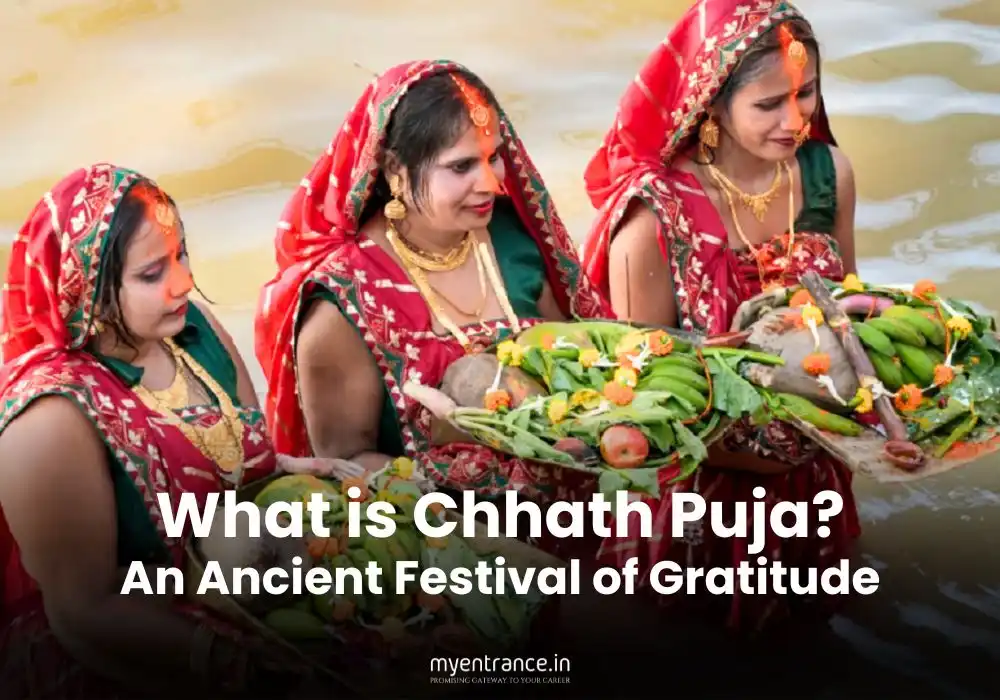
The recent conclusion of the sacred Chhath Puja, marked by Prime Minister Narendra Modi’s heartfelt greetings to devotees nationwide, serves as a poignant reminder of India’s rich cultural tapestry. For aspirants preparing for competitive examinations like UPSC, SSC, PSC, NID, NIFT, and various other government job tests, such an event is more than just a piece of news; it’s a crucial entry point into understanding current affairs, static general knowledge, and cultural heritage, all vital components of your exam success. At MyEntrance.in, we understand the importance of connecting daily events to your broader study strategy. Let’s delve deeper into Chhath Puja, exploring its essence and why it matters for your preparation.
What is Chhath Puja? An Ancient Festival of Gratitude
Chhath Puja is an ancient Hindu festival dedicated to Surya Dev (the Sun God) and Chhathi Maiya (known as Usha in the Vedas), his divine consort. Unlike many Hindu festivals where idol worship is central, Chhath Puja primarily involves worshipping the setting and rising sun, along with rivers and water bodies. It is a four-day celebration marked by extreme devotion, austerity, and a profound sense of gratitude towards the Sun God for sustaining life on Earth and bestowing prosperity and well-being. This festival emphasizes purity, humility, and the importance of nature’s elements.
Why is Chhath Puja Celebrated? Seeking Blessings and Purity
The core objective behind Chhath Puja is to thank the Sun God for maintaining life’s cycle and to seek blessings for the well-being, prosperity, and longevity of family members, especially children. Devotees observe stringent fasting, which is believed to detoxify the body and mind, leading to spiritual upliftment and purity. It’s also believed that worshipping the Sun God helps cure various diseases and brings immense wealth and happiness. The festival is a powerful expression of faith, where devotees humble themselves before nature’s most vital force, praying for health, success, and removal of obstacles. For competitive exams, understanding the ‘why’ behind such festivals provides context to India’s diverse belief systems and cultural practices.
When is Chhath Puja Observed? Timing and Significance
Chhath Puja is traditionally celebrated on the sixth day (Shashthi) of the Kartik Shukla Paksha, which is the sixth day of the bright fortnight of the Hindu month of Kartik. This usually falls six days after Diwali, India’s festival of lights. The four-day period begins on Kartik Shukla Chaturthi (the fourth day) and concludes on Kartik Shukla Saptami (the seventh day). Knowing the specific Hindu calendar months and their association with major festivals is a frequent area of questioning in general knowledge sections of government exams. This timing, coming after the monsoon, is also ecologically significant, as it involves cleansing river banks.
Where is Chhath Puja Predominantly Celebrated? A Regional and Global Phenomenon
While Chhath Puja is celebrated with immense fervor across the Indian states of Bihar, Jharkhand, and Uttar Pradesh, and parts of Nepal, its observance has now spread significantly. With the migration of people from these regions, the festival is enthusiastically celebrated in major metropolitan cities across India and by the Indian diaspora worldwide, including in the United States, United Kingdom, Canada, and various Gulf countries. This geographical spread highlights its growing cultural footprint and its transformation from a regional festival to one with national and international recognition, making it a relevant topic for current affairs and cultural geography questions.
How is Chhath Puja Performed? The Sacred Rituals
The four days of Chhath Puja involve a series of rigorous rituals and observances:
1. Nahay Khay (Day 1): Devotees take a holy dip, usually in a river, and then consume only one meal, typically rice, bottle gourd, and lentils, prepared in a traditional manner to ensure purity.
2. Kharna (Day 2): Fasting begins from sunrise and concludes after sunset with the consumption of ‘kheer’ (rice pudding) and ‘puri’ (fried bread), offered to Chhathi Maiya. This meal is usually the only solid food consumed on this day.
3. Sandhya Arghya (Day 3): This is the main day, involving a rigorous fast throughout the day. In the evening, devotees gather at riverbanks or ponds to offer ‘Arghya’ (oblation) to the setting sun. Elaborate offerings of fruits, sweets, and ‘thekua’ (a traditional sweet snack) are prepared and arranged in bamboo baskets.
4. Usha Arghya & Paran (Day 4): On the final day, devotees again gather at the water body before sunrise to offer ‘Arghya’ to the rising sun. After this, they break their fast, known as ‘Paran,’ by consuming some of the offerings, often ginger and water, marking the conclusion of the solemn observances.
Understanding these detailed rituals helps in comprehending the depth of devotion and the cultural practices associated with major festivals, which can appear in cultural heritage questions in exams.
Chhath Puja and Your Exam Strategy: Connecting the Dots
For candidates aiming for top government positions, staying informed about such cultural events is paramount. PM Modi’s greetings elevate Chhath Puja to a national talking point, making it ripe for questions in your current affairs section. Furthermore, its history, geographical spread, and associated rituals fall under static general knowledge, particularly in culture, history, and social studies. MyEntrance.in provides daily news quizzes, detailed current affairs analysis, and static GK resources to help you connect these dots seamlessly. By understanding the ‘why,’ ‘what,’ ‘where,’ ‘when,’ and ‘how’ of festivals like Chhath Puja, you not only enrich your knowledge but also secure those crucial marks in your competitive examinations.
Frequently Asked Questions (FAQs)
Q1: What is the primary purpose of Chhath Puja?
A1: The main purpose of Chhath Puja is to express gratitude to the Sun God (Surya Dev) and Chhathi Maiya for sustaining life on Earth and to seek blessings for the well-being, prosperity, and longevity of family members, along with spiritual purity and removal of obstacles.
Q2: Which deities are worshipped during Chhath Puja?
A2: During Chhath Puja, the primary deities worshipped are Surya Dev (the Sun God) and Chhathi Maiya, who is considered to be his divine consort and a sister of the Sun God, representing Usha, the goddess of dawn.
Q3: How many days does Chhath Puja last, and when is it typically celebrated?
A3: Chhath Puja is a four-day festival. It is typically celebrated six days after Diwali, during the Kartik Shukla Paksha (the bright fortnight) of the Hindu month of Kartik, usually falling in October or November.
Q4: What are the main rituals observed during Chhath Puja?
A4: The main rituals include taking a holy dip and consuming a pure meal (Nahay Khay), observing a day-long fast ending with Kheer (Kharna), offering prayers and oblations to the setting sun (Sandhya Arghya), and offering prayers to the rising sun followed by breaking the fast (Usha Arghya and Paran).
Q5: Which Indian states are most known for celebrating Chhath Puja?
A5: Chhath Puja is predominantly celebrated with great fervor in the Indian states of Bihar, Jharkhand, and Uttar Pradesh. It is also widely observed in parts of Nepal and by the Indian diaspora across the globe.





