
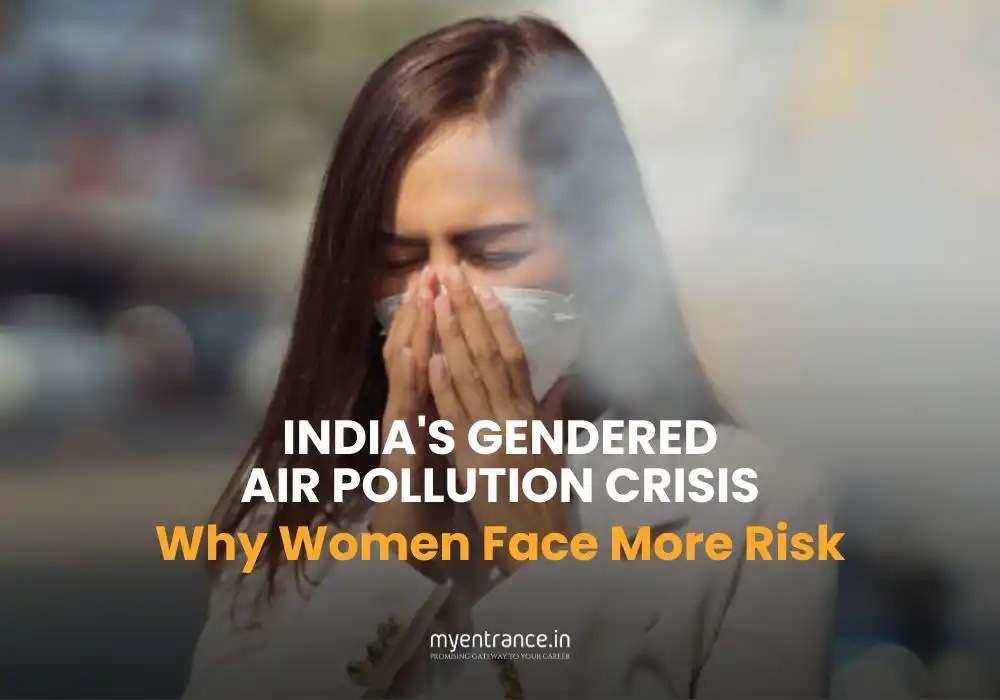
Air pollution in India has emerged as a critical public health and environmental challenge, consistently making headlines and impacting millions. However, beyond the visible smog and widely reported statistics, there lies a deeper, often overlooked truth: women in India disproportionately bear the brunt of this environmental hazard. This isn’t just about general exposure; it’s a complex issue rooted in societal roles, household dynamics, and physiological vulnerabilities, demanding focused attention and comprehensive solutions. Understanding this nuanced problem is crucial not only for policymakers but also for aspirants preparing for competitive examinations like UPSC, SSC, PSC, NID, NIFT, and other government roles, as it touches upon environmental science, social justice, public health, and current affairs.
Understanding the Disparity: Why Women Face More Risk
The reasons behind women’s heightened exposure to air pollution in India are multi-faceted, stemming from both indoor and ambient (outdoor) sources. It’s a “why” that is deeply interwoven with daily life and societal structures.
The Home Front: Indoor Air Pollution’s Silent Toll
For decades, and still prevalent in many parts of rural and even some urban areas, traditional cooking fuels like firewood, dung cakes, and agricultural residues are the primary energy sources for households. Women, who predominantly manage cooking and household chores, spend extensive hours near these open fires or inefficient cookstoves. This daily routine exposes them to extremely high concentrations of particulate matter, carbon monoxide, and other toxic pollutants right within their homes. The “where” is their own kitchen, and the “when” is often several hours a day, every day. This chronic exposure significantly surpasses that of men in the same households, who typically spend less time in these polluted environments.
Beyond the Home: Ambient Air Pollution’s Unique Burden
While indoor pollution is a major contributor, women also face unique exposures to ambient air pollution. In many communities, women are involved in agricultural activities, daily commutes, or work in the informal sector, often in close proximity to polluting industries, construction sites, or high-traffic areas. Social norms and responsibilities mean they often accompany children outdoors, spend time in marketplaces, or travel longer distances for water and fuel collection, increasing their outdoor exposure. Moreover, physiological differences and reproductive health considerations mean the “how” of air pollution’s impact can be distinct and more severe for women, affecting not just their own health but also that of their unborn children.
The Far-Reaching Consequences: Health, Economy, Society
The consequences of this disproportionate exposure are profound, impacting women’s health, economic well-being, and overall societal development.
Health Impacts: Women face a higher risk of developing chronic respiratory diseases such as asthma, bronchitis, and chronic obstructive pulmonary disease (COPD). The fine particulate matter can penetrate deep into the lungs and enter the bloodstream, increasing the risk of cardiovascular diseases, strokes, and even certain cancers. For pregnant women, exposure to air pollution has been linked to adverse birth outcomes, including preterm births, low birth weight, and stillbirths. The “what” is a cascade of serious health conditions that undermine their quality of life and longevity.
Economic and Social Burden: Poor health due to air pollution often leads to reduced productivity, loss of income, and increased healthcare expenditures. This can push families, particularly those already living on the margins, further into poverty. The burden of care for sick family members, often falling on women, adds to their unrecognised labour and limits their opportunities for education, employment, and social participation. The “how” here extends beyond individual health to broader socio-economic implications.
Towards a Cleaner Future: Solutions and Policy Focus
Addressing this gendered aspect of air pollution requires targeted interventions and a holistic approach. Government initiatives, like the Pradhan Mantri Ujjwala Yojana (PMUY), aimed at providing clean cooking fuel (LPG) to rural and deprived households, are crucial steps in mitigating indoor air pollution. However, the “what” for comprehensive solutions extends further. Promoting cleaner, more efficient biomass cookstoves, improving ventilation in homes, and raising awareness about the health risks associated with indoor air pollution are also vital.
For ambient air pollution, strategies must include stricter emission standards for industries and vehicles, transitioning to renewable energy sources, better urban planning, and developing gender-sensitive public transport systems. Implementing policies that consider women’s unique exposure patterns and vulnerabilities, ensuring their participation in environmental decision-making, and investing in health infrastructure capable of addressing pollution-related illnesses are critical for a just and sustainable future. This multi-pronged strategy is the “how” we can work towards equitable environmental health.
Why This Matters for Your Exams
For aspiring civil servants and professionals, understanding the nuances of India’s air pollution crisis, particularly its gendered dimension, is indispensable. It’s a recurring theme in current affairs, general studies papers (environment, social justice, public health), and essay topics for examinations like UPSC, SSC, and PSC. Questions might delve into government policies, their effectiveness, the socio-economic impacts, or demand critical analysis of sustainable development goals. For design and fashion aspirants (NID, NIFT), understanding environmental and social issues can inform sustainable design practices and responsible business models.
Frequently Asked Questions (FAQs)
1. What is the primary reason for women’s higher exposure to indoor air pollution in India?
The primary reason is their traditional role in managing household chores, particularly cooking, which often involves spending long hours near inefficient cookstoves burning solid fuels like firewood, dung cakes, and agricultural residues, leading to high exposure to harmful pollutants.
2. How does ambient (outdoor) air pollution specifically affect women’s health compared to men’s?
Beyond general exposure, women may face unique ambient exposure due to occupational roles, longer commutes for daily necessities, or accompanying children outdoors. Physiologically, air pollution can have specific adverse impacts on women’s reproductive health, including risks during pregnancy like preterm births and low birth weight, making them more vulnerable.
3. Are women in rural or urban areas more affected by air pollution in India?
Both rural and urban women are significantly affected, but the primary sources of pollution may differ. Rural women face higher indoor air pollution due to reliance on traditional cooking fuels, while urban women often experience higher exposure to ambient pollution from vehicle emissions, industrial sources, and construction dust, in addition to potential indoor sources.
4. What government initiatives in India are addressing the issue of air pollution, especially concerning women?
The Pradhan Mantri Ujjwala Yojana (PMUY), aimed at providing clean cooking fuel (LPG) to women from economically weaker sections, is a significant initiative directly addressing indoor air pollution. Other broader initiatives like the National Clean Air Programme (NCAP) aim to reduce ambient air pollution across cities, which indirectly benefits all populations, including women.
5. Why is the topic of women and air pollution important for competitive exams like UPSC or SSC?
This topic is highly relevant for competitive exams as it integrates environmental science, public health, social justice, gender studies, and government policies. It can be a subject for essay questions, general studies papers (environment, governance, social issues), and current affairs, requiring candidates to demonstrate a comprehensive understanding of complex societal challenges and potential solutions.





