
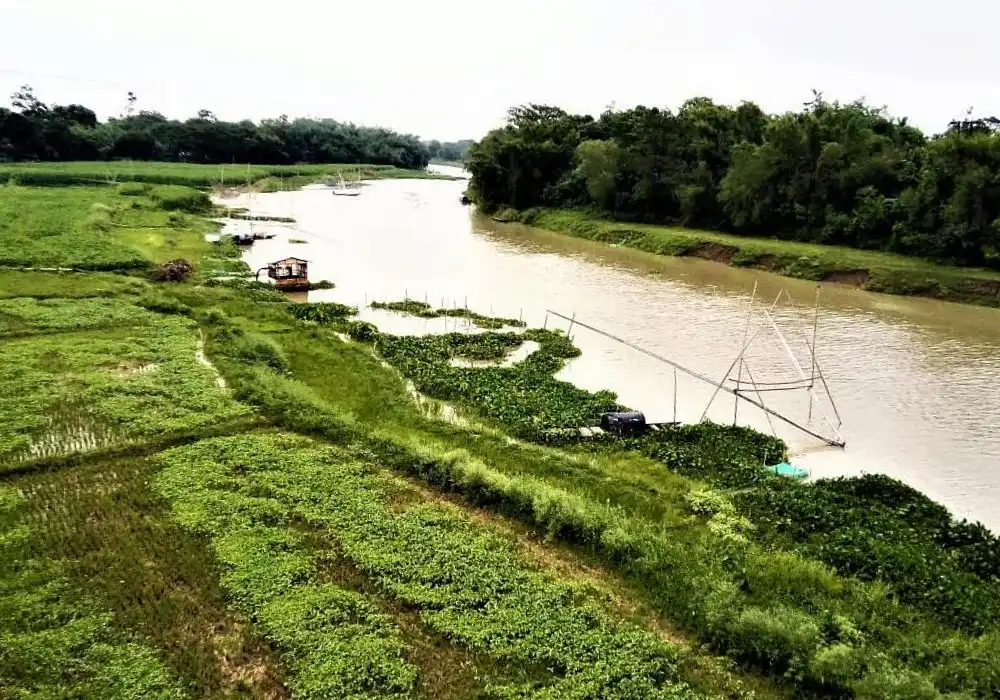
For aspirants targeting the coveted Civil Services, a profound understanding of UPSC General Studies Paper 2 is non-negotiable. This comprehensive guide delves into two pivotal areas – the intricacies of good governance at the rural grassroots level and the perennial challenges posed by interstate river water disputes – offering strategic perspectives crucial for Mains examination success. This resource, provided by myentrance.in, is designed to equip you with the expert knowledge and analytical skills needed to excel not just in UPSC, but also in SSC, PSC, NID, NIFT, and a myriad of other government examinations.
The Blueprint of UPSC GS Paper 2: A Strategic Overview
UPSC General Studies Paper 2 fundamentally assesses an aspirant’s understanding of the Indian Constitution, polity, governance, social justice, and international relations. Within this expansive canvas, the topics of rural governance and interstate river water disputes hold immense significance, frequently appearing in both Mains and Prelims. They encapsulate critical aspects of India’s federal structure, administrative efficacy, and societal challenges, demanding a nuanced and multi-dimensional approach to answer writing. Mastering these areas demonstrates not only factual recall but also a deep grasp of contemporary policy issues and their implications.
Empowering Rural India: The Quest for Good Governance
Good governance in rural India is the cornerstone of inclusive development and democratic decentralization. The 73rd Constitutional Amendment Act marked a watershed moment, empowering Panchayati Raj Institutions (PRIs) as self-governing units. However, achieving genuine good governance at this level remains a complex endeavor. Challenges often stem from the “3Fs” – lack of adequate Funds, functional autonomy (Functions), and skilled Functionaries. PRIs frequently grapple with financial dependence on state governments, leading to limited capacity for local planning and execution. Moreover, political interference, bureaucratic hurdles, inadequate capacity building for elected representatives and officials, and the digital divide in remote areas further impede their effectiveness.
Despite these obstacles, government initiatives like the Mahatma Gandhi National Rural Employment Guarantee Act (MGNREGA), Swachh Bharat Abhiyan (Gramin), and various Direct Benefit Transfer (DBT) schemes have sought to improve service delivery and citizen engagement. The push for e-governance, through platforms like e-Gram Swaraj and digitization of land records, aims to enhance transparency and efficiency. Moving forward, the emphasis must shift towards strengthening local planning, fostering social audits to ensure accountability, promoting active public participation in decision-making, and ensuring genuine devolution of powers. Realizing good governance in rural India is not just about administrative reforms; it is about empowering communities to shape their own destiny.
India’s Arterial Conflicts: Understanding Interstate River Water Disputes
Water, an indispensable resource, often becomes a source of conflict in a vast and populous country like India. Interstate river water disputes are a recurring feature of India’s federal landscape, with states often vying for a larger share of common river basins. The constitutional framework for managing these disputes is primarily enshrined in Article 262, which empowers Parliament to legislate for the adjudication of such conflicts and to exclude the Supreme Court’s jurisdiction. Pursuant to this, the Inter-State River Water Disputes Act of 1956 was enacted, providing for the establishment of Water Disputes Tribunals.
The genesis of these disputes is multi-faceted, ranging from historical claims and differing interpretations of past agreements to burgeoning population growth, increased demand for irrigation and industrial use, and the exacerbating effects of climate change. While tribunals have been constituted over the decades to resolve prominent disputes, their effectiveness has been a subject of intense debate. Delays in adjudication, non-implementation of awards, lack of scientifically standardized data, and the politicization of water issues often prolong the conflicts. Contemporary challenges also include groundwater depletion, pollution, and the absence of a truly national water policy that prioritizes basin-level integrated management. Innovative solutions are imperative, encompassing enhanced data sharing mechanisms, robust inter-state councils, the promotion of mediation, and a fundamental shift towards cooperative federalism in water governance, moving beyond mere dispute resolution to proactive basin-wide development.
Why These Topics are Indispensable for Your Examination Success
An in-depth understanding of good governance in rural India and interstate river water disputes is paramount for several reasons across various competitive examinations. Primarily, these are direct components of the UPSC GS Paper 2 syllabus, demanding analytical and critical thinking in Mains answer writing. They reflect real-world administrative, political, and socio-economic challenges that an aspiring civil servant must comprehend and offer solutions for. Moreover, these topics are highly interdisciplinary, drawing connections with economics (resource allocation, development schemes), social issues (poverty, inequality, decentralization), environmental concerns (water scarcity, climate change), and current affairs (ongoing disputes, government policies). A strong grasp of these areas demonstrates an aspirant’s ability to analyze complex issues, propose viable policy options, and understand the intricacies of India’s federal structure – skills highly valued by examining bodies.
Expert Insight: Sample Questions and Strategic Answers
To further solidify your preparation, myentrance.in presents sample questions and expert answers that mirror the analytical depth expected in competitive examinations.
Sample Question 1: Critically analyze the effectiveness of Panchayati Raj Institutions in fostering good governance in rural India. What structural and functional reforms are needed to enhance their autonomy and accountability?
Sample Answer 1: Panchayati Raj Institutions (PRIs), established by the 73rd Amendment, represent a significant stride towards democratic decentralization. Their effectiveness in fostering good governance, however, has been a mixed bag. Achievements include bringing governance closer to people, ensuring women’s representation, and providing a platform for local self-rule. Yet, PRIs frequently suffer from a lack of genuine autonomy due to inadequate devolution of the “3Fs”—Funds, Functions, and Functionaries. Financial dependence on state governments, limited capacity of local officials, political interference, and an overarching bureaucratic control often hinder their independent functioning and accountability. To enhance their autonomy, greater financial grants from state and central governments, along with diversified own-revenue generation capacities, are crucial. Functionally, a clear demarcation of responsibilities, robust e-governance initiatives for transparency, and mandatory social audits are essential. Structurally, independent State Election Commissions and State Finance Commissions must be strengthened, coupled with continuous capacity building for elected representatives and functionaries to ensure they possess the necessary skills for effective local governance.
Sample Question 2: Discuss how digital interventions and e-governance initiatives can transform service delivery and promote transparency in rural administration. What are the associated challenges in their implementation?
Sample Answer 2: Digital interventions and e-governance initiatives hold immense potential to revolutionize service delivery and transparency in rural administration. Platforms like e-Gram Swaraj, Direct Benefit Transfer (DBT) mechanisms, and the digitization of land records (e.g., Bhulekh) enable faster, more efficient, and leak-proof delivery of government schemes and services, reducing intermediaries and corruption. Online grievance redressal systems, digital attendance for MGNREGA workers, and public information portals foster accountability and empower citizens through access to information. However, significant challenges persist. The pervasive digital divide, especially in remote areas lacking internet connectivity and electricity, remains a major hurdle. Low digital literacy among rural populations, language barriers, inadequate IT infrastructure, and concerns regarding data privacy and cyber security further complicate implementation. Overcoming these requires targeted digital literacy campaigns, robust public-private partnerships for infrastructure development, and designing user-friendly interfaces in local languages to ensure inclusivity and equitable access.
Sample Question 3: Examine the constitutional framework governing interstate river water disputes in India. To what extent have statutory mechanisms like the Inter-State River Water Disputes Act, 1956, succeeded in resolving these conflicts effectively?
Sample Answer 3: India’s constitutional framework for interstate river water disputes is primarily articulated in Article 262, which grants Parliament exclusive power to legislate for the adjudication of such disputes and restricts the Supreme Court’s jurisdiction. Pursuant to this, the Inter-State River Water Disputes Act, 1956, was enacted, empowering the central government to establish ad hoc tribunals for resolving specific disputes. While this statutory mechanism has provided a structured process, its effectiveness has been limited. Tribunals have successfully adjudicated several long-standing disputes, such as the Narmada and Krishna River disputes, providing comprehensive awards. However, the process is often plagued by inordinate delays in tribunal formation and award delivery, non-compliance by states with tribunal awards, and the politicization of water issues, frequently leading to further litigation in the Supreme Court. The ad-hoc nature of tribunals, without a permanent institutional mechanism for data collection and dispute prevention, also contributes to their constrained success in fostering lasting cooperative federalism in water resource management.
Sample Question 4: With increasing water scarcity and climate change, the resolution of interstate river water disputes requires a paradigm shift. Suggest innovative approaches beyond traditional tribunal mechanisms to foster cooperative federalism in water management.
Sample Answer 4: The escalating challenges of water scarcity and climate change necessitate a paradigm shift in resolving India’s interstate river water disputes, moving beyond the limitations of traditional tribunals. Innovative approaches should prioritize cooperative federalism and integrated basin management. Firstly, establishing a permanent, transparent, and multi-disciplinary Inter-State Water Data Bank, perhaps under a revitalized National Water Commission, is crucial for real-time data sharing and dispute prevention. Secondly, promoting basin-level planning and management bodies, involving all riparian states, can foster shared ownership and sustainable resource utilization. Thirdly, leveraging advanced mediation and conciliation techniques, with expert panels, can offer quicker, mutually acceptable solutions outside lengthy judicial processes. Fourthly, incentivizing states for water conservation, efficient use, and adopting water-saving technologies through central grants can reduce overall demand. Finally, integrating climate change adaptation strategies and scientific forecasting into water allocation models will ensure future resilience, promoting collaborative rather than confrontational water governance.
Sample Question 5: Good governance at the local level is often hampered by the lack of convergence between central schemes and local needs, compounded by the complexities of resource allocation. Analyze this statement in the context of India’s federal structure and propose ways to bridge these gaps.
Sample Answer 5: The statement highlights a critical challenge for good governance in India’s federal structure: the disconnect between centrally designed schemes and the specific, diverse needs of local communities. Central schemes, often uniform in design, sometimes fail to account for regional variations, climatic conditions, or unique socio-economic contexts at the grassroots. This lack of flexibility leads to suboptimal outcomes and resource wastage. Compounding this, the complexities of resource allocation, particularly the financial dependence of local bodies on state and central governments, limit their autonomy to adapt schemes or initiate projects based on local priorities. In India’s federal setup, this creates a top-down implementation model rather than a responsive bottom-up approach. To bridge these gaps, several measures are essential. Firstly, promoting genuine decentralized planning, where PRIs play a significant role in identifying needs and designing projects, should be prioritized. Secondly, financial devolution must be enhanced, allowing local bodies greater flexibility in utilizing funds and generating their own revenues. Thirdly, fostering convergence across various central and state schemes at the district and block levels, with clear guidelines for local adaptation, is crucial. Finally, strengthening the capacity of local functionaries in planning, financial management, and implementation will empower them to better align resources with local needs, thereby enhancing the efficacy of governance.
Your Gateway to Exam Success with Myentrance.in
Mastering these intricate topics requires not just theoretical understanding but also consistent practice and up-to-date knowledge. Myentrance.in provides a comprehensive suite of resources to aid your preparation journey. Engage with our interactive examinations and answers, keep abreast with daily current affairs and news quizzes, delve into static general knowledge, and gain invaluable examination tips from subject matter experts. Our tailored content ensures you are fully equipped to tackle the toughest questions across SSC, UPSC, PSC, NID, NIFT, and all other government examinations, transforming challenges into stepping stones for success.





