
For aspiring civil servants and competitive exam candidates, a profound understanding of contemporary national policies and significant global economic contributions is non-negotiable. This deep dive explores India’s transformative ethanol blending program and the monumental Sveriges Riksbank Prize, offering critical insights essential for UPSC Mains, SSC, PSC, and various government examinations.
Navigating India’s Green Fuel Vision: The Ethanol Blending Imperative
In the rigorous landscape of competitive examinations, current affairs often serve as the bedrock for analytical questions, particularly in UPSC General Studies Paper 3. India’s Ethanol Blending Programme (EBP) is a prime example of a multi-faceted policy initiative with significant economic, environmental, and energy security implications. This ambitious program, aiming for an E20 target (20% ethanol blended with petrol), signifies a strategic pivot towards indigenous, cleaner fuel sources.
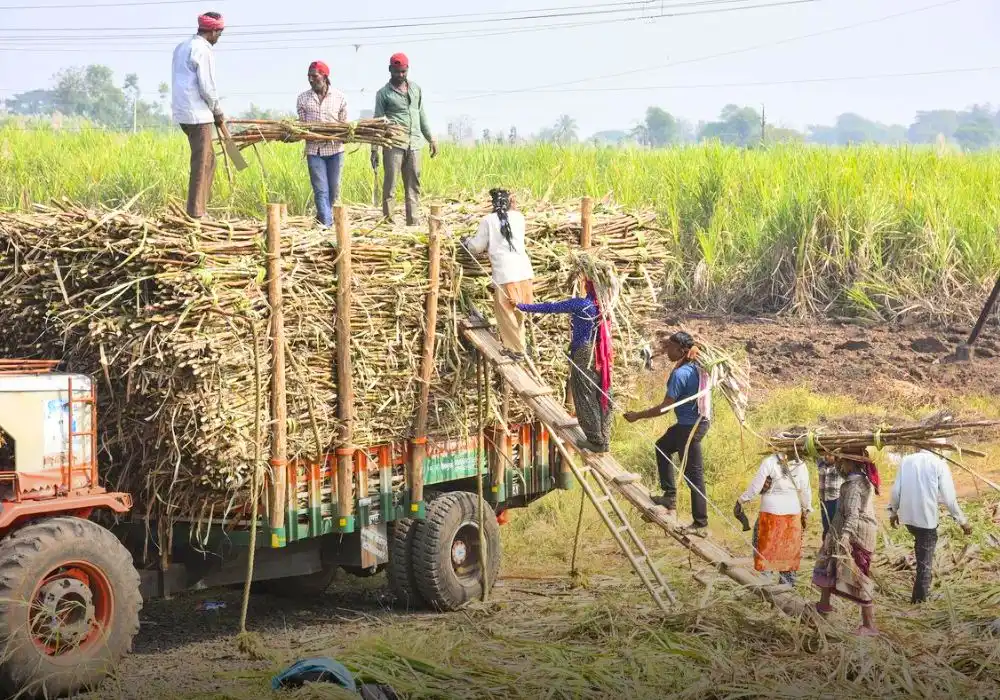
From an economic perspective, EBP seeks to bolster the agricultural sector by providing an additional revenue stream for sugarcane and grain farmers, thereby diversifying income and reducing crop waste. It also plays a crucial role in curbing India’s burgeoning crude oil import bill, strengthening the nation’s energy independence and foreign exchange reserves. Environmentally, ethanol-blended fuel promises a reduction in greenhouse gas emissions and particulate matter, contributing directly to India’s climate change commitments and urban air quality improvement. However, the program is not without its challenges, including ensuring sustainable feedstock availability without impacting food security, developing robust infrastructure for ethanol supply chains, and managing the water footprint of ethanol production. Mastering these nuances is paramount for candidates aiming to excel in descriptive answer writing for UPSC and analytical questions in state PSC examinations.
Unravelling Global Economic Excellence: The Sveriges Riksbank Prize
Beyond national policies, a keen awareness of global intellectual contributions, particularly in economics, is vital for comprehensive exam preparation. The Sveriges Riksbank Prize in Economic Sciences in Memory of Alfred Nobel, often informally referred to as the Nobel Prize in Economics, celebrates groundbreaking research that fundamentally reshapes our understanding of economic systems and human behaviour. This prestigious recognition highlights theoretical frameworks and empirical analyses that have profound implications for public policy, market dynamics, and societal welfare.
Each year, the laureates’ work provides a rich source of material for both static general knowledge and current affairs. For static GK, understanding the history of the prize, notable past winners, and the evolution of economic thought they represent is crucial. For current affairs, analyzing the recent laureates’ contributions – be it in macroeconomics, microeconomics, behavioural economics, or development economics – and their real-world applications offers invaluable insights for essay writing and analytical questions. The prize winners often highlight methodologies and findings that directly influence policy decisions worldwide, making them indispensable for candidates preparing for UPSC Mains GS Paper 3 and for general awareness sections of SSC and other government exams.
Sharpening Your Analytical Edge: Targeted Practice & Expert Answers
Success in competitive exams hinges not just on knowledge acquisition but on the ability to articulate that knowledge cogently and analytically. Practicing answer writing, especially for complex topics like ethanol blending or economic theories, is critical. Here are five sample questions, along with their expert answers, designed to test your understanding and critical thinking, followed by an explanation of their importance for your examinations.
Question 1: Critically analyze India’s Ethanol Blending Programme (EBP) regarding its environmental, economic, and social implications. What are the key challenges in achieving the ambitious E20 target by 2025?
Answer 1: India’s EBP aims to blend ethanol with petrol, significantly reducing reliance on crude oil imports and mitigating pollution. Environmentally, it promises lower greenhouse gas emissions and cleaner air. Economically, it boosts the rural economy by providing an additional revenue stream for sugarcane farmers and diversifying agricultural output, simultaneously reducing the massive crude import bill. Socially, it contributes to national energy security and potentially fosters rural industrialization. However, key challenges persist in achieving the ambitious 2025 E20 target. These include ensuring consistent and adequate feedstock availability without impacting food security, developing robust ethanol transportation and storage infrastructure, addressing the water intensity of ethanol production, and ensuring widespread vehicle compatibility with higher ethanol blends. Overcoming these hurdles demands integrated policy and technological solutions.
Why is this important for exams? This question is a classic for UPSC GS Paper 3, covering multiple dimensions like economy, environment, and infrastructure. It tests your ability to critically evaluate a government policy, identify inter-sectoral linkages, and propose solutions. Similar analytical questions can appear in PSC Mains examinations. For Prelims and SSC, factual questions about EBP targets, sources of ethanol (1G, 2G), or key government initiatives related to biofuels are common, requiring a strong factual foundation.
Question 2: Discuss the significance of the Sveriges Riksbank Prize in Economic Sciences in memory of Alfred Nobel in shaping modern economic thought. Illustrate with a recent laureate’s contribution and its real-world policy impact.
Answer 2: The Sveriges Riksbank Prize, established in 1968, recognizes groundbreaking contributions that have profoundly advanced economic research and influenced public policy, thereby solidifying economics as a rigorous scientific discipline. It highlights work that has significantly impacted our understanding of markets, decision-making, and societal welfare. For instance, the 2023 laureate, Claudia Goldin, was recognized for her meticulous historical research on women’s labour market outcomes. Her work illuminated the primary drivers of gender differences in earnings and employment across centuries. This deep historical and economic analysis provides critical insights for policymakers globally, informing strategies to address persistent gender pay gaps, improve work-life balance, and encourage greater female participation in the economy, demonstrating a tangible link between theoretical research and practical policy interventions.
Why is this important for exams? This question demands both static general knowledge (about the prize, its history, its distinction from original Nobel Prizes) and dynamic current affairs (recent laureates, their specific contributions). For UPSC Mains, it assesses your analytical depth in connecting theoretical contributions to practical policy implications. For SSC and PSC exams, factual questions on recent prize winners, their fields of work, or the prize’s origin are frequently asked under current affairs and static GK sections.
Question 3: How does India’s push for ethanol blending align with its broader climate change commitments and renewable energy targets? Examine the potential conflicts and synergies.
Answer 3: India’s aggressive pursuit of ethanol blending directly aligns with its ambitious climate change commitments under the Paris Agreement by promoting cleaner combustion and reducing fossil fuel dependency, thereby lowering carbon emissions. It synergizes strongly with the nation’s renewable energy targets by diversifying the energy basket and fostering a domestic bio-economy. Ethanol, being a biofuel, offers a pathway to reduce reliance on imported crude oil, enhancing energy security. However, potential conflicts arise concerning land use: extensive feedstock cultivation for ethanol could compete with food production or lead to deforestation if not managed sustainably. The high water intensity required for conventional ethanol production is another concern in water-stressed regions. The key lies in leveraging second-generation ethanol from agricultural waste, which minimizes these conflicts and maximizes environmental and economic synergies.
Why is this important for exams? This question requires a holistic understanding of multiple interconnected policy domains – environment, energy, agriculture, and international commitments. It tests your ability to identify both positive correlations (synergies) and negative ones (conflicts), which is crucial for complex analytical questions in UPSC GS Mains and higher-level PSC examinations. It also touches upon static GK concepts like climate change agreements and sustainable development goals.
Question 4: The Sveriges Riksbank Prize often highlights foundational research that later informs economic policy. Discuss how the concept of “Behavioural Economics,” acknowledged by the prize, has influenced public policy interventions globally.
Answer 4: Behavioural economics, a field significantly recognized by the Sveriges Riksbank Prize, notably awarded to Richard Thaler, integrates insights from psychology into economic analysis, demonstrating that human decision-making is often influenced by cognitive biases and heuristics, not just pure rationality. This foundational research has profoundly impacted public policy globally, moving beyond the traditional assumption of a purely “rational agent.” Its influence is evident in “nudge” policies – subtle interventions designed to steer individuals towards better choices without restricting their freedom. Examples include automatic enrolment in retirement savings plans (opt-out schemes), default options for organ donation, and presentation of energy consumption data to encourage conservation. These policies aim to improve welfare by acknowledging and intelligently working with human psychology, leading to more effective and citizen-centric governance worldwide.
Why is this important for exams? This question delves into a specific, influential branch of economic thought and its practical application. It is excellent for UPSC Mains GS Paper 3 (Economy) and even GS Paper 4 (Ethics, if linked to public administration and public choice). It assesses conceptual clarity and the ability to cite relevant, real-world examples. For other exams, knowing key economic theories and their proponents, especially Nobel laureates, is essential for static GK and current affairs.
Question 5: Compare and contrast the policy rationale and implementation challenges for India’s Ethanol Blending Programme with any similar biofuel initiatives in a major developed economy (e.g., Brazil or USA).
Answer 5: India’s Ethanol Blending Programme (EBP) is primarily driven by objectives of enhancing energy security, reducing air pollution, and boosting farmer incomes, largely utilizing sugarcane and grain-based ethanol. Its implementation faces significant challenges related to ensuring consistent feedstock availability amidst population growth, developing widespread compatible infrastructure, and managing the environmental impact of large-scale cultivation. In contrast, Brazil, a global pioneer, initiated its ethanol program (Proálcool) decades ago, primarily for energy independence during oil crises and to support its robust sugar industry, leveraging abundant sugarcane. The USA, another major producer, focuses predominantly on corn-based ethanol, often driven by agricultural subsidies, domestic energy independence, and environmental goals. While all three aim for cleaner energy and reduced fossil fuel dependence, their policy rationales, choice of feedstock, scale of production, and specific implementation challenges vary significantly based on their unique agricultural endowments, energy demands, and socio-economic priorities.
Why is this important for exams? Comparative analysis is a highly valued skill in UPSC Mains, particularly for GS Paper 2 (International Relations) and GS Paper 3 (Economy/Environment). This question tests your ability to draw parallels and distinctions between different national policies, demonstrating a global perspective. It requires understanding both India’s specific context and a broader international landscape, preparing you for complex multi-dimensional questions that often involve drawing lessons or contrasting approaches.





