
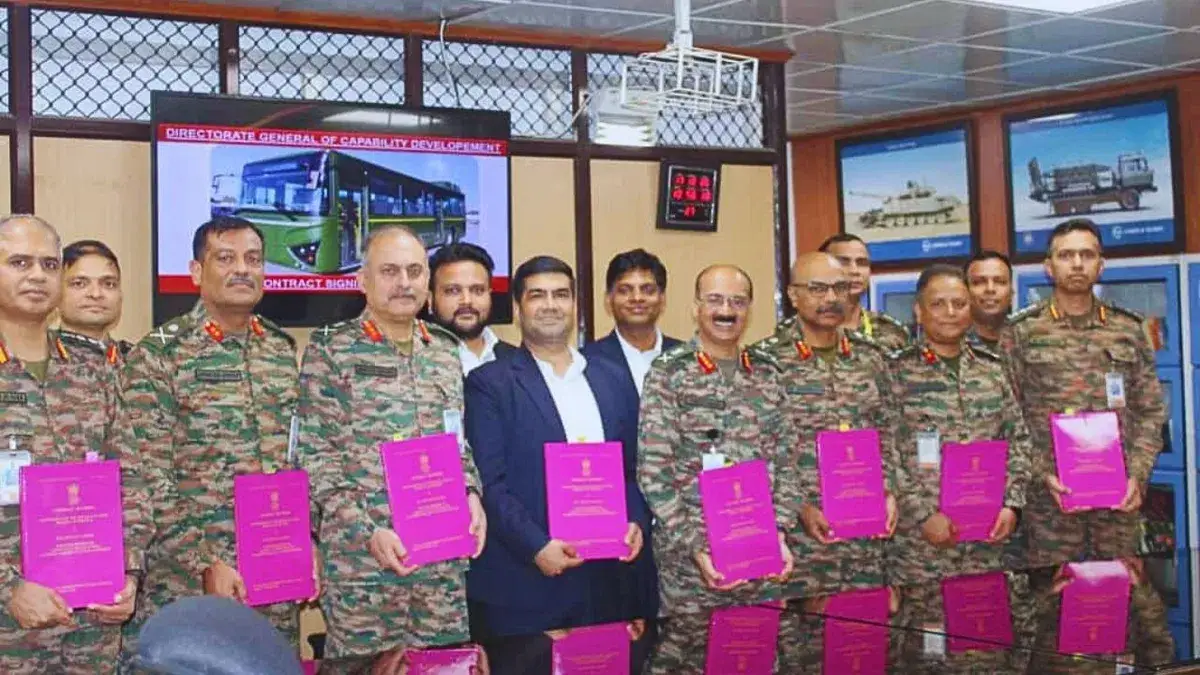
The Indian Army, a cornerstone of national security, is now spearheading a significant environmental transformation by integrating electric mobility into its operations. This strategic move, encompassing the induction of a substantial fleet of electric buses, is a direct response to the Prime Minister’s E-DRIVE initiative, underscoring a national commitment to a cleaner and greener future. For aspirants preparing for competitive examinations such as UPSC, SSC, PSC, NID, NIFT, and other government roles, understanding the nuances of such initiatives is crucial, as they frequently form the backbone of current affairs, general knowledge, and even essay questions.
The Green March: Why This Initiative Matters
The core objective behind the Indian Army’s decision to induct 113 state-of-the-art electric buses, complemented by 43 high-speed charging stations, is a resolute commitment to environmental stewardship. This action aligns perfectly with the broader national agenda to reduce carbon emissions and transition towards sustainable energy sources. The ‘PM E-DRIVE’ initiative itself is a powerful directive aimed at accelerating the adoption of electric vehicles across various sectors, and the Indian Army’s participation sets a commendable precedent for other government entities. This substantial investment, facilitated by a contract exceeding 130 crore rupees with a private sector partner, highlights a collaborative approach involving public-private partnerships to achieve national environmental goals. It’s not merely about replacing older vehicles; it’s about embedding a culture of sustainability within one of the nation’s most critical institutions, thereby contributing significantly to a healthier planet for future generations.
Connecting the Dots: Relevance for Your Exams
For anyone preparing for a government exam, news like the Indian Army’s adoption of electric buses isn’t just a fleeting headline; it’s a multi-faceted topic ripe for examination. This development directly relates to current affairs questions on government initiatives, environmental policies, and defense modernization. Static general knowledge sections could test your understanding of schemes like FAME India (Faster Adoption and Manufacturing of Hybrid & Electric Vehicles) which often support such projects, or India’s international commitments to climate change. In descriptive papers, this could serve as an excellent case study for essays on sustainable development, the role of armed forces in environmental protection, or the success of public-private partnerships. Daily news quizzes will undoubtedly feature questions on the number of buses, the name of the initiative, or the underlying purpose. Understanding the ‘why’ (environmental protection, national policy), ‘what’ (electric buses, charging infrastructure, financial outlay), and ‘how’ (government initiative, private partnership) is key to acing questions on this topic.
Beyond the News: A Broader Perspective
The Indian Army’s leap into electric mobility is more than just an isolated event; it’s a powerful symbol of India’s comprehensive drive towards a sustainable future. It demonstrates how various arms of the government are working in concert to achieve environmental objectives while also modernizing their operations. This trend of adopting green technologies is not confined to defense; it extends to public transport, government fleets, and even private sector incentives. The message is clear: whether for national security or everyday life, a greener, more sustainable approach is becoming integral to India’s progress. As an informed citizen and an aspiring civil servant, recognizing these overarching themes and their practical manifestations is paramount.
Frequently Asked Questions (FAQs)
Q1: What is the primary objective behind the Indian Army’s induction of electric buses?
A1: The primary objective is to contribute to a cleaner and greener environment by reducing carbon emissions and promoting sustainable mobility, aligning with the national ‘PM E-DRIVE’ initiative.
Q2: How many electric buses and fast chargers has the Indian Army inducted under this initiative?
A2: The Indian Army has inducted 113 electric buses along with 43 fast chargers as part of this green mobility initiative.
Q3: What is the estimated cost of this project, and how is it being executed?
A3: The project involves a contract worth over 130 crore rupees and is being executed through a public-private partnership with a private company.
Q4: How does this initiative connect to broader government goals and exam preparation?
A4: This initiative is a direct implementation of the ‘PM E-DRIVE’ and other national environmental policies, making it a crucial current affairs topic. It can feature in exam questions related to government schemes, environmental protection, defense modernization, and public-private partnerships for various competitive exams.
Q5: What is the ‘PM E-DRIVE’ initiative, and why is it significant?
A5: The ‘PM E-DRIVE’ initiative is a government-led directive aimed at accelerating the adoption of electric vehicles across various sectors in India. Its significance lies in its role as a catalyst for sustainable transportation, reduced fossil fuel dependence, and a healthier environment nationwide.





