
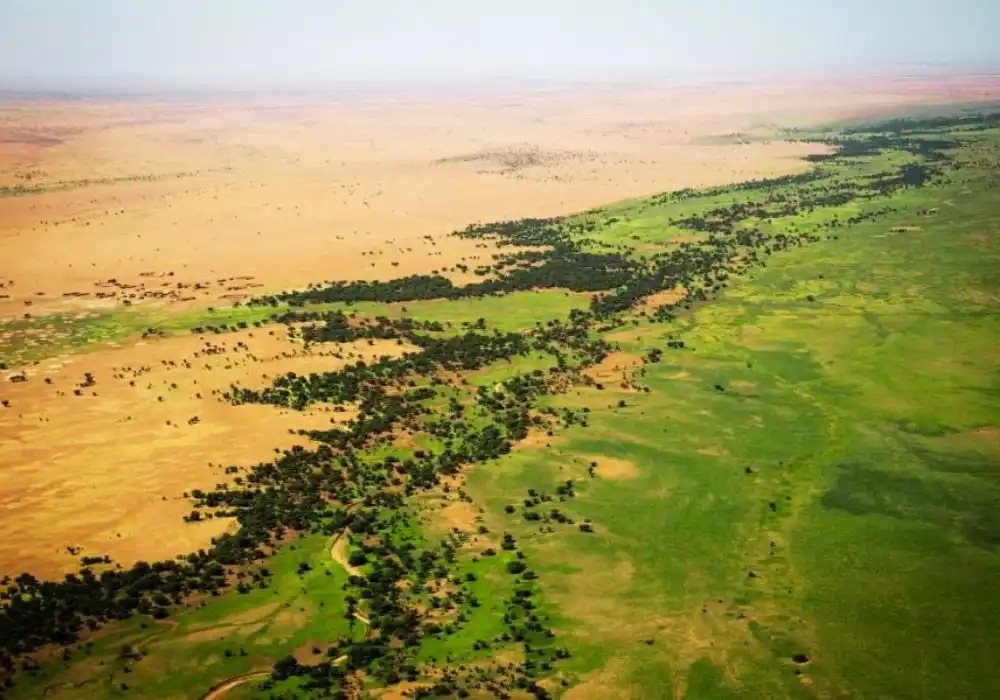
As aspiring candidates for UPSC, SSC, PSC, NID, NIFT, and other government examinations, understanding global initiatives that tackle pressing environmental challenges is paramount. The Great Green Wall (GGW) Initiative stands out as a monumental, inspiring, and highly relevant topic for your current affairs, environment, and geography sections. It’s far more than just planting trees; it’s a profound vision for a sustainable future across a vast continent.
Why the Great Green Wall? Addressing a Looming Crisis
The genesis of the Great Green Wall lies in a dire environmental threat: desertification and land degradation, particularly acute in Africa’s Sahel region. This semi-arid band stretching across the continent has been suffering from prolonged droughts, unsustainable land use practices, and the undeniable impacts of climate change. These factors combine to turn fertile land into barren desert, threatening the livelihoods of millions. The consequences are devastating: food insecurity, forced migration as communities seek viable land, increased conflict over dwindling resources, and a significant loss of biodiversity. Recognizing this escalating crisis, African leaders envisioned a collaborative, pan-continental solution to restore degraded ecosystems and build resilience. This urgent need gave birth to the Great Green Wall in 2007.
What Exactly is the Great Green Wall? A Mosaic of Restoration
Contrary to a common misconception, the Great Green Wall is not a single, continuous wall of trees. Instead, it’s an ambitious, integrated program aimed at restoring 100 million hectares of degraded land across the Sahel by 2030. It encompasses a mosaic of sustainable land management practices, including planting native trees and shrubs, improving soil fertility, establishing water harvesting systems, and promoting sustainable agriculture. The initiative’s core objectives extend beyond ecological restoration; it also seeks to enhance food security, create job opportunities, empower local communities, and sequester vast amounts of carbon dioxide from the atmosphere, thus contributing to global climate change mitigation efforts. It’s a holistic approach that intertwines environmental protection with socio-economic development.
Where is This Ambitious Project Located? The Sahel’s Lifeline
The Great Green Wall focuses on the Sahel zone, a crucial transition region between the Sahara Desert to the north and the savannas to the south. This vast, fragile ecosystem spans approximately 8,000 kilometers from east to west, encompassing 11 core countries: Senegal, Mauritania, Mali, Burkina Faso, Niger, Nigeria, Chad, Sudan, Eritrea, Ethiopia, and Djibouti. Each of these nations actively participates in implementing strategies tailored to their specific environmental and socio-economic contexts, contributing to the broader continental vision. The sheer geographic scale of this project underscores its immense ambition and the collaborative spirit driving it.
When Did it Begin and How is Progress Being Made? The Journey So Far
Launched in 2007 by the African Union, the Great Green Wall Initiative set a clear target: to complete its ambitious goals by 2030. Progress, while challenging, has been steady and significant. Over the years, millions of trees and plants have been planted, vast areas of degraded land have been brought back to life through sustainable land management techniques, and innovative water conservation methods have been implemented. Local communities are actively involved in the restoration efforts, benefiting from improved yields, new livelihood opportunities, and a more stable environment. While the initiative has faced hurdles such as funding gaps, political instability in certain regions, and the very climate change it aims to combat, the commitment remains strong, demonstrating a remarkable resolve to achieve its vision before the target year.
How Does it Impact Local Lives and Global Futures? Profound Significance
The impact of the Great Green Wall is multifaceted and profound, resonating from local communities to the global stage. Locally, it offers a lifeline to millions, providing enhanced food security through rehabilitated land and increased agricultural productivity. It generates income through new “green” jobs in planting, managing, and harvesting restored ecosystems. It fosters peace and stability by reducing competition over dwindling resources and preventing climate-induced migration. Globally, the GGW is a critical component in the fight against climate change, sequestering significant amounts of carbon dioxide and helping to regulate regional climates. It preserves vital biodiversity and serves as a powerful model for large-scale land restoration and sustainable development, inspiring similar efforts worldwide. Its success is a testament to what collective action can achieve in the face of daunting environmental challenges.
Frequently Asked Questions
Q1: What is the primary goal of the Great Green Wall Initiative?
A1: The primary goal is to combat desertification and land degradation across the Sahel region of Africa, restoring 100 million hectares of degraded land, fostering food security, creating green jobs, and enhancing climate resilience by 2030.
Q2: Which region of Africa is the Great Green Wall primarily focused on?
A2: The initiative is primarily focused on the Sahel region, a semi-arid band stretching across Africa, south of the Sahara Desert.
Q3: When was the Great Green Wall Initiative officially launched?
A3: The Great Green Wall Initiative was officially launched by the African Union in 2007.
Q4: Is the Great Green Wall a literal, continuous wall of trees stretching across Africa?
A4: No, it is not a literal, continuous wall of trees. Instead, it is a mosaic of diverse land restoration projects and sustainable land management practices implemented across various locations within the Sahel.
Q5: What are some key benefits of the Great Green Wall Initiative beyond just environmental restoration?
A5: Beyond environmental restoration, key benefits include improved food security, creation of green jobs and income opportunities for local communities, enhanced climate change mitigation through carbon sequestration, preservation of biodiversity, and a reduction in climate-induced migration and conflict.





