
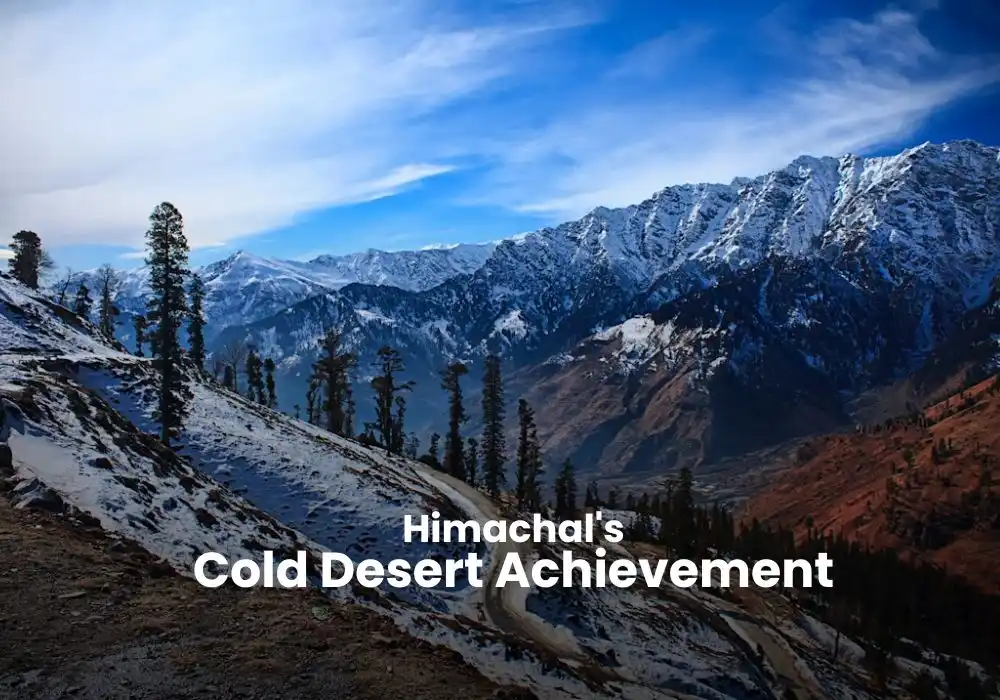
Welcome, future achievers! At myentrance.in, we understand that staying ahead in your competitive exam preparation means not just knowing the facts, but understanding their deeper significance. Today, we’re diving into a landmark environmental achievement that has direct implications for your UPSC, SSC, PSC, and other government exam aspirations: Himachal Pradesh’s Cold Desert Biosphere Reserve has officially received the prestigious UNESCO tag, elevating India’s total count to 13 such globally recognized sites. This isn’t just news; it’s a vital piece of current affairs, static general knowledge, and environmental science that you cannot afford to overlook. Our platform offers essential daily current affairs practice questions for all aspirants.
Decoding the News: Himachal’s Cold Desert Achievement
What happened? Himachal Pradesh’s remarkable Cold Desert Biosphere Reserve has been formally added to UNESCO’s World Network of Biosphere Reserves. This designation acknowledges its unique ecological importance and the efforts made towards sustainable development and biodiversity conservation.
Where is it located? As the name suggests, this cold desert region is nestled in the high-altitude trans-Himalayan landscape of Himachal Pradesh, particularly encompassing parts of the Spiti Valley. This area is characterized by extremely arid conditions, sparse vegetation, and unique fauna adapted to harsh climates.
When did this significant event occur? While the original content implies a recent development, the key is to remember that this addition brings India’s total to 13. For your exams, it’s crucial to know the *current status* and the number. This recognition is a culmination of years of conservation efforts.
Why This Matters for Your Competitive Exams
This announcement is a goldmine for anyone preparing for competitive examinations. Here’s why you need to pay close attention:
* UPSC & PSC Examinations: Candidates for civil services will find this information relevant to Geography (physical geography, climate, biodiversity), Environment and Ecology (conservation, protected areas, international organizations like UNESCO), and Current Affairs. Questions can range from the location and specific characteristics of the Cold Desert Biosphere Reserve to the objectives of the UNESCO Man and the Biosphere (MAB) Programme.
* SSC & Other Government Exams: For these examinations, this falls squarely under Static General Knowledge and Current Affairs. Expect direct questions on the number of UNESCO Biosphere Reserves in India, the latest addition, or its geographical location. Knowledge about key species found in cold deserts could also be tested.
* Daily News Quizzes & Current Affairs: This event will undoubtedly feature in our daily news quizzes and current affairs sections at myentrance.in. Regularly attempting these quizzes will help you embed this information into your memory.
* Static General Knowledge: The concept of Biosphere Reserves, their purpose, and their global network becomes a part of your static GK. Understanding the hierarchy of protected areas (National Parks, Wildlife Sanctuaries, Biosphere Reserves) is fundamental. This portal offers comprehensive study material for all SSC exams.
Understanding Biosphere Reserves and UNESCO’s Role
What is a Biosphere Reserve? A Biosphere Reserve is a unique concept designated by UNESCO to promote sustainable development, balancing the conservation of biological and cultural diversity with economic and social development. These are not merely protected areas; they are “learning places for sustainable development.” Each reserve has three main zones:
1. Core Area: Strictly protected for ecosystems, species, and genetic resources.
2. Buffer Zone: Surrounds the core, used for research, education, and recreation activities.
3. Transition Area: The outermost part, where local communities live and work, fostering sustainable resource management.
How does UNESCO get involved? The United Nations Educational, Scientific and Cultural Organization (UNESCO) designates Biosphere Reserves under its Man and the Biosphere (MAB) Programme. This intergovernmental scientific programme aims to establish a scientific basis for the improvement of relationships between people and their environments. Getting a UNESCO tag means a site meets stringent international criteria for ecological significance, conservation efforts, and the involvement of local communities in sustainable practices. This global recognition brings international attention and potential support for conservation initiatives.
Key Takeaways for Exam Preparation
To effectively utilize this information for your exams, we recommend:
* Memorize the Count: India now has 13 UNESCO-designated Biosphere Reserves.
* Identify the Newest Addition: Himachal Pradesh’s Cold Desert Biosphere Reserve.
* Locate it on a Map: Understand its geographical context within Himachal Pradesh and the Indian subcontinent.
* Understand the Concept: Be clear about what a Biosphere Reserve is, its zones, and the role of UNESCO’s MAB Programme.
* Connect to Broader Themes: Link this news to topics like climate change, biodiversity loss, sustainable development goals, and indigenous communities.
At myentrance.in, we continuously update our interactive examinations, current affairs, and static general knowledge sections to reflect such crucial developments. Make sure to regularly check our platform and utilize these resources to convert this valuable information into guaranteed marks in your upcoming exams.
Frequently Asked Questions (FAQs)
Q1: What is the significance of a Biosphere Reserve receiving a UNESCO tag?
A1: A UNESCO tag for a Biosphere Reserve means it is recognized as part of the World Network of Biosphere Reserves under the Man and the Biosphere (MAB) Programme. This recognition highlights its ecological importance, promotes sustainable development practices, and often brings international support for conservation and research. It also signifies global adherence to a model of sustainable human-environment interaction.
Q2: How many UNESCO-designated Biosphere Reserves does India currently have?
A2: With the inclusion of Himachal Pradesh’s Cold Desert Biosphere Reserve, India now has 13 Biosphere Reserves designated under UNESCO’s Man and the Biosphere (MAB) Programme. It’s important for exam aspirants to keep this number updated, as it’s a common static GK question.
Q3: Where exactly is the Cold Desert Biosphere Reserve located in Himachal Pradesh?
A3: The Cold Desert Biosphere Reserve is primarily located in the Spiti Valley region of Himachal Pradesh. This trans-Himalayan area is characterized by its high altitude, extreme arid conditions, and unique ecosystem adapted to cold desert environments, encompassing parts of the Pin Valley National Park and surrounding areas.
Q4: What is the ‘Man and the Biosphere (MAB) Programme’ mentioned in relation to UNESCO?
A4: The Man and the Biosphere (MAB) Programme is an intergovernmental scientific programme launched by UNESCO in the early 1970s. It aims to establish a scientific basis for the improvement of relationships between people and their environments globally. It designates Biosphere Reserves as “learning places for sustainable development” to test interdisciplinary approaches to understanding and managing changes and interactions between social and ecological systems.
Q5: How can I prepare for questions related to Biosphere Reserves for competitive exams like UPSC or SSC?
A5: For UPSC, focus on understanding the concept of Biosphere Reserves, their three zones, the MAB Programme, the criteria for designation, and the ecological significance of specific reserves. For SSC and other government exams, prioritize memorizing the number of UNESCO-tagged reserves in India, their locations, and the latest additions. Regularly follow current affairs, attempt quizzes on myentrance.in, and refer to environmental science notes for a comprehensive understanding.





