
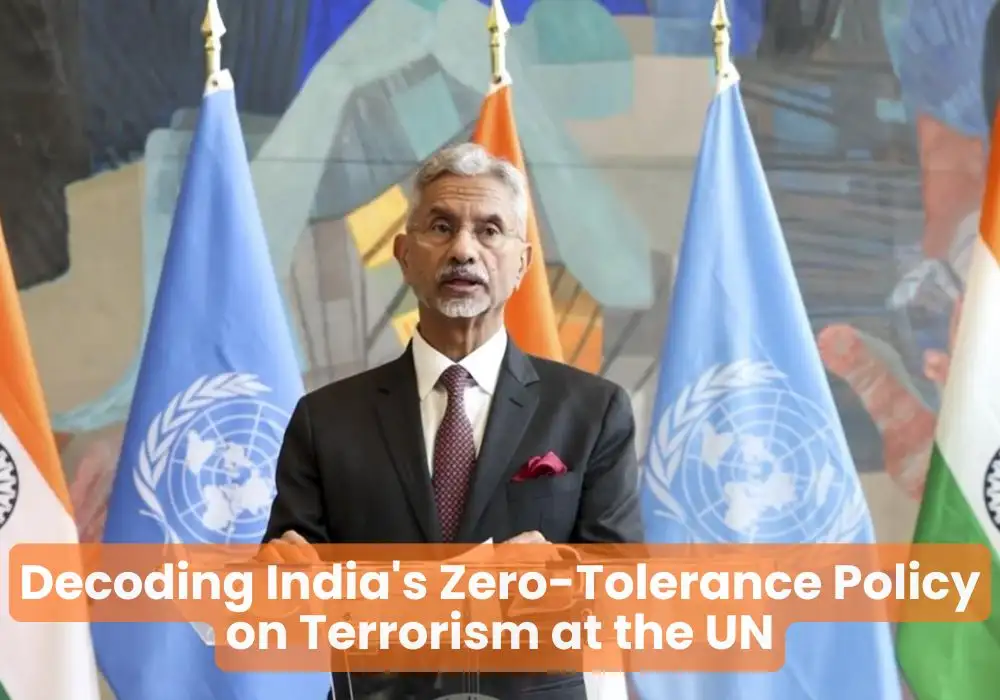
For every aspiring candidate aiming for prestigious government services like UPSC, SSC, PSC, or even specialized design entrance exams such as NID and NIFT, staying abreast of global developments, particularly India’s foreign policy, is not just recommended, it’s essential. Recently, India powerfully reiterated its steadfast policy of zero-tolerance towards terrorism on the global stage. This pivotal moment, where India called for a unified worldwide response against this pervasive threat in all its varied forms, carries significant weight not only in international diplomacy but also for your competitive exam preparation.
India’s Unwavering Message at the United Nations
At a crucial United Nations Ministerial Meeting held in New York, India delivered an unequivocal message regarding its approach to terrorism. This wasn’t just a routine statement; it was a reaffirmation of a long-held national commitment. The core of this message was India’s “zero-tolerance” policy, making it clear that there is no justification or exception for any act of terrorism, regardless of its motivation or origin. The statement underscored the urgent need for the international community to come together, recognizing terrorism as a global menace that transcends borders and ideologies. This collective fight, India stressed, must address the threat in all its manifestations, from funding and radicalization to safe havens and cross-border operations.
The significant responsibility of conveying India’s national statement fell upon Mr. Sibi George, the Secretary (West) at the Ministry of External Affairs. His address at this high-level forum highlighted India’s consistent advocacy for robust international cooperation to dismantle terrorist networks and counter extremist ideologies. This move at the United Nations is a strategic diplomatic effort to galvanize global action and maintain pressure on nations that might directly or indirectly support or condone terrorism.
Why India’s Stance is Crucial for Global Security and Your Knowledge Base
India’s historical experience with terrorism has shaped its strong and consistent foreign policy on this issue. The “why” behind this reiteration is rooted in the continuous threat terrorism poses to peace, stability, and human rights globally. By firmly advocating for zero-tolerance, India aims to:
* Elevate the Discourse: Ensure that counter-terrorism remains a top priority on the international agenda.
* Foster Unity: Encourage nations to overcome political differences and form a united front against this common enemy.
* Strengthen Multilateralism: Reinforce the role of international bodies like the UN in addressing complex global challenges.
* Protect National Interests: Safeguard India’s own security from cross-border terrorism and its various insidious forms.
For aspiring civil servants and competitive exam candidates, understanding this “why” is key. It helps you grasp the nuances of India’s foreign policy, its strategic alliances, and its role in shaping international norms. It’s not merely about knowing *what* happened, but comprehending the underlying reasons and implications.
Connecting This News to Your Exam Preparation
This event is a goldmine for various sections of your competitive examinations:
* Current Affairs: This is a direct, high-impact current affairs topic. You should know the who, what, where, and why of India’s statement at the UN.
* International Relations (UPSC/PSC): This news offers a practical example of India’s foreign policy in action, its commitment to multilateralism, and its engagement with global security issues. It can be linked to broader topics like UN reforms, international conventions on terrorism, and India’s role as a global power.
* General Knowledge (SSC/NID/NIFT/Other Govt Exams): Being aware of major international events and India’s position on global challenges is fundamental. Questions might arise on key organizations (UN), important international meetings, or the names of key diplomatic figures.
* Essay Writing: Topics on global terrorism, the role of international cooperation in combating terrorism, or India’s contribution to global peace and security frequently appear in essay sections. This news provides excellent factual basis and analytical points.
* Interview Preparation: Being able to articulate India’s stand on critical global issues demonstrates awareness and analytical ability.
To effectively utilize such news, always look beyond the headline. Understand the historical context of India’s counter-terrorism efforts, the role of the Ministry of External Affairs, and the various UN bodies involved in combating terrorism. By dissecting events like this, you build a robust foundation of knowledge that can be applied across different exam formats.
Frequently Asked Questions (FAQs)
1. What does India’s “zero-tolerance approach to terrorism” signify?
India’s “zero-tolerance approach” means that it firmly believes no act of terrorism can ever be justified, regardless of its motives, and there should be absolutely no compromise or leniency towards individuals, organizations, or states that sponsor or support terrorism. It advocates for a complete and unwavering stance against the menace.
2. Why did India choose to reiterate its stance at a UN Ministerial Meeting?
India chose to reiterate its stance at a UN Ministerial Meeting because the United Nations provides the most prominent global platform for addressing international peace and security issues. Reiterating its position there allows India to galvanize broader international support, emphasize the collective responsibility of nations, and push for stronger global mechanisms to combat terrorism, ensuring the issue remains a high priority on the world agenda.
3. Who delivered India’s statement, and what is the significance of their role?
India’s national statement was delivered by Mr. Sibi George, who holds the position of Secretary (West) in the Ministry of External Affairs. As a senior diplomat, his role is significant because he represents India’s official foreign policy positions on international forums, lending authoritative weight to the nation’s commitment and diplomatic efforts in the global arena.
4. How is India’s push for global cooperation against terrorism relevant to competitive exams?
This topic is highly relevant for competitive exams as it directly relates to Current Affairs, India’s Foreign Policy, International Relations, and General Knowledge. It provides concrete examples for understanding multilateral diplomacy, global security challenges, and the functioning of international organizations like the UN. It can also serve as a strong basis for essay writing and interview discussions on contemporary global issues.
5. What is the broader role of the United Nations in combating global terrorism?
The United Nations plays a crucial role in combating global terrorism by providing a framework for international cooperation, developing counter-terrorism strategies and conventions, and facilitating information sharing among member states. Through bodies like the Security Council and specialized offices, it works to build consensus, monitor terrorist activities, coordinate efforts to counter financing of terrorism, and prevent radicalization, aiming for a unified global response.





