
India, a nation deeply reliant on its water resources for agriculture, industry, and daily life, faces complex challenges in ensuring sustainable water availability. Understanding the government’s strategic responses to these challenges is not just about staying informed; it’s a critical component of preparing for prestigious competitive examinations like UPSC, SSC, PSC, NID, NIFT, and other government roles. Recently, a significant step was taken to fortify the nation’s water resilience, and grasping its nuances is essential for any aspiring candidate. Challenge yourself with our daily news quiz for upsc and ssc to test your awareness
The Genesis of a Vital Initiative: What It Is and Who’s Leading It
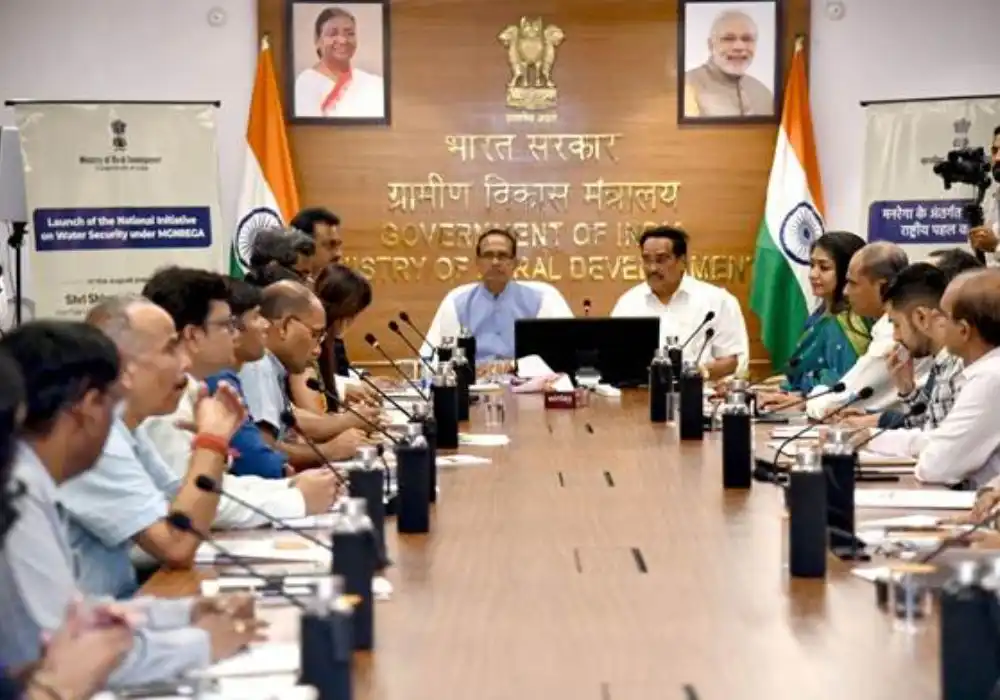
At the heart of India’s proactive approach to water management is the newly launched National Initiative on Water Security. This isn’t just another program; it signifies a concentrated national effort to address the multifaceted issues surrounding water scarcity, conservation, and sustainable utilization. The initiative was collaboratively unveiled in New Delhi, underscoring its inter-sectoral importance. Leading this crucial endeavor are two pivotal figures: Shri Shivraj Singh Chouhan, the Union Minister for Agriculture and Farmers’ Welfare, and Shri C.R. Patil, the Union Minister for Jal Shakti. The joint launch by ministers from ministries so diverse yet interconnected – agriculture being the largest consumer of water, and Jal Shakti being the primary custodian of water resources – highlights the holistic vision behind this initiative. It acknowledges that water security is not just an environmental concern, but also an economic, agricultural, and social imperative.
Unpacking the “How”: The MGNREGA Connection
One of the most noteworthy announcements made during the launch, which holds immense significance for policy-oriented questions in competitive exams, is the mandated allocation of funds for water conservation under the Mahatma Gandhi National Rural Employment Guarantee Act (MGNREGA). This decision marks a strategic integration of rural employment generation with environmental sustainability. Previously, water conservation works were often undertaken under MGNREGA, but this new directive ensures a *fixed portion* of funds will *now be mandatorily spent* on such activities.
Why is this significant? MGNREGA is a colossal rural development program, guaranteeing 100 days of wage employment in a financial year to rural households. By linking it directly and mandatorily to water conservation, the government achieves a dual objective:
1. Sustainable Asset Creation: It ensures the creation of vital water infrastructure like check dams, percolation tanks, desilting of ponds, and afforestation, which directly enhance local water tables and availability.
2. Livelihood Security: It provides employment opportunities in rural areas, especially during lean agricultural seasons, while simultaneously addressing a critical national resource challenge. This integration exemplifies a smart policy design that maximizes the impact of existing schemes.
Why This Initiative Demands Your Attention for Exams
For aspirants targeting government jobs, understanding the National Initiative on Water Security goes beyond mere current affairs; it provides context for a wide range of subjects:
* Current Affairs: Direct questions on the initiative’s name, objectives, launching ministers, and key policy changes (like the MGNREGA linkage).
* General Knowledge (GK): Knowledge about national water policies, ministries involved in resource management, and major government schemes.
* UPSC Civil Services Exam: This topic is ripe for questions in General Studies Paper-III (Environment & Ecology, Economic Development) and General Studies Paper-II (Governance, Social Justice). Essay topics on water scarcity, sustainable development, and rural upliftment can directly draw from this initiative. The inter-ministerial collaboration is also a key point for governance-related questions.
* SSC & PSC Exams: Expect factual questions on the names of ministers, the initiative’s purpose, and the specific connection with MGNREGA.
* NID & NIFT: Awareness of national environmental policies and resource management is crucial for understanding design challenges related to sustainability, rural development, and infrastructure.
This initiative is a testament to India’s commitment to ensuring water security for future generations. For you, the examinee, it’s a crucial case study in policy implementation, inter-ministerial coordination, and the sustainable development paradigm. Focus on the “why” behind the policy, the “what” it aims to achieve, and the “how” it plans to execute through existing frameworks like MGNREGA. This is the home for mock tests and current affairs for serious aspirants.
Frequently Asked Questions (FAQs)
1. What is the primary objective of the National Initiative on Water Security?
The core objective of the National Initiative on Water Security is to comprehensively address issues of water scarcity, promote sustainable water conservation practices, and ensure efficient management of water resources across the nation for present and future generations.
2. Which Union Ministers jointly launched this significant initiative?
The National Initiative on Water Security was jointly launched by Shri Shivraj Singh Chouhan, the Union Minister for Agriculture and Farmers’ Welfare, and Shri C.R. Patil, the Union Minister for Jal Shakti. Their combined presence highlights the multi-sectoral importance of water security.
3. How does the Mahatma Gandhi National Rural Employment Guarantee Act (MGNREGA) contribute to this water security initiative?
A key announcement in this initiative mandates that a fixed portion of funds under MGNREGA will now be compulsorily spent on water conservation works. This strategically links rural employment generation with the creation of vital water infrastructure and promotes sustainable water management at the grassroots level.
4. Why is understanding the National Initiative on Water Security important for competitive exam aspirants?
This initiative is crucial for competitive exams as it touches upon current affairs, government policies, sustainable development goals, and inter-ministerial coordination. It can be a source for direct questions in GK, current affairs, and serve as a case study for policy analysis in UPSC Mains, SSC, and PSC examinations.
5. What kind of water conservation activities are likely to be prioritized under the MGNREGA linkage within this initiative?
Under the MGNREGA linkage, activities likely to be prioritized include the construction and renovation of traditional water bodies, building check dams, farm ponds, promoting rainwater harvesting structures, afforestation drives, and desilting of existing water sources, all aimed at enhancing local water availability and groundwater recharge.





