
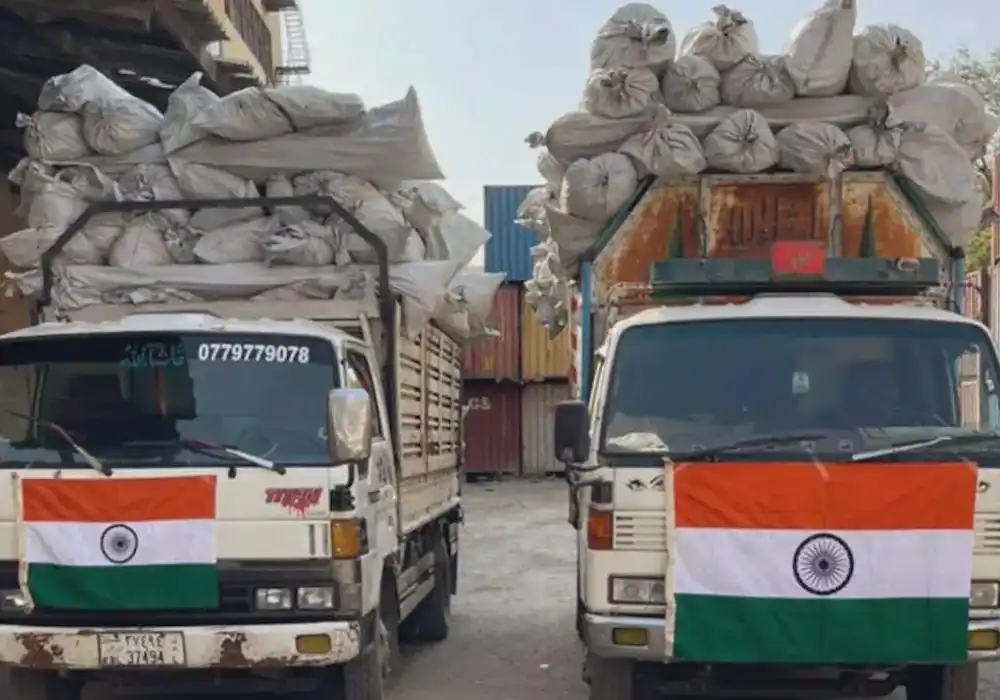
The world often sees India as a rising economic power, but its role as a compassionate global actor, particularly in times of crisis, is equally profound. Recently, India once again extended a hand of support to Afghanistan, dispatching vital humanitarian assistance in the wake of a devastating earthquake. This isn’t merely a news item; it’s a window into India’s foreign policy, its strategic objectives, and a critical current affair that competitive exam aspirants, from UPSC to SSC, must understand. Bookmark this page for the latest gk updates for competitive exams.
India’s Enduring Commitment to Afghanistan: More Than Just Aid
Why India Helps: India’s engagement with Afghanistan transcends immediate political landscapes; it is rooted in deep historical, cultural, and people-to-people ties. The recent delivery of three container loads of relief materials to Kabul, consisting of essential food items, water purifiers, and protein powder, serves as a powerful testament to India’s “Neighbourhood First” policy and its unwavering commitment to humanitarian principles. This aid is not a one-off event but a continuation of India’s consistent support to the Afghan people, especially following natural calamities. India believes in fostering stability and prosperity in its immediate neighbourhood, and providing assistance during crises is a fundamental pillar of this approach. It reinforces India’s image as a responsible and reliable global partner, focused on alleviating suffering wherever possible. For students, understanding this “why” is key to grasping India’s broader foreign policy objectives and its role on the international stage.
The Strategic Lifeline: Chabahar Port and Aid Delivery
How and Where the Aid Reached: A critical aspect of this humanitarian mission is the route taken: the supplies travelled via Chabahar Port. This detail is immensely significant for those studying international relations, geography, and strategic infrastructure. Chabahar Port, located in Iran on the Gulf of Oman, is a strategic asset developed with India’s assistance. It provides India with an alternative, reliable sea-land route to Afghanistan, bypassing Pakistan. The port significantly reduces transit time and costs, facilitating trade and, crucially, humanitarian aid delivery to landlocked Afghanistan. The successful use of Chabahar for such an important consignment underscores its operational readiness and its vital role in India’s regional connectivity initiatives. This route exemplifies how geopolitical infrastructure plays a direct role in humanitarian diplomacy, a concept vital for UPSC General Studies and SSC General Awareness sections.
Understanding the Impact: A Multi-faceted Perspective
What This Aid Signifies: The delivery of relief materials following an earthquake highlights several important themes. Firstly, it showcases international cooperation in disaster management. Earthquakes cause immense devastation, and a coordinated global response is essential for recovery. India’s prompt action demonstrates its capability and willingness to contribute effectively to global humanitarian efforts. Secondly, it strengthens India’s soft power in the region. By providing unconditional aid, India builds goodwill and reinforces its image as a benevolent power, distinct from other actors whose engagements might be perceived as transactional. For competitive exams, this event provides a tangible example for questions on India’s foreign policy, regional influence, and humanitarian diplomacy. It illustrates how current affairs are often intertwined with broader themes of international relations and disaster preparedness, urging students to look beyond the immediate headline.
Your Exam Edge: Connecting Current Events to Core Knowledge
For aspirants preparing for SSC, UPSC, PSC, NID, NIFT, and other government examinations, understanding an event like India’s humanitarian aid to Afghanistan is crucial.
* Current Affairs: This is a direct current affairs topic, appearing in daily news quizzes and monthly compilations.
* Static General Knowledge: It connects to static GK related to international ports (Chabahar), important rivers/regions (Afghanistan’s geography), and international organizations (UN’s role in disaster relief, though not explicitly mentioned here, it’s a related concept).
* UPSC & PSC: For these exams, this topic is central to International Relations (India-Afghanistan relations, India’s Neighbourhood First policy, Humanitarian Diplomacy, Geopolitics of Chabahar Port), Geography (strategic locations, trade routes), and Disaster Management (international response to natural disasters). Questions could explore the rationale behind India’s aid, the strategic importance of the route, or the broader implications for regional stability.
* SSC & Other Government Exams: Expect questions on the specific country (Afghanistan), the nature of the aid, the port used (Chabahar), or general questions about India’s foreign policy or prominent natural disasters.
* NID & NIFT: While not directly about design, general awareness sections can include questions on global events, humanitarian crises, or India’s international relations. Understanding such events demonstrates a broad awareness of global issues.
This single event offers multiple layers of learning, transforming a simple news update into a comprehensive study point for various competitive examinations. By dissecting the “why,” “what,” “where,” “when,” and “how,” you can effectively prepare for questions that test both your factual recall and your analytical understanding of global events. It’s important to test your knowledge with our news pointers to identify weak areas.
Frequently Asked Questions (FAQs)
Q1: Why does India continue to provide aid to Afghanistan despite the current political situation there?
A1: India’s approach to Afghanistan is primarily guided by humanitarian principles and its long-standing people-to-people ties, rather than solely by the prevailing political regime. India believes in supporting the welfare of the Afghan people, especially during crises, and this aid is a continuation of that unwavering commitment, aligning with its “Neighbourhood First” policy.
Q2: What is the strategic significance of Chabahar Port in the context of India’s aid to Afghanistan?
A2: Chabahar Port, developed with India’s assistance in Iran, offers a crucial alternative sea-land route for India to access Afghanistan and Central Asia, bypassing Pakistan. Its strategic importance lies in facilitating efficient trade and, crucially, humanitarian aid delivery, reducing transit time and costs. It strengthens India’s regional connectivity and geopolitical influence.
Q3: Besides humanitarian aid, what other forms of assistance has India traditionally provided to Afghanistan?
A3: Historically, India has been a significant development partner for Afghanistan, contributing to infrastructure projects (like the Salma Dam, Afghan Parliament building), education, healthcare, and capacity building. India has offered scholarships to Afghan students and provided training in various sectors, aiming for long-term sustainable development.
Q4: How does this event reflect India’s “Neighbourhood First” policy?
A4: The dispatch of humanitarian aid to Afghanistan directly reflects India’s “Neighbourhood First” policy, which prioritizes strengthening ties and cooperation with its immediate neighbours. It emphasizes addressing their needs, fostering regional stability, and demonstrating India’s role as a benevolent and responsible power in its vicinity, especially during times of crisis.
Q5: How can knowledge of such international events benefit an aspirant for competitive exams like UPSC or SSC?
A5: Understanding international events like India’s aid to Afghanistan is vital for competitive exams as it covers current affairs, international relations, foreign policy, geography (Chabahar Port), and disaster management. It helps aspirants analyze global scenarios, understand India’s geopolitical strategies, and answer questions that often integrate static general knowledge with contemporary developments, enhancing both factual recall and analytical skills.





