
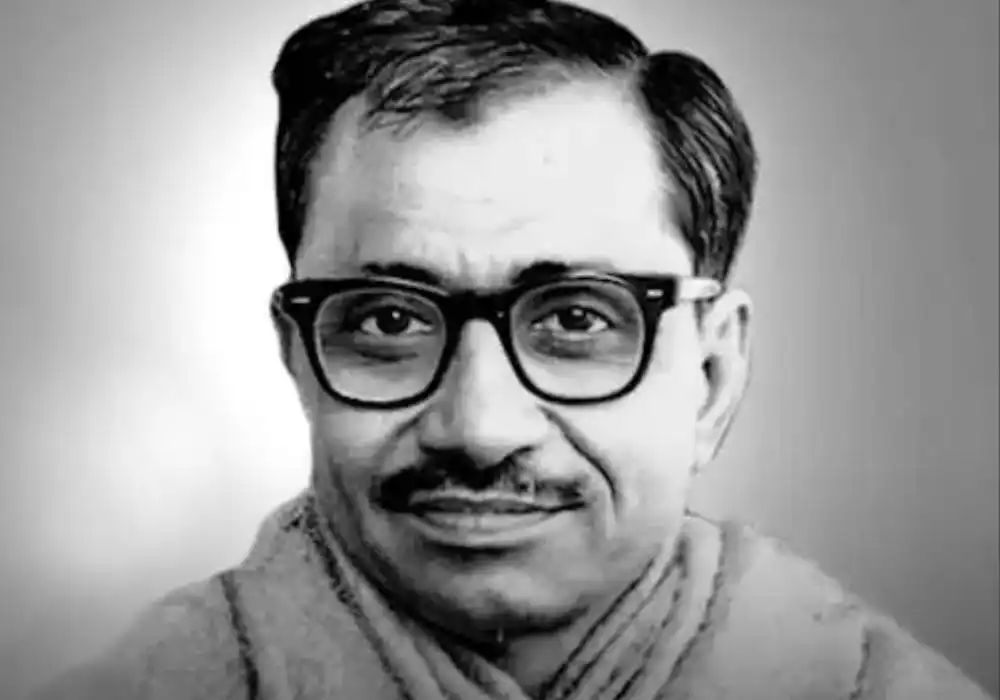
Recently, national leaders paid homage to Pandit Deendayal Upadhyaya on his birth anniversary, reminding us of a figure whose life exemplified profound thought and remarkable simplicity. For aspirants gearing up for challenging competitive examinations like UPSC, SSC, PSC, NID, NIFT, and other government roles, understanding such pivotal personalities is not just about historical knowledge; it’s about grasping the core ideas that have shaped modern India and continue to influence policy and public discourse. Let’s delve into the life and philosophy of this influential leader, exploring why his legacy remains critical for both your general knowledge and exam preparation. Stay informed and ahead of the competition with our daily GK news digest.
Who Was Pandit Deendayal Upadhyaya? A Brief Overview
Born in 1916, Pandit Deendayal Upadhyaya emerged as a prominent philosopher, political activist, and leader. He was a key figure in the Bharatiya Jana Sangh, the precursor to today’s Bharatiya Janata Party. His journey was marked by a deep commitment to the nation, advocating for an indigenous model of development that prioritized human well-being and cultural values. His life, characterized by austerity and intellectual rigor, serves as an inspiration, reflecting a leader who, as recounted by Vice President C.P. Radhakrishnan, lived with utmost simplicity, possessing merely five rupees at the time of his passing. This dedication to selfless service and simple living underscores the values he championed throughout his public life.
The Philosophy of Integral Humanism: A Cornerstone for National Development
At the heart of Pandit Deendayal Upadhyaya’s intellectual contribution lies the concept of Integral Humanism (Ekatma Manav Darshan). This philosophy proposes a holistic approach to human development, viewing the individual, society, and nature as interconnected and interdependent. It rejects both Western capitalism and communism, advocating instead for an economic and social model rooted in Indian cultural ethos. Integral Humanism emphasizes the four basic attributes of human beings – body, mind, intellect, and soul – and strives for their harmonious integration. It champions self-reliance, decentralization, and the upliftment of the last person (Antyodaya) in society, ensuring that the benefits of progress reach everyone, especially the marginalized. Understanding this philosophy is crucial for exams, particularly for papers on ethics, political science, and socio-economic development.
His Enduring Legacy and Its Relevance for Modern India
Pandit Deendayal Upadhyaya’s ideas have left an indelible mark on Indian political thought. His vision for a self-reliant and culturally rooted nation continues to inspire various government policies and initiatives aimed at inclusive growth and sustainable development. Schemes promoting rural development, skill enhancement, and social welfare often echo the principles of Antyodaya and Swadeshi (self-reliance) that he ardently advocated. For competitive exam aspirants, tracing the influence of such historical figures on contemporary governance provides a deeper understanding of current affairs and policy frameworks, often forming the basis of analytical questions in Mains examinations.
Mastering Such Topics for Your Competitive Exams with MyEntrance.in
For aspirants of UPSC, SSC, PSC, NID, NIFT, and other government exams, knowledge of figures like Pandit Deendayal Upadhyaya and his philosophies is not merely academic; it is foundational. Such topics frequently appear in General Knowledge sections, Current Affairs quizzes, History papers, and even as foundational concepts in Ethics and Governance. MyEntrance.in is designed precisely to help you navigate this vast ocean of information. Our platform offers comprehensive educational resources, including interactive examinations and detailed answers that test your understanding of historical figures, philosophical concepts, and their modern-day relevance. Our daily news quizzes and current affairs updates ensure you’re always informed about recent tributes and their significance, while our static general knowledge sections provide in-depth analyses of important personalities and their contributions. Furthermore, our examination tips guide you on how to effectively integrate such knowledge into your answers for both objective and descriptive tests. By leveraging these tools, you can transform complex historical and philosophical ideas into actionable knowledge, boosting your scores and confidence. Get everything you need for competitive exams at MyEntrance, your one-stop exam shop.
Conclusion
Pandit Deendayal Upadhyaya remains a towering figure whose simple life and profound ideas continue to inspire. His philosophy of Integral Humanism offers a unique perspective on nation-building and human well-being, making him an essential subject for competitive exam preparation. Embrace the opportunity to learn more about such luminaries, enriching your knowledge base and enhancing your exam readiness.
Frequently Asked Questions (FAQs)
1. Who was Pandit Deendayal Upadhyaya and what is his primary contribution?
Pandit Deendayal Upadhyaya was a prominent Indian philosopher, political activist, and a key leader of the Bharatiya Jana Sangh. His primary contribution is the philosophy of Integral Humanism, which advocates for a holistic and indigenous approach to human development, focusing on the well-being of every individual and cultural self-reliance.
2. What is Integral Humanism and why is it important for competitive exams?
Integral Humanism is a philosophy proposed by Deendayal Upadhyaya that rejects both Western capitalism and communism, promoting a balanced approach to individual and societal development rooted in Indian values. It is crucial for competitive exams, especially for UPSC and PSC, as it forms a basis for questions in political science, ethics, governance, and socio-economic development, reflecting India’s unique developmental path.
3. How is Pandit Deendayal Upadhyaya’s legacy relevant in current Indian politics and policies?
His legacy significantly influences current Indian politics and policies through principles like ‘Antyodaya’ (uplifting the last person) and ‘Swadeshi’ (self-reliance). Many government schemes and initiatives aimed at inclusive growth, rural development, and social welfare draw inspiration from his philosophy, making him a recurring topic in current affairs and general knowledge for exams.
4. In which sections of competitive exams would I typically find questions related to Pandit Deendayal Upadhyaya?
You would typically find questions related to Pandit Deendayal Upadhyaya in various sections of competitive exams. These include General Knowledge, Current Affairs (especially concerning his birth/death anniversaries or government tributes), Indian History (Modern History/Political History), Indian Polity and Governance, and sometimes in Ethics or Essay papers, particularly for UPSC and State PSC examinations.
5. How can MyEntrance.in help me prepare for topics like Pandit Deendayal Upadhyaya and Integral Humanism for my exams?
MyEntrance.in offers comprehensive resources to help you master such topics. Our platform provides interactive examinations with detailed answers, daily news quizzes and current affairs updates for recent events, in-depth static general knowledge articles on important personalities and philosophies, and expert examination tips. These resources ensure you gain a thorough understanding and can confidently tackle related questions in exams like SSC, UPSC, PSC, NID, NIFT, and other government recruitment tests.





